


Evidence of the Importance of Dietary Habits Regarding Depressive Symptoms and Depression
- PMID: 32131552
- PMCID: PMC7084175
- DOI: 10.3390/ijerph17051616
Evidence of the Importance of Dietary Habits Regarding Depressive Symptoms and Depression
Abstract
Background: Mental illness is one of the fastest rising threats to public health, of which depression and anxiety disorders are increasing the most. Research shows that diet is associated with depressive symptoms or depression (depression).
Aim: This study aimed to investigate the diets impact on depression, by reviewing the scientific evidence for prevention and treatment interventions.
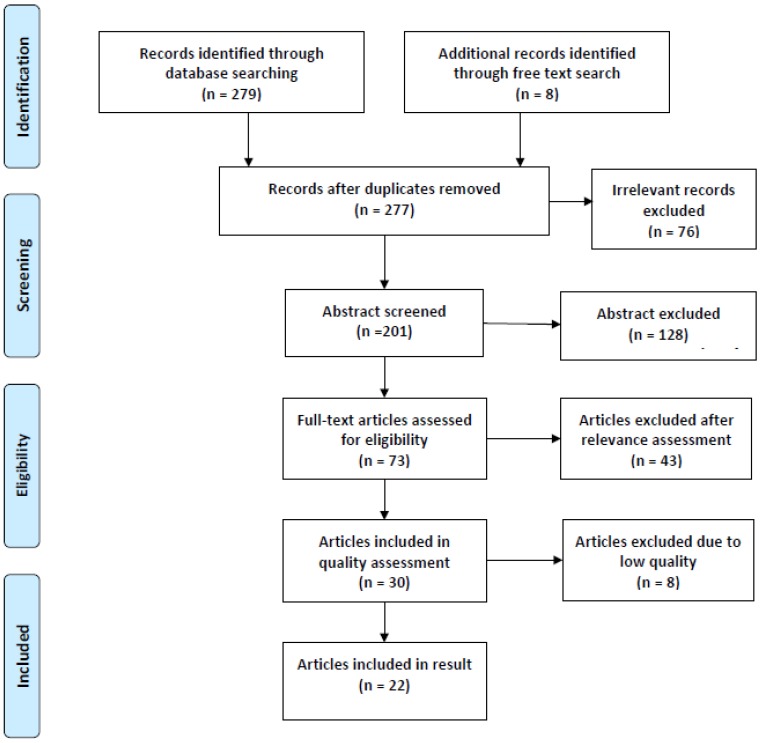
Method: A systematic review was conducted, and narrative synthesis analysis was performed.
Result: Twenty scientific articles were included in this review. The result showed that high adherence to dietary recommendations; avoiding processed foods; intake of anti-inflammatory diet; magnesium and folic acid; various fatty acids; and fish consumption had a depression. Public health professionals that work to support and motivate healthy eating habits may help prevent and treat depression based on the evidence presented in the results of this study. Further research is needed to strengthen a causal relationship and define evidence-based strategies to implement in prevention and treatment by public healthcare.
Keywords: anxiety; causality; depression; depressive symptoms; diet; mental health; prevention; public health; public health professionals.
Conflict of interest statement
The authors declare no conflict of interest.
Figures
References
-
- WHO . Depression. World Health Organization; Geneva, Switzerland: 2018. [(accessed on 12 January 2020)]. Available online: https://www.who.int/news-room/fact-sheets/detail/depression.
-
- WHO . Preventing depression in the WHO European Region. World Helth Organization; Geneva, Switzerland: 2016. [(accessed on 12 January 2020)]. Available online: http://www.euro.who.int/en/health-topics/noncommunicable-diseases/mental....
-
- Assosciation U.N. Agenda 2030. [(accessed on 12 January 2020)]; Available online: https://www.un.org/sustainabledevelopment/sustainable-development-goals/
Publication types
MeSH terms
LinkOut - more resources
Full Text Sources
Medical
