


Serum 25-Hydroxyvitamin D and the risk of mortality in adult patients with Sepsis: a meta-analysis
- PMID: 32131740
- PMCID: PMC7057612
- DOI: 10.1186/s12879-020-4879-1
Serum 25-Hydroxyvitamin D and the risk of mortality in adult patients with Sepsis: a meta-analysis
Abstract
Background: Vitamin D deficiency has been related to the risk of sepsis. However, previous studies showed inconsistent results regarding the association between serum 25-hydroxyvitamin D (25 (OH) D) and mortality risk in septic patients. We aimed to evaluate the relationship between serum 25 (OH) D at admission and mortality risk in adult patients in a meta-analysis.
Methods: Follow-up studies that provided data of multivariate adjusted relative risk (RR) between serum 25 (OH) D and mortality risk in septic patients were retrieved via systematic search of PubMed and Embase databases. A random effect model was used to pool the results.
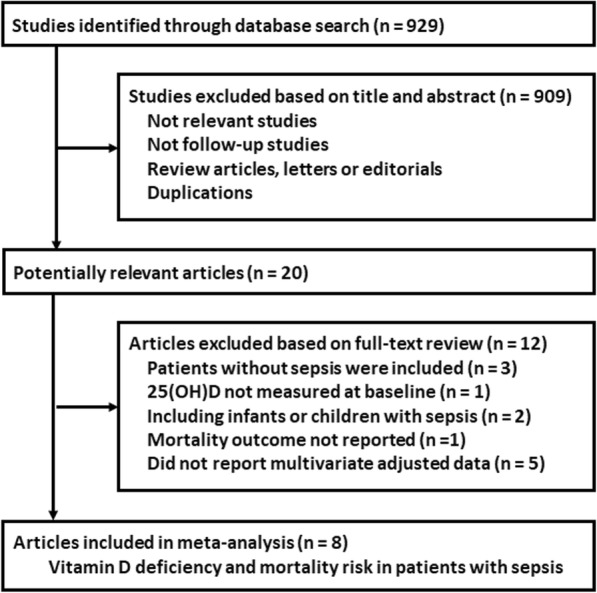
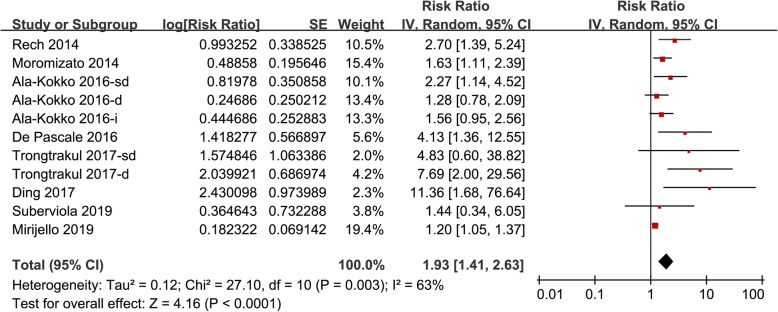
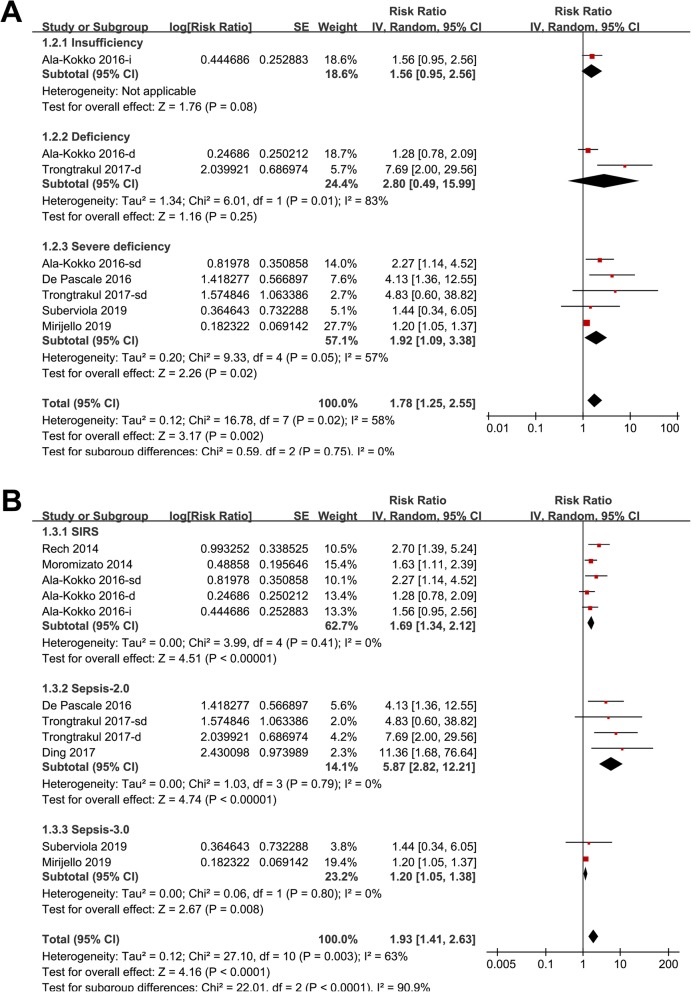
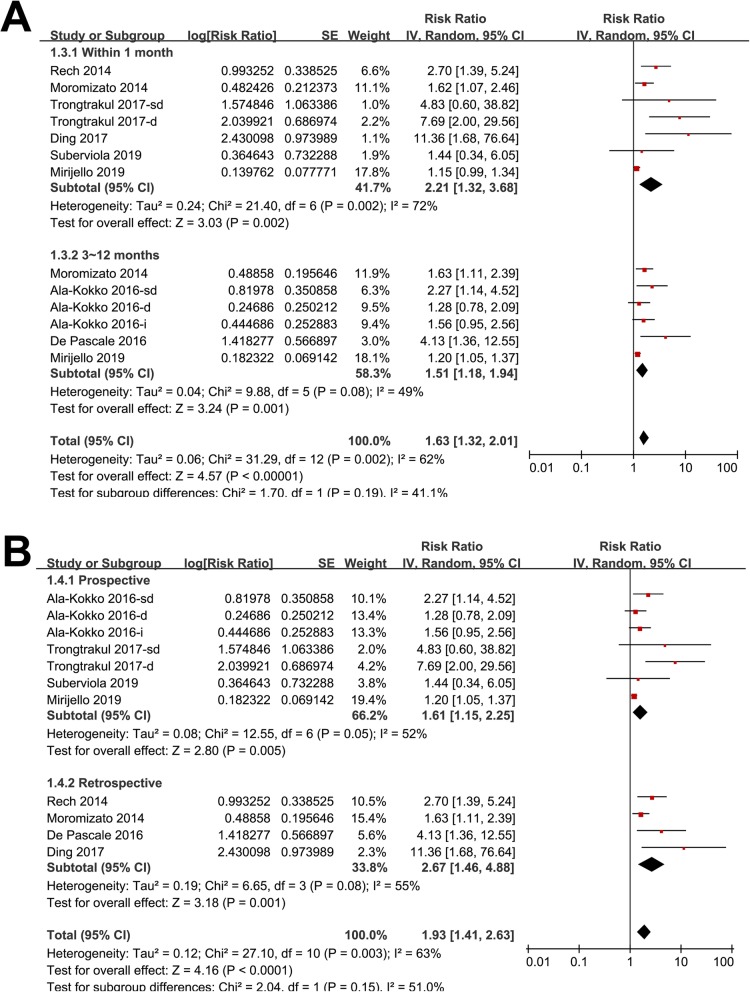
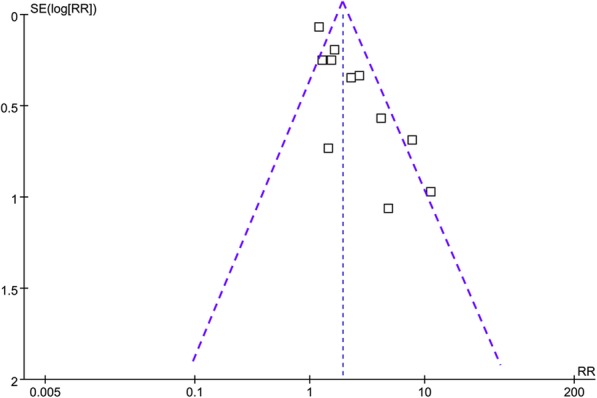
Results: Eight studies with 1736 patients were included. Results of overall meta-analysis showed that lower 25 (OH) D at admission was independently associated with increased risk or mortality (adjusted RR: 1.93, p < 0.001; I2 = 63%) in patients with sepsis. Exploring subgroup association showed that patients with severe vitamin D deficiency (25 (OH) D < 10 ng/ml) was significantly associated with higher mortality risk (adjusted RR: 1.92, p < 0.001), but the associations were not significant for vitamin D insufficiency (25 (OH) D 20~30 ng/ml) or deficiency (25 (OH) D 10~20 ng/ml). Further analyses showed that the association between lower serum 25 (OH) D and higher mortality risk were consistent in studies applied different diagnostic criteria for sepsis (systemic inflammatory response syndrome, Sepsis-2.0, or Sepsis-3.0), short-term (within 1 month) and long-term studies (3~12 months), and in prospective and retrospective studies.
Conclusions: Severe vitamin D deficiency may be independently associated with increased mortality in adult patients with sepsis. Large-scale prospective studies are needed to validate our findings.
Keywords: 25-hydroxyvitamin D; Meta-analysis; Mortality; Sepsis; Vitamin D.
Conflict of interest statement
The authors declare that they have no competing interests.
Figures
References
-
- Rhee C, Wang R, Zhang Z, Fram D, Kadri SS, Klompas M. Epidemiology of hospital-onset versus community-onset Sepsis in U.S. hospitals and association with mortality: a retrospective analysis using electronic clinical data. Crit Care Med. 2019;47(9):1169–1176. doi: 10.1097/CCM.0000000000003817. - DOI - PMC - PubMed
Publication types
MeSH terms
Substances
LinkOut - more resources
Full Text Sources
Medical
