


Experienced complaints, activity limitations and loss of motor capacities in patients with pure hereditary spastic paraplegia: a web-based survey in the Netherlands
- PMID: 32131864
- PMCID: PMC7057591
- DOI: 10.1186/s13023-020-1338-4
Experienced complaints, activity limitations and loss of motor capacities in patients with pure hereditary spastic paraplegia: a web-based survey in the Netherlands
Abstract
Background: Hereditary spastic paraplegia (HSP) is a group of inherited disorders characterized by progressive spastic paresis of the lower limbs. Treatment is often focused on reducing spasticity and its physical consequences. To better address individual patients' needs, we investigated a broad range of experienced complaints, activity limitations, and loss of motor capacities in pure HSP. In addition, we aimed to identify patient characteristics that are associated with increased fall risk and/or reduced walking capacity.
Methods: We developed and distributed an HSP-specific online questionnaire in the Netherlands. A total of 109 out of 166 questionnaires returned by participants with pure HSP were analyzed.
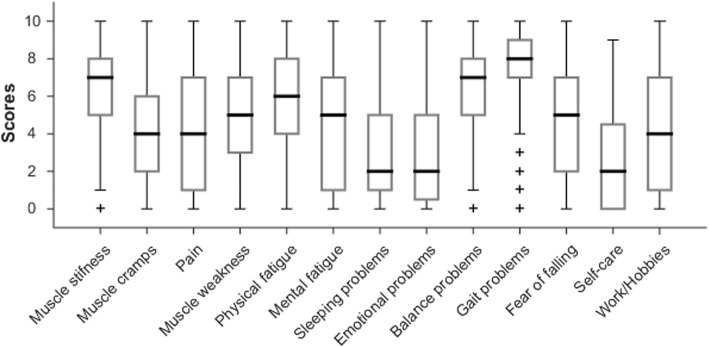
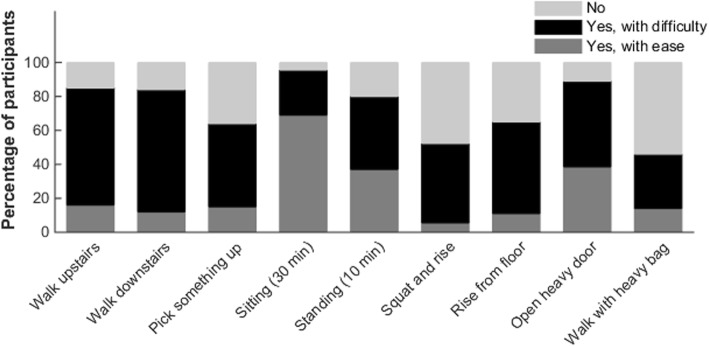
Results: Participants experienced the greatest burden from muscle stiffness and limited standing and walking activities, while 72% reported leg and/or back pain. Thirty-five and 46% reported to use walking aids (e.g. crutches) indoors and outdoors, respectively; 57% reported a fall incidence of at least twice a year ('fallers'); in 51% a fall had led to an injury at least once; and 73% reported fear of falling. Duration of spasticity and incapacity to rise from the floor were positively associated with being a 'faller', whereas non-neurological comorbidity and wheelchair use were negatively associated. Higher age, experienced gait problems, not being able to stand for 10 min, and incapacity to open a heavy door showed a negative association with being a 'walker without aids' (> 500 m).
Conclusions: Our results emphasize the large impact of spastic paraparesis on the lives of people with pure HSP and contribute to a better understanding of possible targets for rehabilitation.
Keywords: Falls; Gait; Hereditary spastic paraplegia; Rehabilitation; Spastic paraparesis; Survey.
Conflict of interest statement
The authors declare that they have no competing interests.
Figures


References
-
- Fink JK, et al. In: Hereditary Spastic Paraplegia Overview. Pagon RA, Adam MP, Ardinger HH, Wallace SE, Amemiya A, LJH B, et al., editors. Seattle (WA): GeneReviews(R); 1993. - PubMed
Publication types
MeSH terms
LinkOut - more resources
Full Text Sources
