


Pattern of Antibacterial Resistance in Urinary Tract Infections: A Systematic Review and Meta-analysis
- PMID: 32133087
- PMCID: PMC6826787
- DOI: 10.4103/ijpvm.IJPVM_419_17
Pattern of Antibacterial Resistance in Urinary Tract Infections: A Systematic Review and Meta-analysis
Abstract
Background: Urinary tract infection (UTI) is one of the most common infectious diseases ranking next to upper respiratory tract infections. UTIs are often significantly associated with morbidity and mortality. The inappropriate administration of antibiotics to treat these infections increased infection resistance to antibiotics. The aim of this study is to determine the frequency of antibiotic resistance pattern in UTIs.
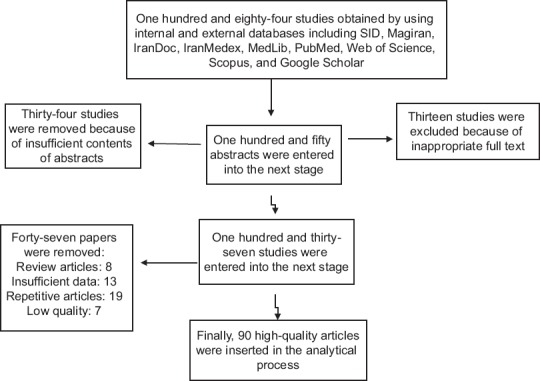
Methods: We searched several databases including PubMed, Web of Science, Scopus, Google Scholar, Iran Medex, Magiran, IranDoc, MedLib, and Scientific Information Database to identify the studies addressing antibacterial resistance patterns of the most common uropathogenic bacteria in UTIs in Iran. A total of 90 reports published from different regions of Iran from 1992 to May 2015 were involved in this study.
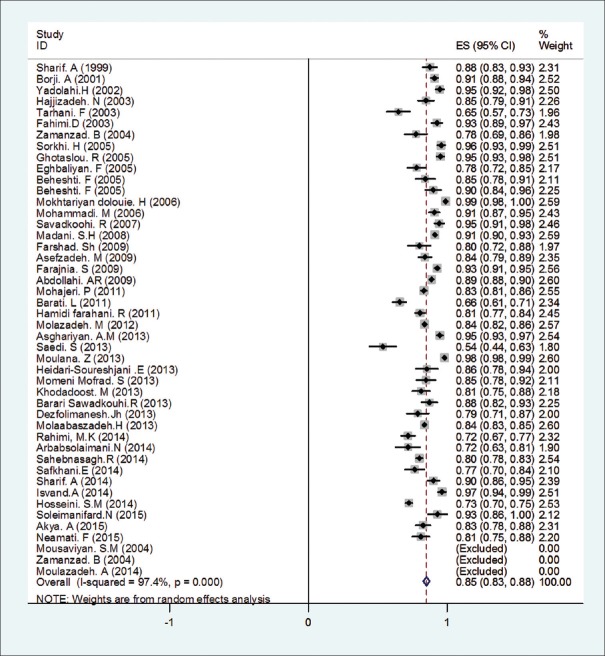
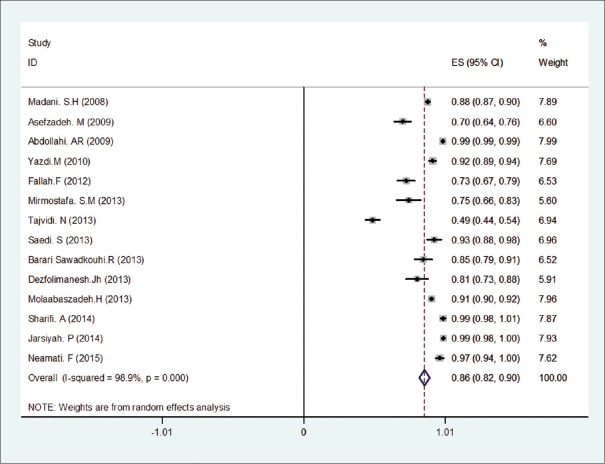
Results: It is shown that the most common pathogen causing UTIs is Escherichia coli with 62%. The resistance among the isolates of E. coli was as follows: ampicillin (86%), amoxicillin (76%), tetracycline (71%), trimethoprim-sulfamethoxazole (64%), cephalexin (61%), and cefalothin (60%). The highest sensitivity among isolates of E. coli was as follows: imipenem (86%), nitrofurantoin (82%), amikacin (79%), chloramphenicol (72%), and ciprofloxacin (72%).
Conclusions: The results of this study showed that the most common resistance are antibiotics that are commonly used. The most effective antibiotics for E. coli were imipenem, nitrofurantoin, amikacin, chloramphenicol, and ciprofloxacin. Considering this study, it had better, use less gentamicin, second-generation cephalosporins, and nalidixic acid in the initial treatment of infections caused by E. coli, and no use penicillins, tetracyclines, cotrimoxazole, and first-generation cephalosporins.
Keywords: Antibiotics; Gram-negative bacteria; Gram-positive bacteria; antimicrobial resistance; urinary tract infections.
Copyright: © 2019 International Journal of Preventive Medicine.
Conflict of interest statement
There are no conflicts of interest.
Figures
References
-
- Jalilian S, Farahani A, Mohajeri P. Antibiotic resistance in uropathogenic Escherichia coli isolated from urinary tract infections out-patients in Kermanshah. International Journal of Medicine and Public Health. 2014;4:1.
-
- Isvand A, Yahyavi M, Asadi-Samani M, Kooti W, Davoodi-Jouneghani Z. The study of bacteriological factors and antibiotic resistance in women with UTI referred to the Razi laboratory in Dezful. Sci J Ilam Univ Med Sci. 2014;22:199–205.
-
- Sharifi A, Khoramrooz S, Khosravani S, Yazdanpanah M, Gharibpour F, Malekhoseini A, et al. Antimicrobial resistance pattern of Escherichia coli isolated from patients with urinary tract infection (UTI) in Yasuj city during 1391-1392. J Armaghane Danesh Yasuj Univ Med Sci. 2014;19:337–46.
-
- Asadi Manesh FF, Sharifi A, Mohammad Hosini Z, Nasrolahi H, Hosseini N, Kalantari A, et al. Antibiotic resistance of urinary tract infection of children under 14 years admitted to the pediatric clinic of Imam Sajjad hospital, 2012. Armaghane Danesh. 2014;19:411–20.
Publication types
LinkOut - more resources
Full Text Sources