Associations of women's empowerment with neonatal, infant and under-5 mortality in low- and /middle-income countries: meta-analysis of individual participant data from 59 countries
- PMID: 32133162
- PMCID: PMC7042599
- DOI: 10.1136/bmjgh-2019-001558
Associations of women's empowerment with neonatal, infant and under-5 mortality in low- and /middle-income countries: meta-analysis of individual participant data from 59 countries
Abstract
Background: Child survival and women's empowerment are global public health concerns and important sustainable development goals (SDGs). Low- and middle-income countries (LMICs) have the largest burden of both phenomena. The aim of this study is to investigate a measure of women's empowerment at individual and population levels and its potential associations with neonatal, infant and under-5 mortality at national and regional levels in 59 LMICs.
Methods: We used pooled population-based cross-sectional surveys from 59 LMICs (n=6 12 529) conducted from 2000 to 2015 using standardised protocols. We constructed individual-level women's empowerment index (ILWEI) and population-level women's empowerment index (PLWEI) for LMICs and investigated the potential associations of these measures with neonatal, infant and under-5 mortality using two-stage random-effect individual participant data (IPD) meta-analysis.
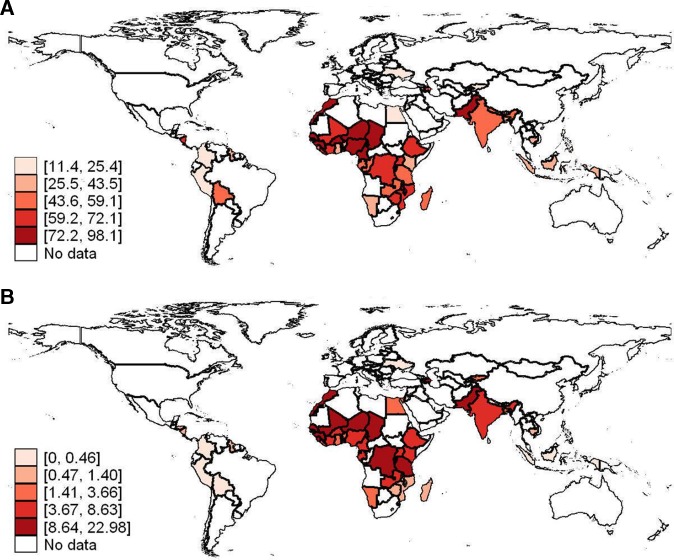
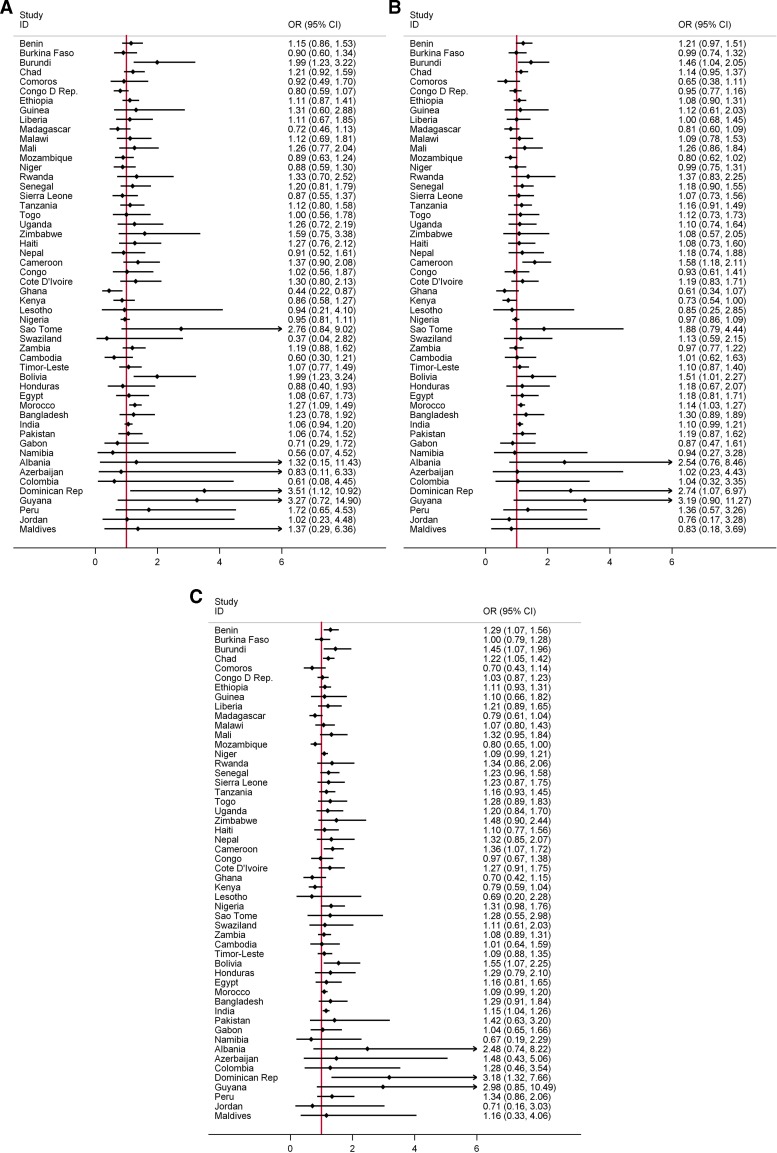
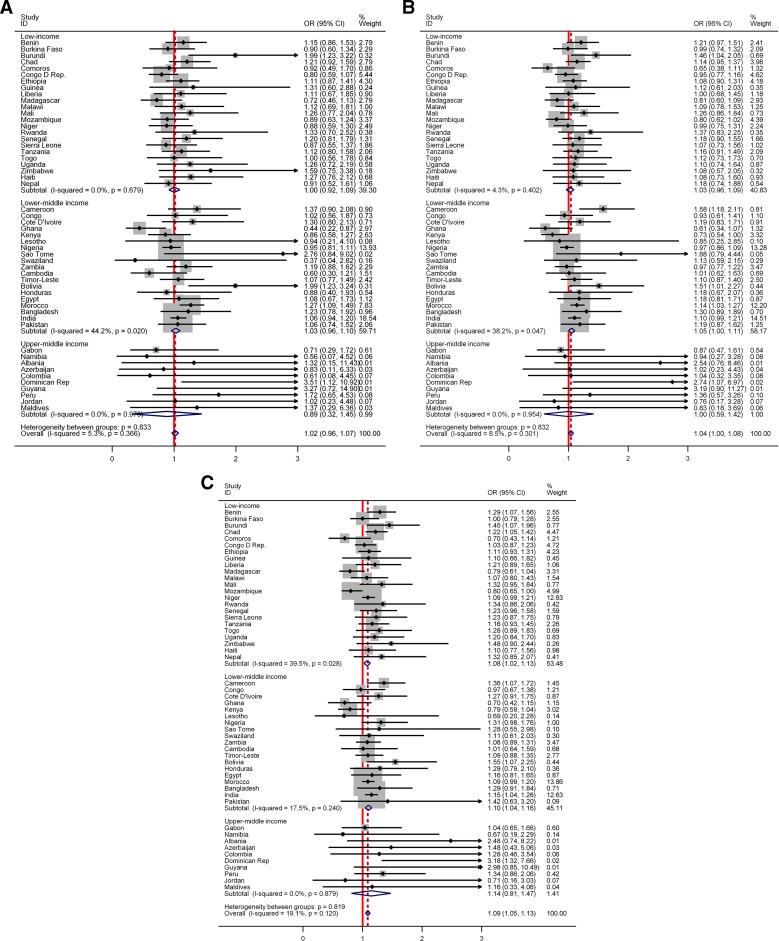
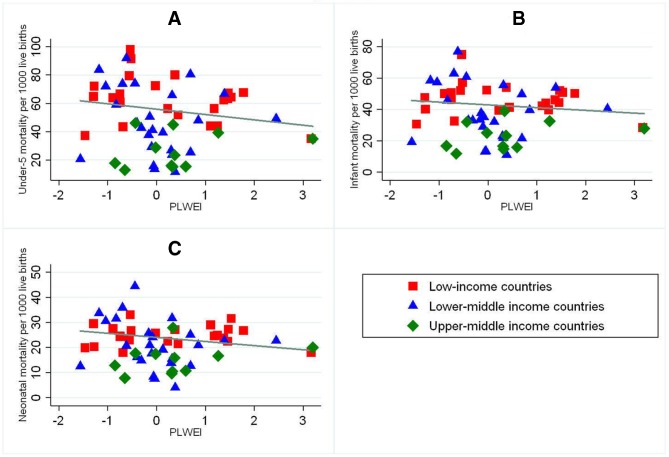
Results: The pooled neonatal mortality rate was 24 per 1000 live births. Infant and under-5 mortality rates were 43 and 55/1000 live births, respectively. In the pooled sample, 61.6% and 19.9% of women had autonomy regarding their healthcare and household decision-making, respectively, whereas 56.0% rejected domestic violence against women for any reason. IPD meta-analysis showed that children of women with low ILWEI had a higher risk of neonatal (OR: 1.18, 95% CI 1.14 to 1.22), infant (OR: 1.12, 95% CI 1.08 to 1.17) and under-5 (OR: 1.12, 95% CI 1.07 to 1.18) mortality compared with children of high ILWEI. Similar relationships were found across most of the regions as well as between PLWEI and all the three outcomes.
Conclusions: Women's empowerment at individual and population levels is associated with neonatal, infant and under-5 mortality in LMICs. Our study underscores the importance of women's empowerment in accelerating progress towards the attainment of the SDG targets for child survival in LMICs. Multi-sectoral and concerted efforts are necessary to eliminate preventable child mortality in these countries.
Keywords: infant mortality; low/middle-income countries; meta-analysis; neonatal mortality; under-5 mortality; women’s empowerment.
© Author(s) (or their employer(s)) 2020. Re-use permitted under CC BY-NC. No commercial re-use. See rights and permissions. Published by BMJ.
Conflict of interest statement
Competing interests: None declared.
Figures
References
-
- Bhutta ZA, Black RE, maternal G. Newborn, and child health—so near and yet so far. New Eng J Med 2013;369:2226–35. - PubMed
-
- Millennium development goals report, 2015. Available: http://www.un.org/millenniumgoals/2015_MDG_Report/pdf/MDG%202015%20rev%2... [Accessed 23 Jan 2017].
-
- You D, Hug L, Ejdemyr S, et al. . Global, regional, and national levels and trends in under-5 mortality between 1990 and 2015, with scenario-based projections to 2030: a systematic analysis by the un Inter-agency group for child mortality estimation. The Lancet 2015;386:2275–86. 10.1016/S0140-6736(15)00120-8 - DOI - PubMed
Publication types
MeSH terms
LinkOut - more resources
Full Text Sources