Large and persistent subnational inequalities in reproductive, maternal, newborn and child health intervention coverage in sub-Saharan Africa
- PMID: 32133183
- PMCID: PMC7042572
- DOI: 10.1136/bmjgh-2019-002232
Large and persistent subnational inequalities in reproductive, maternal, newborn and child health intervention coverage in sub-Saharan Africa
Abstract
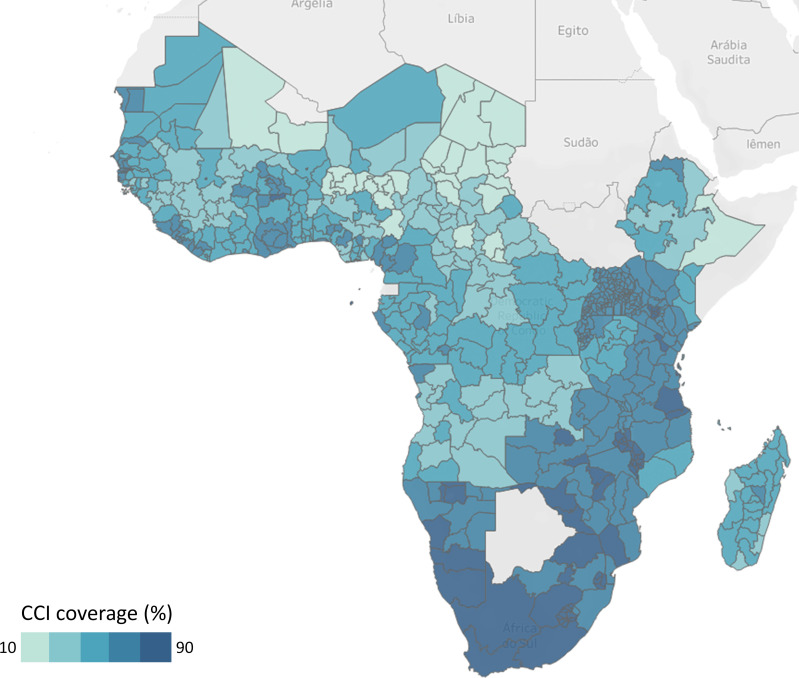
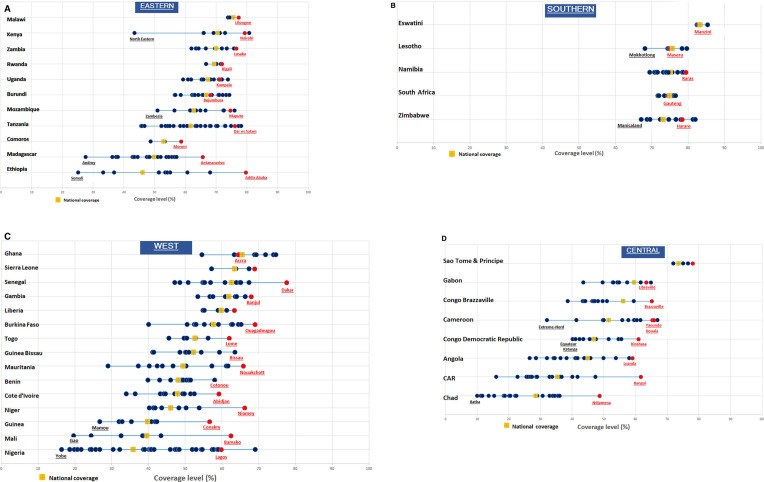
Subnational inequalities have received limited attention in the monitoring of progress towards national and global health targets during the past two decades. Yet, such data are often a critical basis for health planning and monitoring in countries, in support of efforts to reach all with essential interventions. Household surveys provide a rich basis for interventions coverage indicators on reproductive, maternal, newborn and child health (RMNCH) at the country first administrative level (regions or provinces). In this paper, we show the large subnational inequalities that exist in RMNCH coverage within 39 countries in sub-Saharan Africa, using a composite coverage index which has been used extensively by Countdown to 2030 for Women's, Children's and Adolescent's Health. The analyses show the wide range of subnational inequality patterns such as low overall national coverage with very large top inequality involving the capital city, intermediate national coverage with bottom inequality in disadvantaged regions, and high coverage in all regions with little inequality. Even though nearly half of the 34 countries with surveys around 2004 and again around 2015 appear to have been successful in reducing subnational inequalities in RMNCH coverage, the general picture shows persistence of large inequalities between subnational units within many countries. Poor governance and conflict settings were identified as potential contributing factors. Major efforts to reduce within-country inequalities are required to reach all women and children with essential interventions.
Keywords: child health; maternal health.
© Author(s) (or their employer(s)) 2020. Re-use permitted under CC BY-NC. No commercial re-use. See rights and permissions. Published by BMJ.
Conflict of interest statement
Competing interests: None declared.
Figures

References
-
- Ki-Moon B. The Millennium Development Goals Report 2015 : Way C, United nations Pubns. New York: United Nations, 2015.
-
- You D, New J, Wardlaw T. Levels and trends in child mortality. Report 2012. Estimates developed by the UN Inter-agency Group for Child Mortality Estimation 2012.
-
- The DHS Program website Funded by USAID. ICF. Avalaible datasets 2019 Available: http://www.dhsprogram.com [Accessed 19 Oct 2019].
-
- UNICEF Multiple indicator cluster surveys. MICS datasets 2019 Available: https://mics.unicef.org/ [Accessed 19 Oct 2019].
Publication types
MeSH terms
Grants and funding
LinkOut - more resources
Full Text Sources
Medical
Miscellaneous