


Fatty Acid Metabolism, Bone Marrow Adipocytes, and AML
- PMID: 32133293
- PMCID: PMC7040225
- DOI: 10.3389/fonc.2020.00155
Fatty Acid Metabolism, Bone Marrow Adipocytes, and AML
Abstract
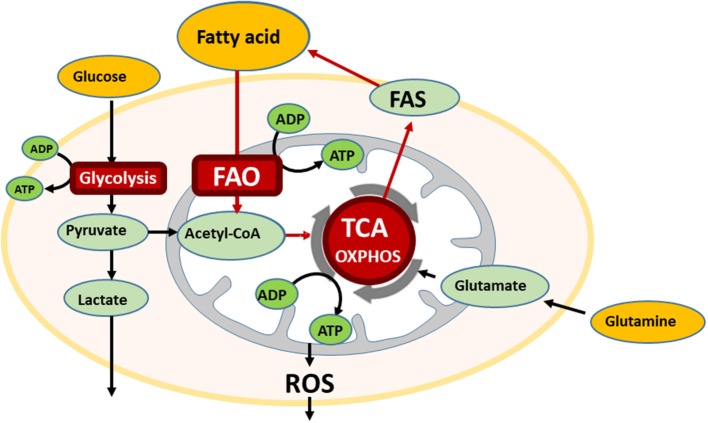
Acute myeloid leukemia (AML) cells modulate their metabolic state continuously as a result of bone marrow (BM) microenvironment stimuli and/or nutrient availability. Adipocytes are prevalent in the BM stroma and increase in number with age. AML in elderly patients induces remodeling and lipolysis of BM adipocytes, which may promote AML cell survival through metabolic activation of fatty acid oxidation (FAO). FAO reactions generate acetyl-CoA from fatty acids under aerobic conditions and, under certain conditions, it can cause uncoupling of mitochondrial oxidative phosphorylation. Recent experimental evidence indicates that FAO is associated with quiescence and drug-resistance in leukemia stem cells. In this review, we highlight recent progress in our understanding of fatty acid metabolism in AML cells in the adipocyte-rich BM microenvironment, and discuss the therapeutic potential of combinatorial regimens with various FAO inhibitors, which target metabolic vulnerabilities of BM-resident, chemoresistant leukemia cells.
Keywords: adipocyte; bone marrow microenvironment; fatty acid metabolism; fatty acid oxidation; therapy resistance.
Copyright © 2020 Tabe, Konopleva and Andreeff.
Figures

References
Publication types
Grants and funding
LinkOut - more resources
Full Text Sources
Medical
