


Thanatogenomic Investigation of the Hydroxymethylome and Mitochondrial Genome of Cadaveric Cardiomyocytes: Proposal for a Proof-of-Concept Study
- PMID: 32134392
- PMCID: PMC7082735
- DOI: 10.2196/17241
Thanatogenomic Investigation of the Hydroxymethylome and Mitochondrial Genome of Cadaveric Cardiomyocytes: Proposal for a Proof-of-Concept Study
Abstract
Background: Cardiovascular disease (CVD) remains the leading cause of death in the United Arab Emirates (UAE). One of the common CVDs is hypertrophic cardiomyopathy (HCM). Recent studies conducted in heart cells of mice have shown that this condition involves a chemical modification called hydroxymethylation of the DNA of heart cells.
Objective: Objectives of the proposed research are to profile the distribution of 5-hydroxymethylation in the cardiomyocyte (CMC) genome of cadaveric cardiac tissue and cardiac biopsy specimens; to compare the hydroxymethylome of cadaveric CMCs with that of cardiac biopsy specimens from HCM patients and/or cardiac transplant patients (control) undergoing cardiac catheterization; to histologically appraise sarcomere distribution and mitochondrial morphology of CMCs in the presence of HCM; to correlate the mitochondrial genome with the HCM phenotype; and to integrate anatomy with biochemistry and genetics into the instructional design of HCM in the core medical curriculum at Mohammed Bin Rashid University of Medicine and Health Sciences (MBRU).
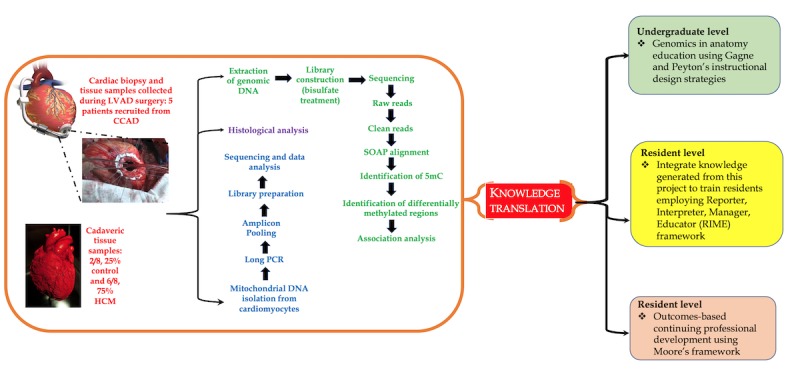
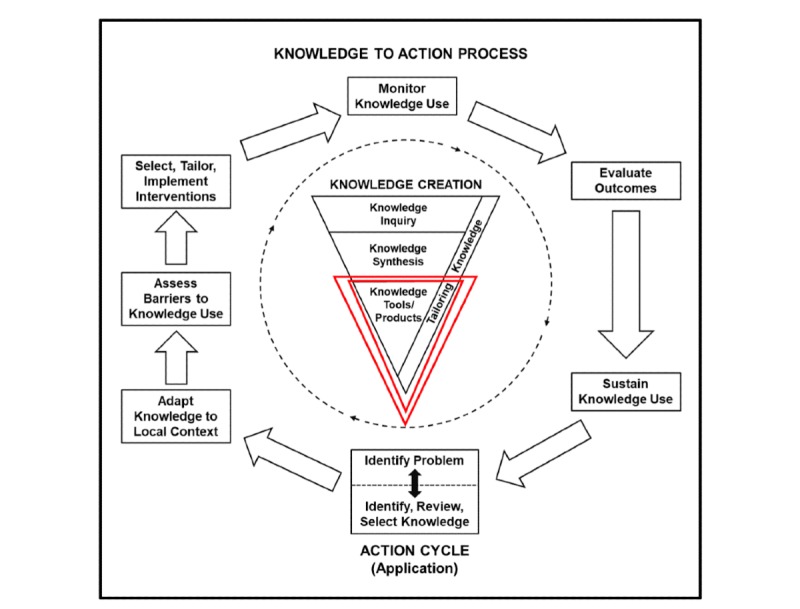
Methods: Normal and hypertrophic heart specimens will be obtained from 8 whole-body cadavers (2/8, 25% control and 6/8, 75% HCM). Myocardial biopsy specimens will be obtained from cardiothoracic and transplant units at the Cleveland Clinic in Abu Dhabi, UAE. As this is a proof-of-concept study, we plan to recruit 5 patients with HCM, where HCM has been diagnosed according to the guidelines of the 2014 European Society of Cardiology Guidelines. Patients with valvular heart disease, history of myocarditis, regular alcohol consumption, or cardiotoxic chemotherapy will be excluded. The control biopsy specimens will be obtained from patients who had received heart transplants. Three investigational approaches will then be employed: (1) gross anatomical evaluation, (2) histological analysis, and (3) profiling and analysis of the hydroxymethylome. These investigations will be pursued with minor modifications, if required, to the standard protocols and in accordance with institutional policy. The objective associated with the education of health professionals will be addressed through a strategy based on Graham's knowledge translation model.
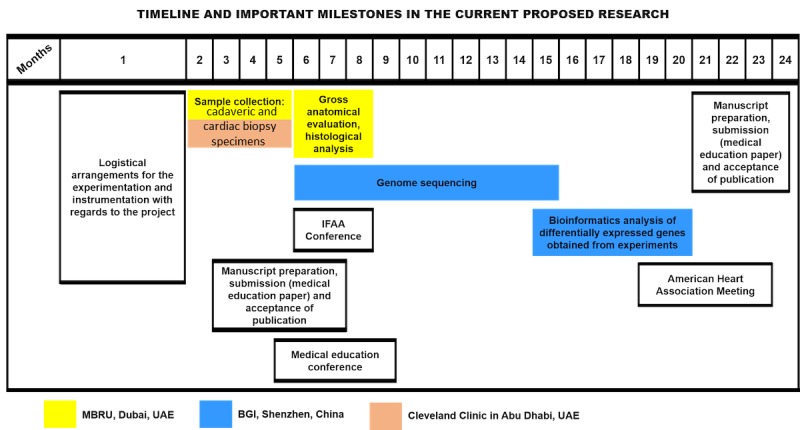
Results: This study is at the protocol-development stage. The validated questionnaires have been identified in relation to the objectives. The MBRU and the Cleveland Clinic Abu Dhabi Institutional Review Board (IRB) are reviewing this study. Further clarification and information can be obtained from the MBRU IRB. There is funding in place for this study (MBRU-CM-RG2019-08). Currently, we are in the process of standardizing the protocols with respect to the various molecular techniques to be employed during the course of the study. The total duration of the proposed research is 24 months, with a provision for 6 months of a no-cost extension.
Conclusions: The spectrum of CVDs has recently received significant focus from the public health sector in the UAE. HCM is a common familial heart disease, contributing to the sudden increase in the mortality rate of young Emiratis in the UAE. Incorporating artificial intelligence into the identification of epigenetic risk factors associated with HCM will promote accurate diagnosis and lead to the development of improved management plans, hence, positive patient outcomes. Furthermore, integration of these findings into the instructional design of undergraduate, postgraduate, and continuous professional development medical curricula will further contribute to the body of knowledge regarding HCM.
International registered report identifier (irrid): PRR1-10.2196/17241.
Keywords: epigenomics; hypertrophic cardiomyopathy; mitochondrial genome; undergraduate medical education.
©Nerissa Naidoo, Gurjyot Bajwa, Ruthwik Duvuru, Yajnavalka Banerjee. Originally published in JMIR Research Protocols (http://www.researchprotocols.org), 05.03.2020.
Conflict of interest statement
Conflicts of Interest: None declared.
Figures
References
-
- Mokdad AH, Forouzanfar MH, Daoud F, El Bcheraoui C, Moradi-Lakeh M, Khalil I, Afshin A, Tuffaha M, Charara R, Barber RM, Wagner J, Cercy K, Kravitz H, Coates MM, Robinson M, Estep K, Steiner C, Jaber S, Mokdad AA, O'Rourke KF, Chew A, Kim P, El Razek MM, Abdalla Sa, Abd-Allah F, Abraham JP, Abu-Raddad LJ, Abu-Rmeileh NM, Al-Nehmi AA, Akanda AS, Al Ahmadi H, Al Khabouri MJ, Al Lami FH, Al Rayess ZA, Alasfoor D, AlBuhairan FS, Aldhahri SF, Alghnam S, Alhabib S, Al-Hamad N, Ali R, Ali SD, Alkhateeb M, AlMazroa MA, Alomari MA, Al-Raddadi R, Alsharif U, Al-Sheyab N, Alsowaidi S, Al-Thani M, Altirkawi KA, Amare AT, Amini H, Ammar W, Anwari P, Asayesh H, Asghar R, Assabri AM, Assadi R, Bacha U, Badawi A, Bakfalouni T, Basulaiman MO, Bazargan-Hejazi S, Bedi N, Bhakta AR, Bhutta ZA, Bin Abdulhak AA, Boufous S, Bourne RR, Danawi H, Das J, Deribew A, Ding EL, Durrani AM, Elshrek Y, Ibrahim ME, Eshrati B, Esteghamati A, Faghmous IA, Farzadfar F, Feigl AB, Fereshtehnejad SM, Filip I, Fischer F, Gankpé FG, Ginawi I, Gishu MD, Gupta R, Habash RM, Hafezi-Nejad N, Hamadeh RR, Hamdouni H, Hamidi S, Harb HL, Hassanvand MS, Hedayati MT, Heydarpour P, Hsairi M, Husseini A, Jahanmehr N, Jha V, Jonas JB, Karam NE, Kasaeian A, Kassa NA, Kaul A, Khader Y, Khalifa SE, Khan EA, Khan G, Khoja T, Khosravi A, Kinfu Y, Defo BK, Balaji AL, Lunevicius R, Obermeyer CM, Malekzadeh R, Mansourian M, Marcenes W, Farid HM, Mehari A, Mehio-Sibai A, Memish ZA, Mensah GA, Mohammad KA, Nahas Z, Nasher JT, Nawaz H, Nejjari C, Nisar MI, Omer SB, Parsaeian M, Peprah EK, Pervaiz A, Pourmalek F, Qato DM, Qorbani M, Radfar A, Rafay A, Rahimi K, Rahimi-Movaghar V, Rahman SU, Rai RK, Rana SM, Rao SR, Refaat AH, Resnikoff S, Roshandel G, Saade G, Saeedi MY, Sahraian MA, Saleh S, Sanchez-Riera L, Satpathy M, Sepanlou SG, Setegn T, Shaheen A, Shahraz S, Sheikhbahaei S, Shishani K, Sliwa K, Tavakkoli M, Terkawi AS, Uthman OA, Westerman R, Younis MZ, El Sayed Zaki M, Zannad F, Roth GA, Wang H, Naghavi M, Vos T, Al Rabeeah AA, Lopez AD, Murray CJ. Health in times of uncertainty in the eastern Mediterranean region, 1990-2013: A systematic analysis for the Global Burden of Disease Study 2013. Lancet Glob Health. 2016 Oct;4(10):e704–e713. doi: 10.1016/S2214-109X(16)30168-1. https://linkinghub.elsevier.com/retrieve/pii/S2214-109X(16)30168-1 - DOI - PMC - PubMed
-
- Mokdad AH, Jaber S, Aziz MI, AlBuhairan F, AlGhaithi A, AlHamad NM, Al-Hooti SN, Al-Jasari A, AlMazroa MA, AlQasmi AM, Alsowaidi S, Asad M, Atkinson C, Badawi A, Bakfalouni T, Barkia A, Biryukov S, El Bcheraoui C, Daoud F, Forouzanfar MH, Gonzalez-Medina D, Hamadeh RR, Hsairi M, Hussein SS, Karam N, Khalifa SE, Khoja TA, Lami F, Leach-Kemon K, Memish ZA, Mokdad AA, Naghavi M, Nasher J, Qasem MB, Shuaib M, Al Thani AA, Al Thani MH, Zamakhshary M, Lopez AD, Murray CJ. The state of health in the Arab world, 1990-2010: An analysis of the burden of diseases, injuries, and risk factors. Lancet. 2014 Jan 25;383(9914):309–320. doi: 10.1016/S0140-6736(13)62189-3. - DOI - PubMed
-
- Al-Ashwal A, Alnouri F, Sabbour H, Al-Mahfouz A, Al-Sayed N, Razzaghy-Azar M, Al-Allaf F, Al-Waili K, Banerjee Y, Genest J, Santos R, Al-Rasadi K. Identification and treatment of patients with homozygous familial hypercholesterolaemia: Information and recommendations from a Middle East advisory panel. Curr Vasc Pharmacol. 2015;13(6):759–770. doi: 10.2174/1570161113666150827125040. http://europepmc.org/abstract/MED/26311574 - DOI - PMC - PubMed
-
- Blair I, Sharif AA. Population structure and the burden of disease in the United Arab Emirates. J Epidemiol Glob Health. 2012 Jun;2(2):61–71. doi: 10.1016/j.jegh.2012.04.002. https://linkinghub.elsevier.com/retrieve/pii/S2210-6006(12)00021-4 - DOI - PMC - PubMed
-
- Al Nowais S. The National. 2018. Mar 11, [2019-09-07]. UAE National Service recruits screened for heart conditions in drive to save lives https://www.thenational.ae/uae/uae-national-service-recruits-screened-fo....
LinkOut - more resources
Full Text Sources
Miscellaneous
