Review
. 2020 Mar 3;13(3):37.
doi: 10.3390/ph13030037.

Synthesis of Imidazole-Based Medicinal Molecules Utilizing the van Leusen Imidazole Synthesis

Affiliations
Review

Synthesis of Imidazole-Based Medicinal Molecules Utilizing the van Leusen Imidazole Synthesis

Xunan Zheng et al. Pharmaceuticals (Basel). .

Abstract

Imidazole and its derivatives are one of the most vital and universal heterocycles in medicinal chemistry. Owing to their special structural features, these compounds exhibit a widespread spectrum of significant pharmacological or biological activities, and are widely researched and applied by pharmaceutical companies for drug discovery. The van Leusen reaction based on tosylmethylisocyanides (TosMICs) is one of the most appropriate strategies to synthetize imidazole-based medicinal molecules, which has been increasingly developed on account of its advantages. In this review, we summarize the recent developments of the chemical synthesis and bioactivity of imidazole-containing medicinal small molecules, utilizing the van Leusen imidazole synthesis from 1977.

Keywords: TosMICs; imidazole; synthesis; van Leusen.


Conflict of interest statement

The authors declare no conflict of interest.

Figures

Scheme 1
Scheme 1
General van Leusen imidazole synthesis.
Scheme 2
Scheme 2
The first example of van Leusen imidazole synthesis.
Scheme 3
Scheme 3
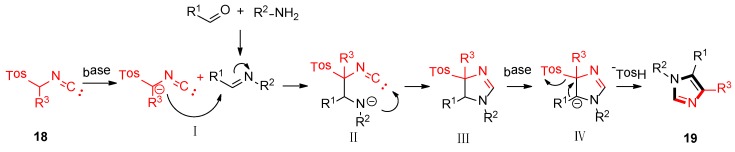
Mechanism of van Leusen imidazole synthesis.
Scheme 4
Scheme 4
The van Leusen methodology as the key step to synthesize glycosidase inhibitor 22.
Scheme 5
Scheme 5
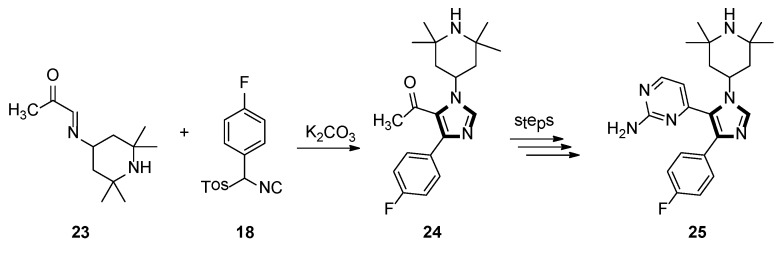
Synthesis of imidazole 25 exhibiting potent binding with p38 MAP kinase.
Scheme 6
Scheme 6
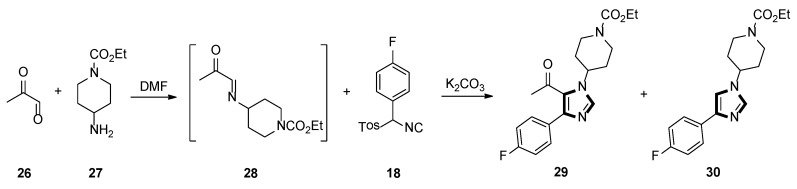
Synthesis of ketone 29 and 1,4-disubstituted imidazole 30.
Scheme 7
Scheme 7
Synthesis of the potential significant therapeutic agent 33.
Scheme 8
Scheme 8
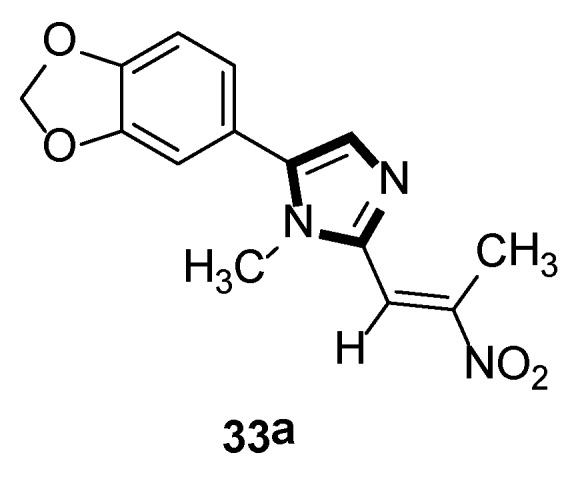
High in vitro leishmanicidal activity of compound 33a.
Scheme 9
Scheme 9
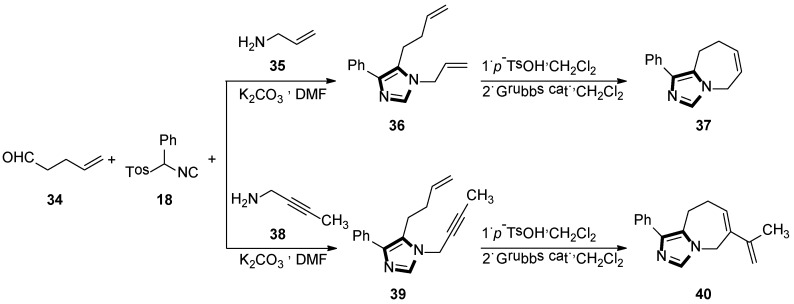
Synthesis of the fused bicyclic 37 and the fused imidazo azepine derivatives 40.

Scheme 10
Scheme 10
Synthesis of fused triazolo imidazoles 44.
Scheme 11
Scheme 11
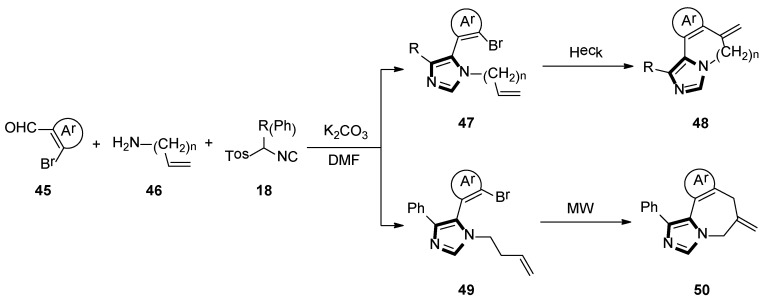
Synthesis of the fused imidazole rings 48 and 50.
Scheme 12
Scheme 12
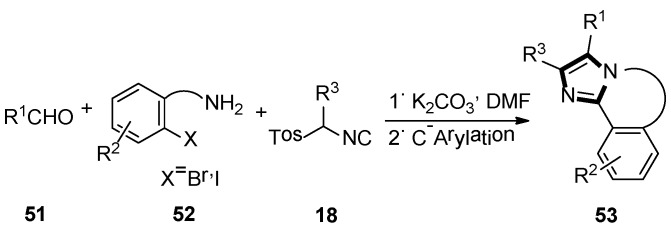
Synthesis of fused imidazole rings 53.
Scheme 13
Scheme 13
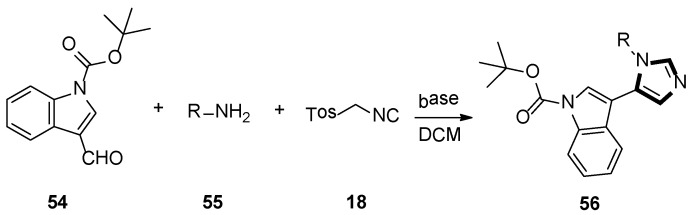
Synthesis of chemical probes 56.
Scheme 14
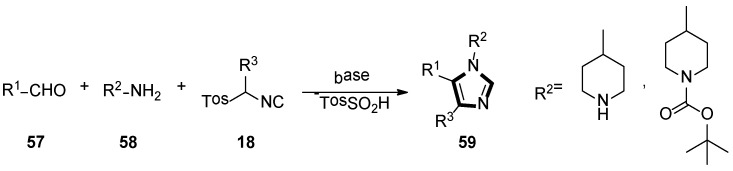
Scheme 14
Synthesis of potential aspartyl-protease inhibitors 59.
Scheme 15
Scheme 15
Synthesis of 1,5-disubstituted-4-methyl imidazoles 63.
Scheme 16
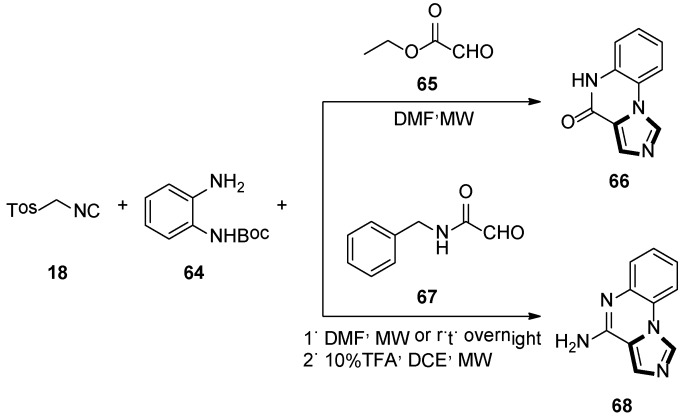
Scheme 16
Synthesis of biologically enticing imidazoquinoxaline 66 and 68.
Scheme 17
Scheme 17
Synthesis of potential IDO1 inhibitors 71.
Scheme 18
Scheme 18
Synthesis of N-fused ImBDs 75.
Scheme 19
Scheme 19
Synthesis of 5-HT7 receptor agonists 79.
Scheme 20
Scheme 20
Synthesis of 5-HT7 receptor low-basicity agonists 82.
Scheme 21
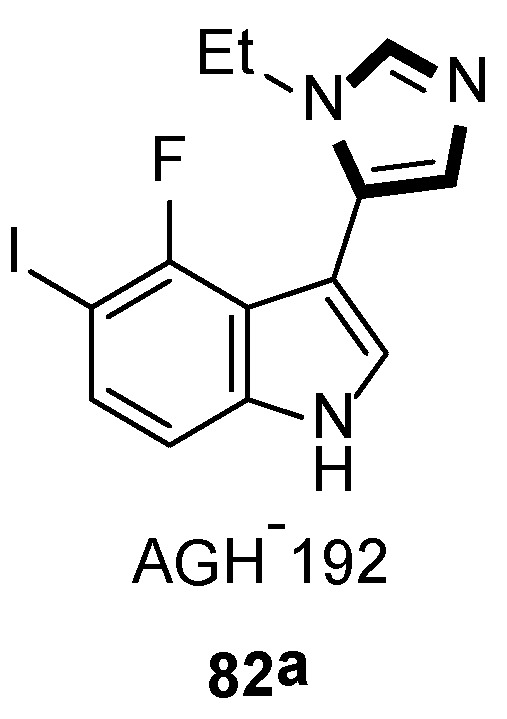
Scheme 21
A potential analgesic 82a.
Scheme 22
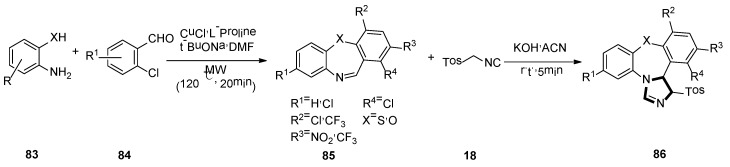
Scheme 22
Synthesis of highly functionalized molecules 86.
Scheme 23
Scheme 23
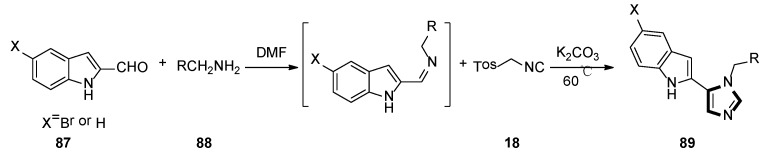
One-pot synthesis of potential IDO1 inhibitors 89.
Scheme 24
Scheme 24
One-pot synthesis of potential IDO1 inhibitors 92.
Scheme 25
Scheme 25
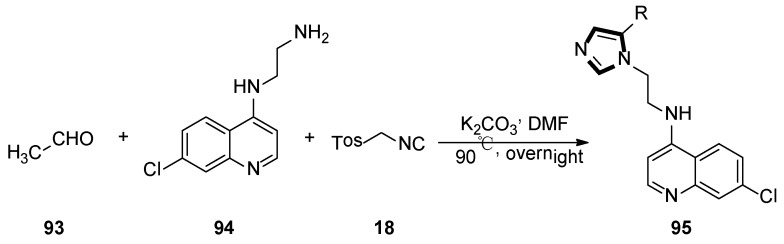
One-pot synthesis of antiplasmodial compounds 95.
Scheme 26
Scheme 26
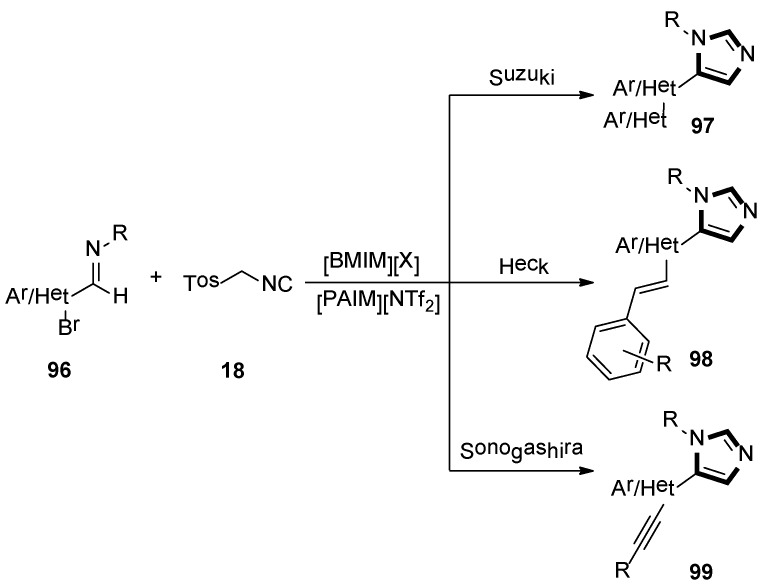
Synthesis of C5-substituted imidazoles 97, 98, and 99.
Scheme 27
Scheme 27
Synthesis of polysubstituted quinoline derivatives 103.
Scheme 28
Scheme 28
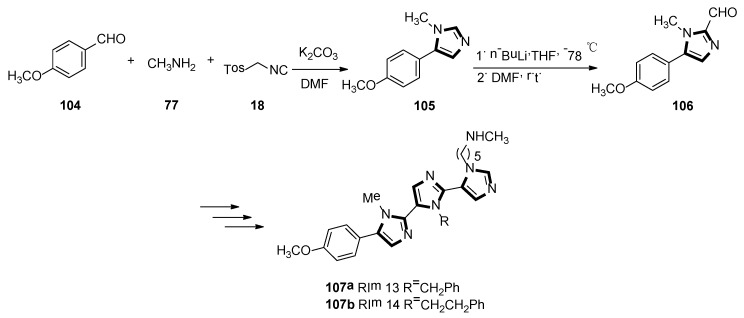
Synthesis of inhibitory activity molecules 107a and 107b.
Scheme 29
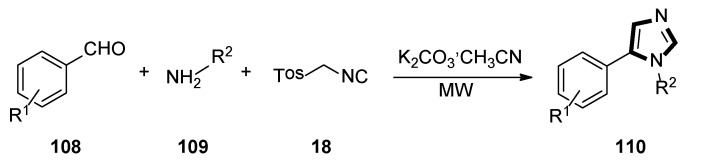
Scheme 29
Synthesis of a novel class of potential inhibitors of microbial pathogen 110.
Scheme 30
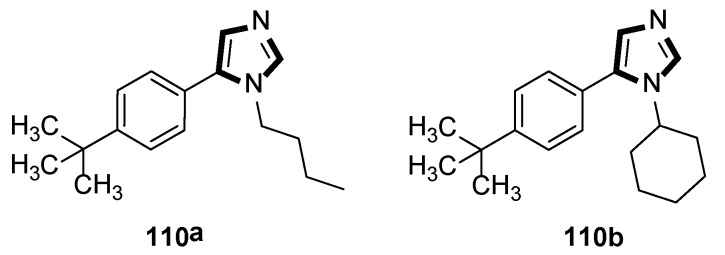
Scheme 30
Antimicrobial compounds 110a and 110b.
Scheme 31
Scheme 31
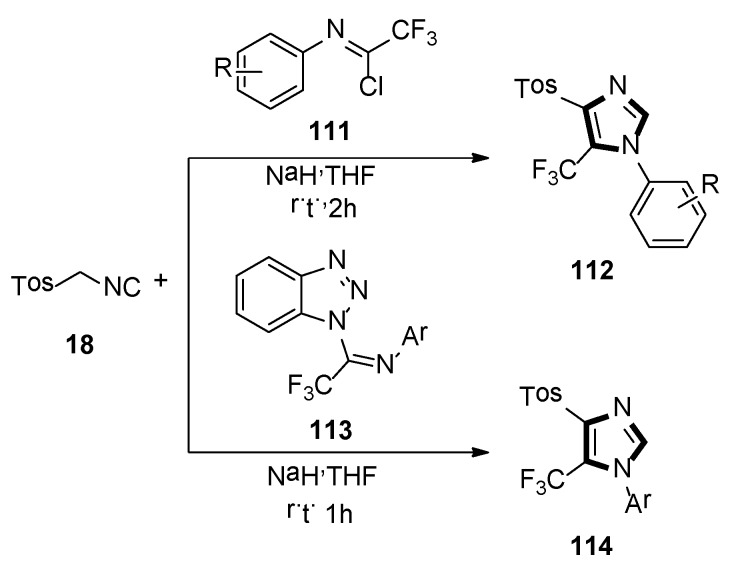
Synthesis of imidazoles 112 and 114 containing the trifluoromethyl group.
Scheme 32
Scheme 32
A possible mechanism for the synthesis of imidazole-containing trifluoromethyl group.
Scheme 33
Scheme 33
The first example of an unusual rearrangement in the van Leusen imidazole synthesis.
Scheme 34
Scheme 34
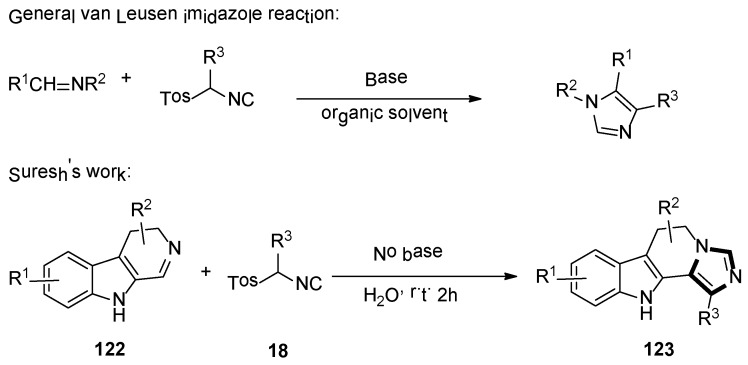
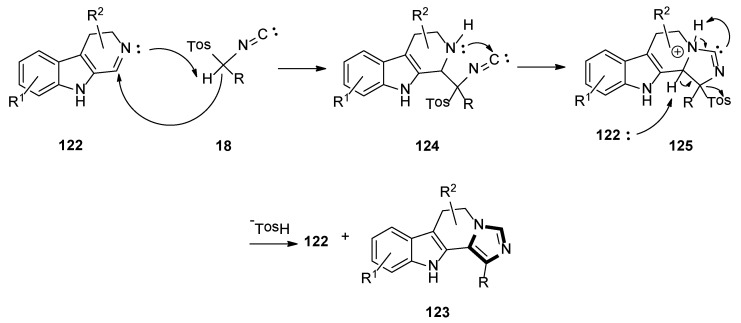
The base-free van Leusen imidazole synthesis of cyclic imines in water.
Scheme 35
Scheme 35
A possible mechanism for the base-free van Leusen imidazole synthesis.
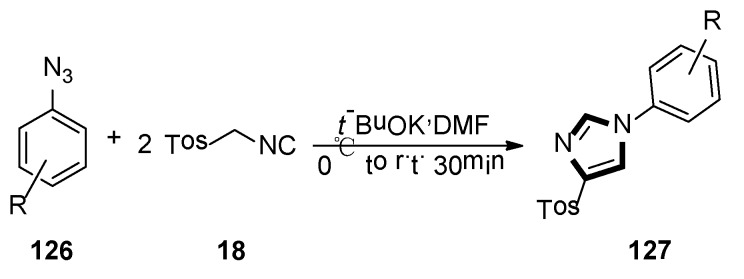
Scheme 36
Scheme 36
Synthesis of 127 by van Leusen imidazole synthesis with two TosMIC.
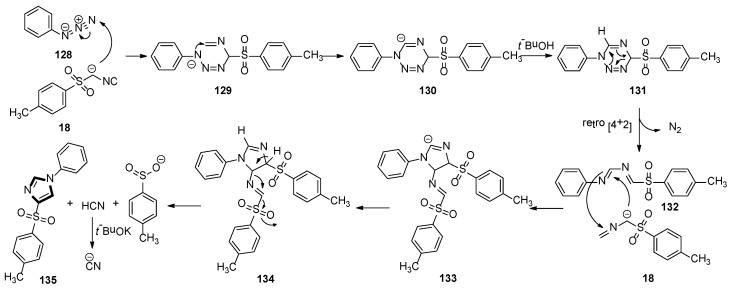
Scheme 37
Scheme 37
A plausible scenario for the van Leusen imidazole synthesis with two TosMIC molecules.
Scheme 38
Scheme 38
DNA-compatible van Leusen imidazole heterocyclization.

References

    1. Mishra R., Ganguly S. Imidazole as an anti-epileptic: An overview. Med. Chem. Res. 2012;21:3929–3939. doi: 10.1007/s00044-012-9972-6. - DOI
    1. Zhang L., Peng X.M., Damu G.L., Geng R.X., Zhou C.H. Comprehensive review in current developments of imidazole-based medicinal chemistry. Med. Res. Rev. 2014;34:340–437. doi: 10.1002/med.21290. - DOI - PubMed
    1. Gaba M., Mohan C. Development of drugs based on imidazole and benzimidazole bioactive heterocycles: Recent advances and future directions. Med. Chem. Res. 2015;25:173–210. doi: 10.1007/s00044-015-1495-5. - DOI
    1. Fan Y.L., Jin X.H., Huang Z.P., Yu H.F., Zeng Z.G., Gao T., Feng L.S. Recent advances of imidazole-containing derivatives as anti-tubercular agents. Eur. J. Med. Chem. 2018;150:347–365. doi: 10.1016/j.ejmech.2018.03.016. - DOI - PubMed
    1. Daraji D.G., Prajapati N.P., Patel H.D. Synthesis and applications of 2-substituted imidazole and its derivatives: A review. J. Heterocycl. Chem. 2019;56:2299–2317. doi: 10.1002/jhet.3641. - DOI

LinkOut - more resources