


Effects of chloromethylisothiazolinone/methylisothiazolinone (CMIT/MIT) on Th2/Th17-related immune modulation in an atopic dermatitis mouse model
- PMID: 32139713
- PMCID: PMC7058054
- DOI: 10.1038/s41598-020-60966-8
Effects of chloromethylisothiazolinone/methylisothiazolinone (CMIT/MIT) on Th2/Th17-related immune modulation in an atopic dermatitis mouse model
Abstract
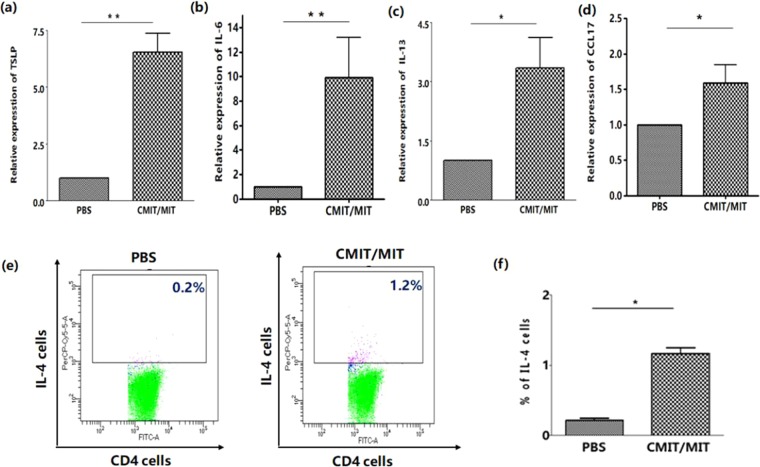
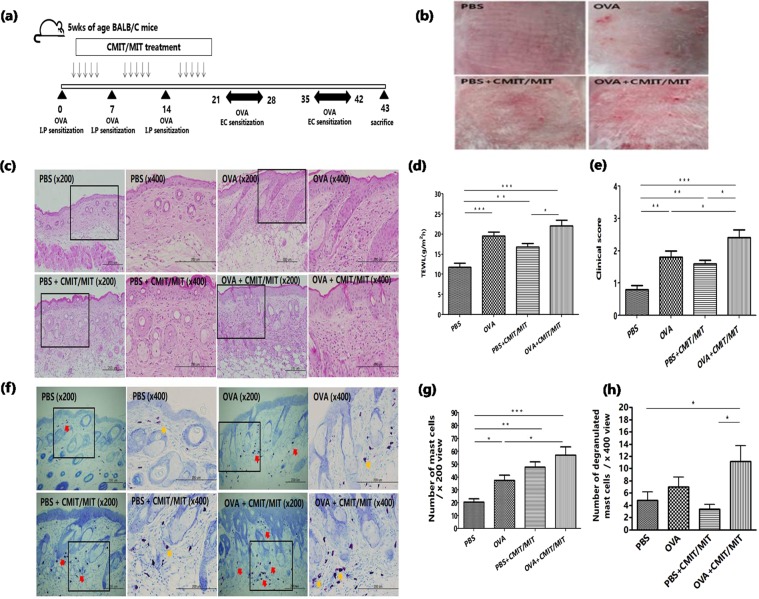
Exposure to chloromethylisothiazolinone/methylisothiazolinone (CMIT/MIT) has been associated with allergic contact dermatitis and occupational asthma. Despite this association however, no study has investigated the effects of CMIT/MIT exposure on the development of atopic dermatitis (AD). This study was conducted to investigate the influence of epicutaneous exposure to CMIT/MIT on AD in a mouse model and the underlying biological mechanisms. BALB/C mice were exposed to CMIT/MIT for 3 weeks and AD was developed using ovalbumin (OVA) epidermal sensitization. CMIT/MIT epicutaneous exposure in normal mice significantly enhanced AD-like phenotypes (e.g., transepidermal water loss, clinical score, total serum immunoglobulin E level and infiltration of inflammatory cells). In addition, CMIT/MIT exposure significantly augmented the mRNA expression level of T helper (Th) 2-related cytokines (thymic stromal lymphopoietin, interleukin (IL)-6 and IL-13), Th2 chemokine (chemokine (C-C motif) ligand 17) and the population of CD4+IL-4+ cells in the skin. Moreover, mice exposed to CMIT/MIT in the OVA challenge had greater AD-like phenotypes, higher IL-4 and IL-17A skin mRNA expression levels, and a larger population of CD4+IL-4+- and IL-17A+-producing cells in the skin-draining lymph nodes. Our current findings in a mouse model thus suggest that CMIT/MIT exposure may cause AD symptoms through the dysregulation of Th2/Th17-related immune responses.
Conflict of interest statement
The authors declare no competing interests.
Figures



References
-
- Cork Michael J., Robinson Darren A., Vasilopoulos Yiannis, Ferguson Adam, Moustafa Manar, MacGowan Alice, Duff Gordon W., Ward Simon J., Tazi-Ahnini Rachid. New perspectives on epidermal barrier dysfunction in atopic dermatitis: Gene–environment interactions. Journal of Allergy and Clinical Immunology. 2006;118(1):3–21. doi: 10.1016/j.jaci.2006.04.042. - DOI - PubMed
Publication types
MeSH terms
Substances
LinkOut - more resources
Full Text Sources
Research Materials
