


Exploring non-linear transition pathways in social-ecological systems
- PMID: 32139800
- PMCID: PMC7058029
- DOI: 10.1038/s41598-020-59713-w
Exploring non-linear transition pathways in social-ecological systems
Abstract
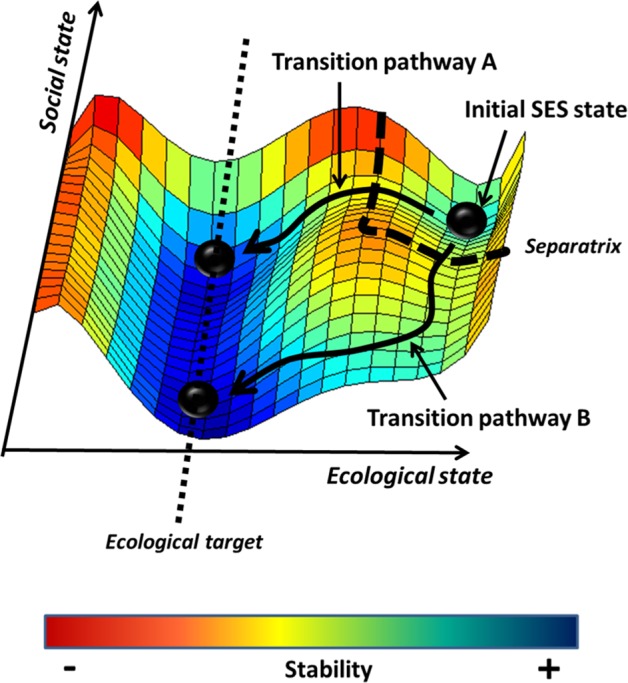
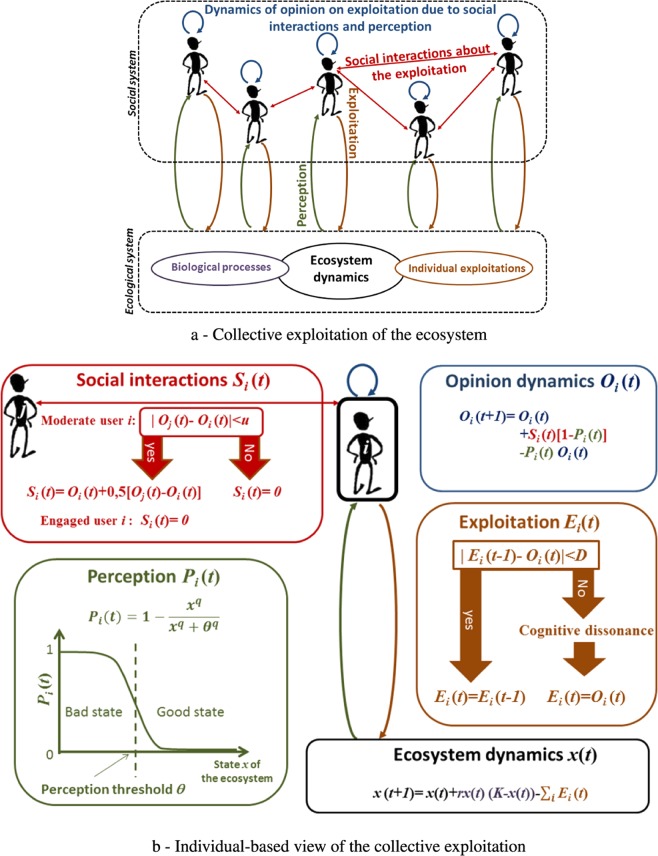
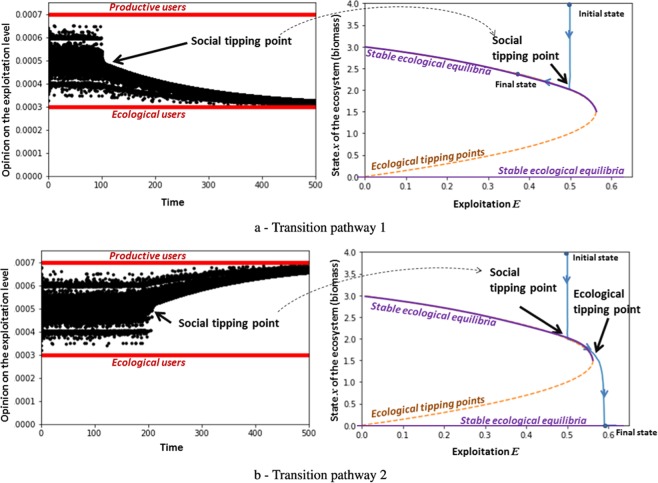
Tipping point dynamics are fundamental drivers for sustainable transition pathways of social-ecological systems (SES). Current research predominantly analyzes how crossing tipping points causes regime shifts, however, the analysis of potential transition pathways from these social and ecological tipping points is often overlooked. In this paper, we analyze transition pathways and the potential outcomes that these may lead to via a stylized model of a system composed of interacting agents exploiting resources and, by extension, the overall ecosystem. Interactions between the social and the ecological system are based on a perception-exploitation framework. We show that the presence of tipping points in SES may yield counter-intuitive social-ecological transition pathways. For example, the high perception of an alarming ecological state among agents can provide short-term ecological benefits, but can be less effective in the long term, compared to a low-perception condition. This work also highlights how understanding non-linear interactions is critical for defining suitable transition pathways of any SES.
Conflict of interest statement
The authors declare no competing interests.
Figures


References
-
- An, L. Modeling human decisions in coupled human and natural systems: Review of agent-based models. Ecological Modelling229, 25–36 (2012). Modeling Human Decisions.
-
- Pahl-Wostl, C. et al. Social learning and water resources management. Ecology and Society12 (2007).
Publication types
LinkOut - more resources
Full Text Sources
