


Biofortification, Crop Adoption and Health Information: Impact Pathways in Mozambique and Uganda
- PMID: 32139914
- PMCID: PMC7053385
- DOI: 10.1093/ajae/aay005
Biofortification, Crop Adoption and Health Information: Impact Pathways in Mozambique and Uganda
Abstract
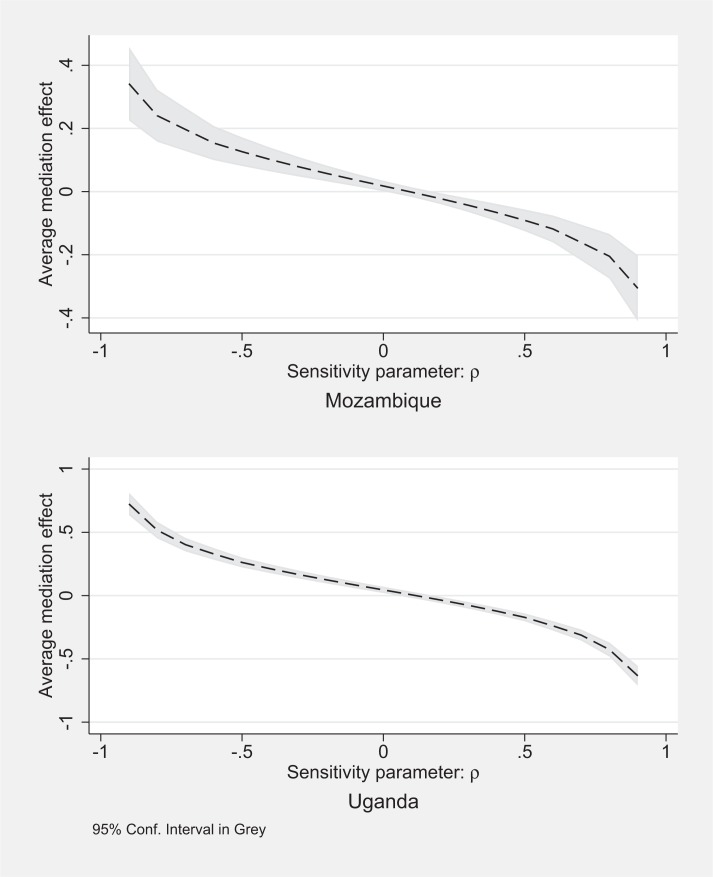
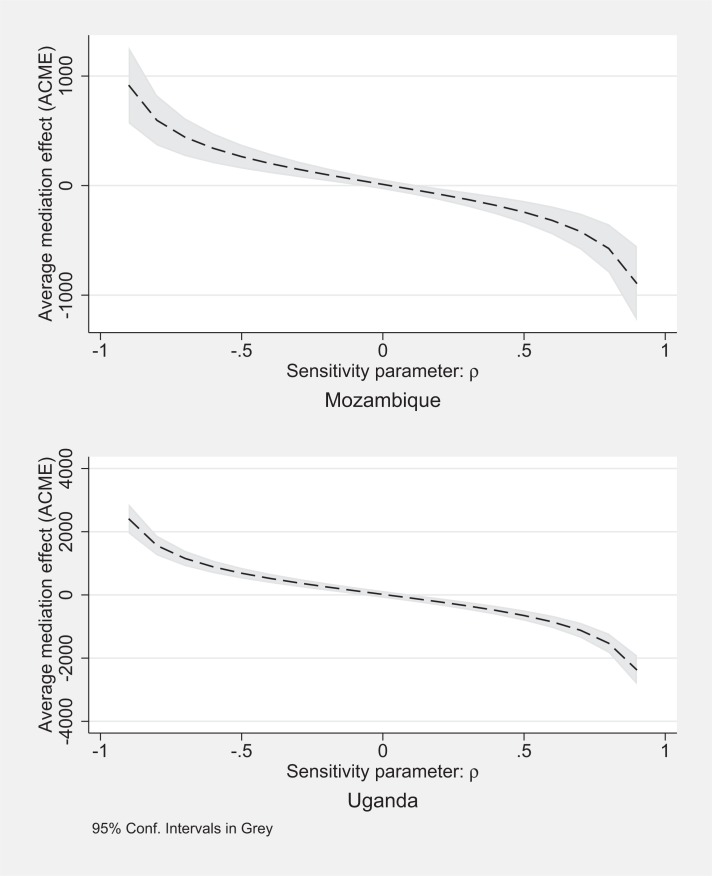
Biofortification is a promising strategy to combat micronutrient malnutrition by promoting the adoption of staple food crops bred to be dense sources of specific micronutrients. Research on biofortified orange-fleshed sweet potato (OFSP) has shown that the crop improves the vitamin A status of children who consume as little as 100 grams per day, and intensive promotion strategies improve dietary intakes of vitamin A in field experiments. However, little is known about OFSP adoption behavior, or about the role that nutrition information plays in promoting adoption and changing diet. We report evidence from similar randomized field experiments conducted in Mozambique and Uganda to promote OFSP. We further use causal mediation analysis to study impact pathways for adoption and dietary intakes. Despite different agronomic conditions and sweet potato cropping patterns across the two countries, the project had similar impacts, leading to adoption by 61% to 68% of farmers exposed to the project, and doubling vitamin A intakes in children. In both countries, two intervention models that differed in training intensity and cost had comparable impacts relative to the control group. The project increased the knowledge of key nutrition messages; however, added knowledge of nutrition messages appears to have minimally affected adoption, conditional on assumptions required for causal mediation analysis. Increased vitamin A intakes were largely explained by adoption and not by nutrition knowledge gained, though in Uganda a large share of impacts on vitamin A intakes cannot be explained by mediating variables. Similar impacts could likely have been achieved by reducing the scope of nutrition trainings. JEL codes: I15, O12, O13, Q12.
Keywords: Biofortification; Mozambique; Uganda; casual mediation analysis; randomized control trial; technology adoption.
© The Author(s) 2018.
Figures
References
-
- Aguayo V., and Baker S.. 2005. Vitamin A Deficiency and Child Survival in Sub-Saharan Africa: A Reappraisal of Challenges and Opportunities. Food and Nutrition Bulletin 26: 348–55. - PubMed
-
- Alderman H., Hoddinott J., and Kinsey B.. 2006. Long Term Consequences of Early Childhood Malnutrition. Oxford Economic Papers 58: 450–74.
-
- Almekinders C., and Hardon J.. 2006. Bringing Farmers Back into Breeding, Experiences with Participatory Plant Breeding and Challenges for Institutionalization. Agromisa Special 5.
-
- Arimond M., de Brauw A., Eozenou P., Gilligan D., Loechl C., and Meenakshi J.. 2009. Evaluating the Impact of Introducing β-Carotene-Rich Orange-Fleshed Sweet Potato (OFSP) Varieties in Uganda: A Report on the 2007 Baseline Survey. Washington DC: International Food Policy Research Institute.
-
- Arimond M., Loechl C., Gilligan D., and de Brauw A.. 2008. HarvestPlus Orange-Fleshed Sweet Potato (OFSP) Reaching End Users Project Mozambique Evaluation Baseline Survey Report. Washington DC: International Food Policy Research Institute.