Review
. 2020 Mar;10(3):399-413.
doi: 10.1016/j.apsb.2019.11.008. Epub 2019 Nov 14.

Selective phytochemicals targeting pancreatic stellate cells as new anti-fibrotic agents for chronic pancreatitis and pancreatic cancer

Affiliations
Review

Selective phytochemicals targeting pancreatic stellate cells as new anti-fibrotic agents for chronic pancreatitis and pancreatic cancer

Puvanesswaray Ramakrishnan et al. Acta Pharm Sin B. 2020 Mar.

Abstract

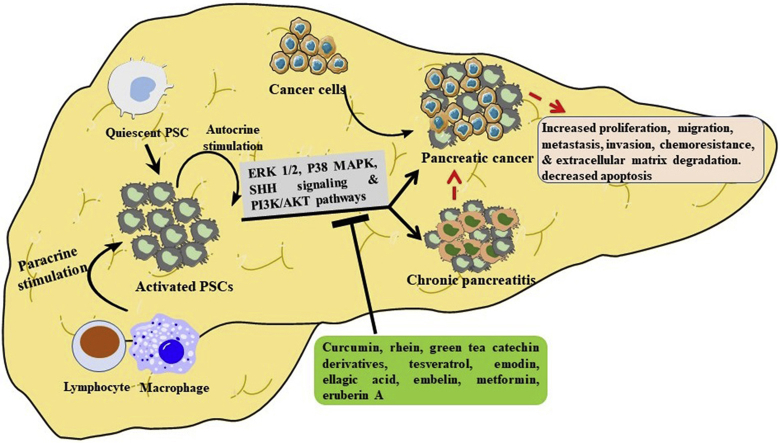
Activated pancreatic stellate cells (PSCs) have been widely accepted as a key precursor of excessive pancreatic fibrosis, which is a crucial hallmark of chronic pancreatitis (CP) and its formidable associated disease, pancreatic cancer (PC). Hence, anti-fibrotic therapy has been identified as a novel therapeutic strategy for treating CP and PC by targeting PSCs. Most of the anti-fibrotic agents have been limited to phase I/II clinical trials involving vitamin analogs, which are abundant in medicinal plants and have proved to be promising for clinical application. The use of phytomedicines, as new anti-fibrotic agents, has been applied to a variety of complementary and alternative approaches. The aim of this review was to present a focused update on the selective new potential anti-fibrotic agents, including curcumin, resveratrol, rhein, emodin, green tea catechin derivatives, metformin, eruberin A, and ellagic acid, in combating PSC in CP and PC models. It aimed to describe the mechanism(s) of the phytochemicals used, either alone or in combination, and the associated molecular targets. Most of them were tested in PC models with similar mechanism of actions, and curcumin was tested intensively. Future research may explore the issues of bioavailability, drug design, and nano-formulation, in order to achieve successful clinical outcomes with promising activity and tolerability.

Keywords: Anti-fibrotic; Chronic pancreatitis; Curcumin; Emodin; Green tea catechin; Pancreatic cancer; Pancreatic stellate cells; Phytochemicals; Resverastrol; Rhein.


Figures

Image 1
Graphical abstract
Figure 1
Figure 1
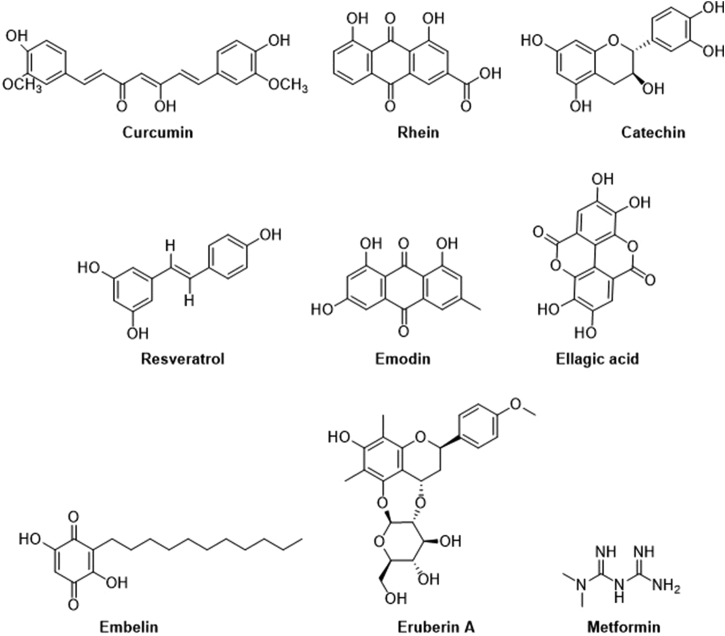
Chemical structures of selective phytochemicals that possess potent anti-fibrotic activity. The phytochemicals selected for this review include curcumin, rhein, green tea catechin (EGCG), resveratrol, emodin, ellagic acid, embelin, eruberin A and metformin.
Figure 2
Figure 2
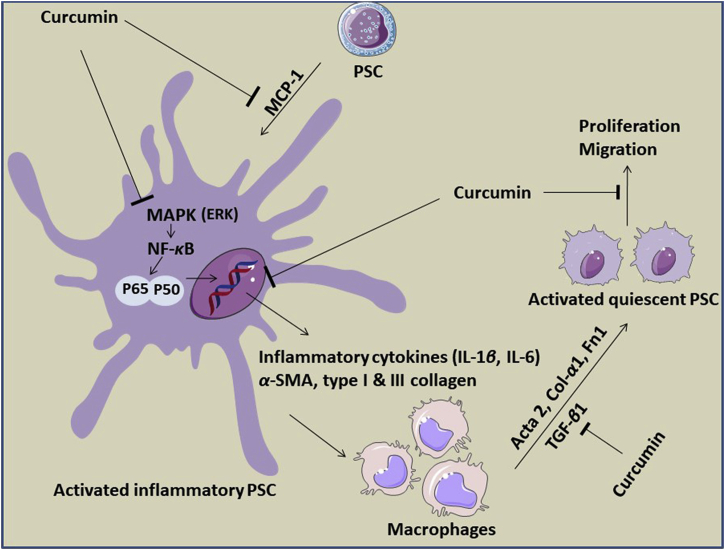
Proposed mechanisms involved in the anti-fibrotic activity of curcumin by inhibiting the activation of PSCs to acquire myofibroblast-like phenotypes. Curcumin attenuates the production of TNF-α-induced MCP-1. Besides, it can also significantly reduce the activation of MAPKs signaling, such as c-Jun N-terminal kinase (JNK), P38 MAPK and ERK, which are pivotal in stimulating the production of inflammatory cytokines and mediators. Additionally, curcumin further down-regulates NF-κB signaling pathway by reducing its subunit P65. Apart from these, curcumin can notably reduce the gene expression of α-SMA, IL-1β, Col I and Col III as well as diminish PSCs activation by downregulating the mRNA expression levels of several fibrogenic mediators, including Acta 2, Col-α1 and FN1, under the stimulating effects of TGF-β.
Figure 3
Figure 3
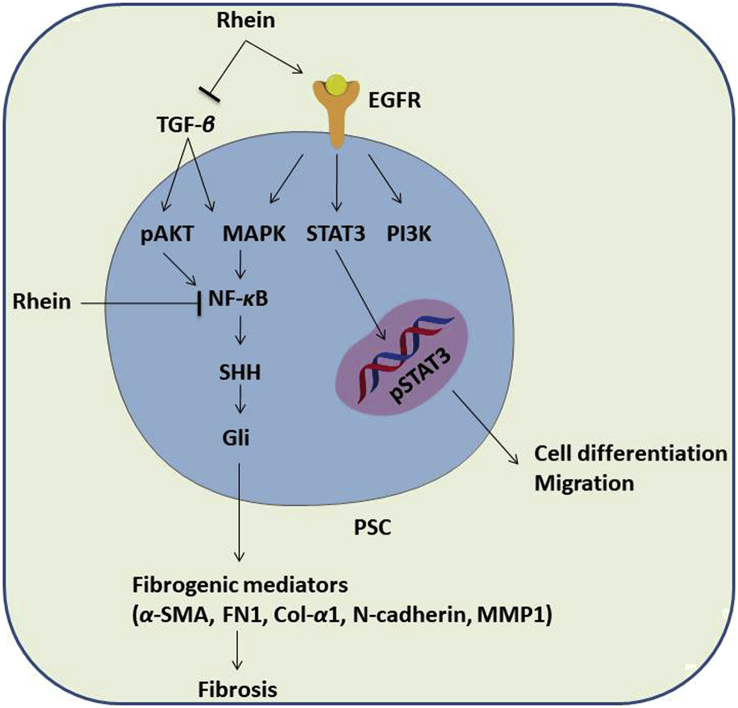
Proposed mechanisms involved in the anti-fibrotic activity of rhein. Rhein suppresses the activity of PSCs by targeting several signaling pathways and regulating fibrotic and tumorigenic markers. It can inhibit PSCs proliferation and migrations by decreasing the STAT3 pathway-induced signaling, which plays an important role in malignant transformation and tumor progression. Furthermore, rhein suppresses NF-κB signaling pathway by reducing its subunit P65. In additional, rhein can inactivate PSCs by attenuating various fibrotic and tumorigenic markers, such as α-SMA, fibronectin, type I collagen, N-cadherin and MMPs by modulating both SHH and AKT signaling pathways. With these, rhein plays a pivotal role in the process of pancreatic fibrosis, and PSCs cell proliferation and migration.
Figure 4
Figure 4
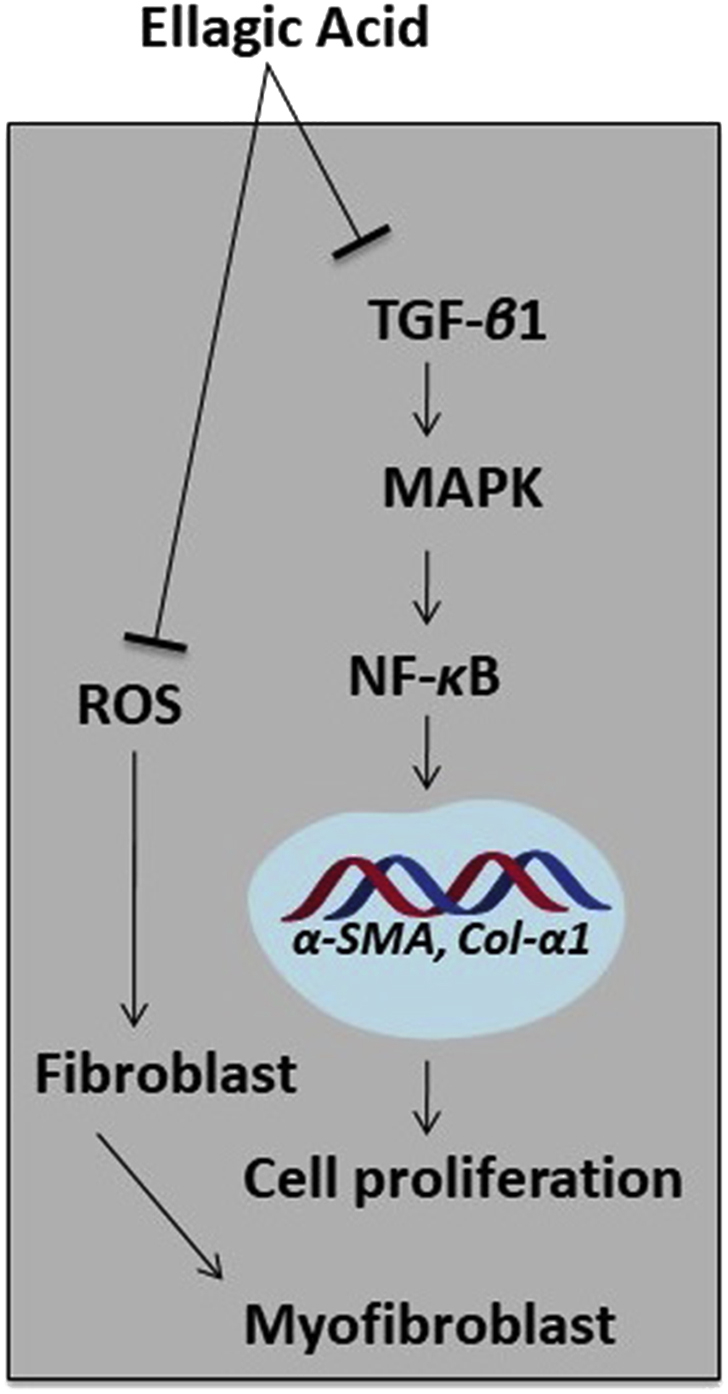
Proposed mechanisms involved in the anti-fibrotic activity of ellagic acid. Ellagic acid can reduce the myeloperoxidase activity and collagen content. Moreover, it attenuates the expression of TGF-β1 as well as modulates its downstream signaling pathway. The amount of α-SMA and macrophages monocytes (ED)-positive cells is decreased after treating with ellagic acid, and it inhibits ROS production that is stimulated by TNF-β1 and PDGF. Other than these, ellagic acid can downregulate α-SMA and collagen genes (α1(I) procollagen and α1(III) procollagen). In PC cells, ellagic acid can decrease the NF-κB transcriptional activity and stimulate apoptosis and reduce cell proliferation.
Figure 5
Figure 5
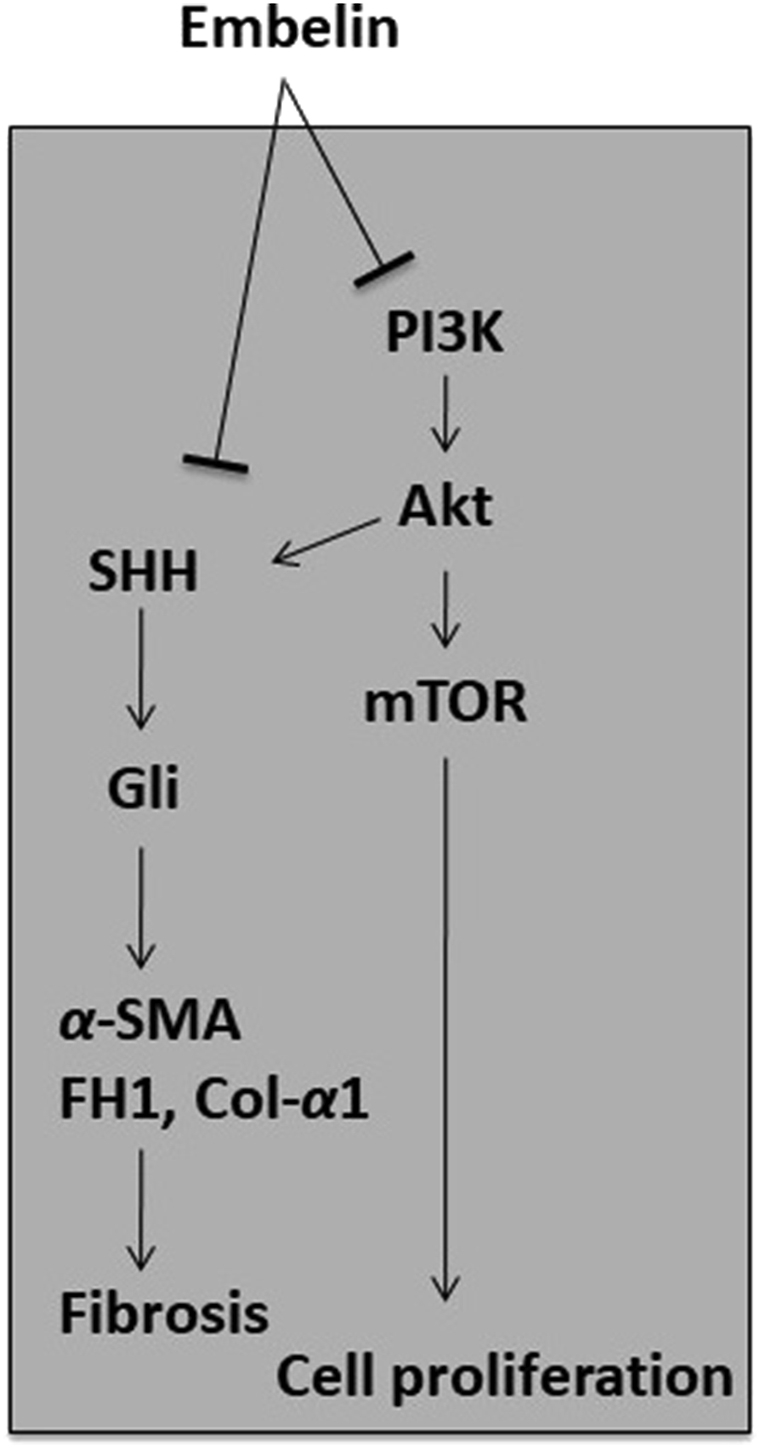
Proposed mechanisms involved in the anti-fibrotic activity of embelin. The anti-fibrotic activity of embelin is thus far reported in PC model, where it can inhibit PSC survival in a dose-dependent manner. Embelin down-regulated the SHH signaling pathway and consequently, the expression of fibrogenic mediators, such as α-SMA, fibronectin, type I collagen is decreased. This suggests that embelin able to alleviate the development of fibrosis.

References

    1. Bynigeri R.R., Jakkampudi A., Jangala R., Subramanyam C., Sasikala M., Rao G.V. Pancreatic stellate cell: Pandora's box for pancreatic disease biology. World J Gastroenterol. 2017;23:382–405. - PMC - PubMed
    1. Masamune A., Watanabe T., Kikuta K., Shimosegawa T. Roles of pancreatic stellate cells in pancreatic inflammation and fibrosis. Clin Gastroenterol Hepatol. 2009;7:S48–S54. - PubMed
    1. Talukdar R., Tandon R.K. Pancreatic stellate cells: new target in the treatment of chronic pancreatitis. J Gastroenterol Hepatol. 2008;23:34–41. - PubMed
    1. Dunér S., Lopatko Lindman J., Ansari D., Gundewar C., Andersson R. Pancreatic cancer: the role of pancreatic stellate cells in tumor progression. Pancreatology. 2011;10:673–681. - PubMed
    1. Luttenberger T., Schmid-Kotsas A., Menke A., Siech M., Beger H., Adler G. Platelet-derived growth factors stimulate proliferation and extracellular matrix synthesis of pancreatic stellate cells: implications in pathogenesis of pancreas fibrosis. Lab Invest. 2000;80:47–55. - PubMed