


A systematic strategy for screening therapeutic constituents of Schisandra chinensis (Turcz .) Baill infiltrated blood-brain barrier oriented in lesions using ethanol and water extracts: a novel perspective for exploring chemical material basis of herb medicines
- PMID: 32140399
- PMCID: PMC7049611
- DOI: 10.1016/j.apsb.2019.10.008
A systematic strategy for screening therapeutic constituents of Schisandra chinensis (Turcz .) Baill infiltrated blood-brain barrier oriented in lesions using ethanol and water extracts: a novel perspective for exploring chemical material basis of herb medicines
Abstract
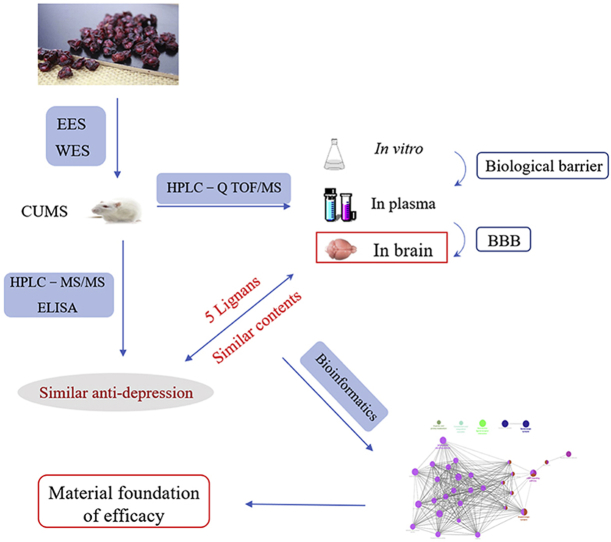
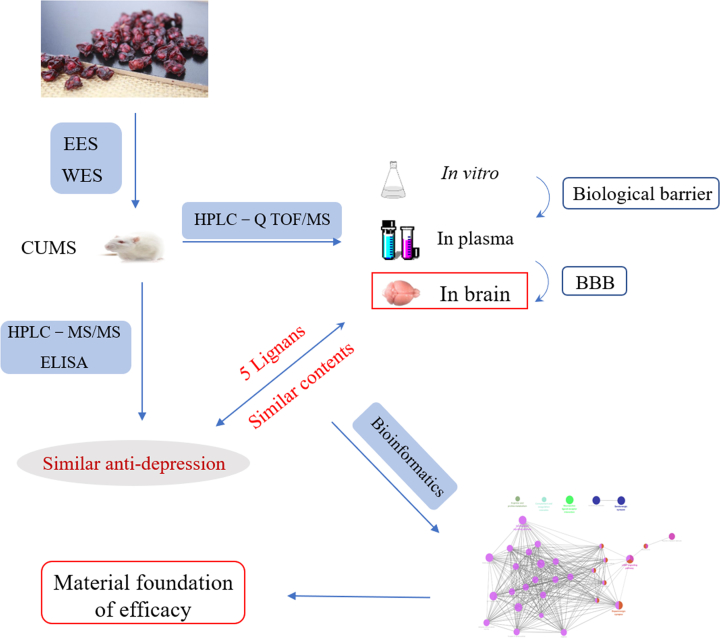
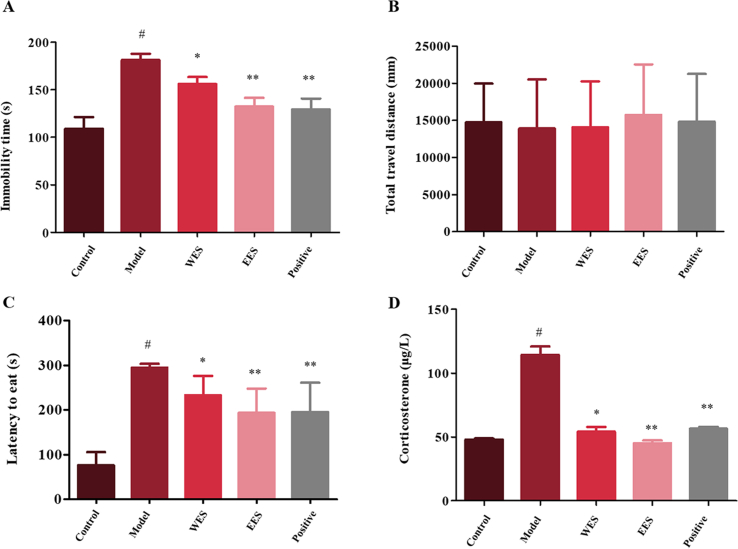
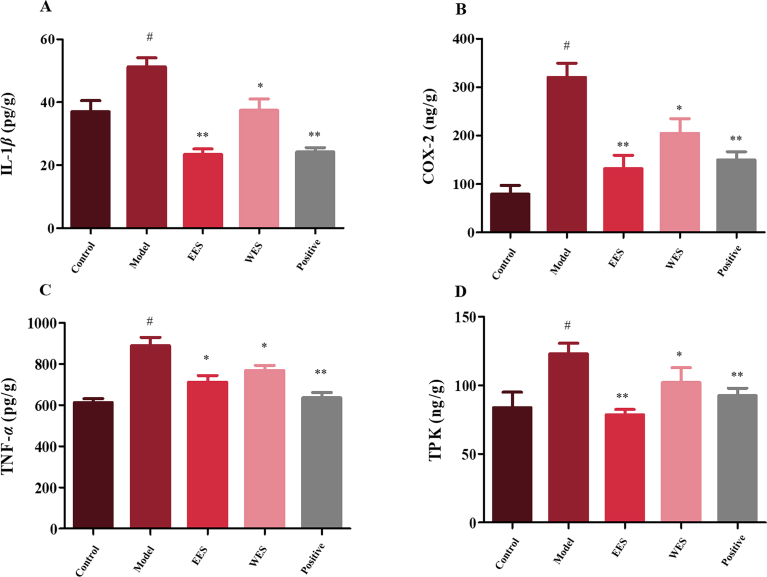
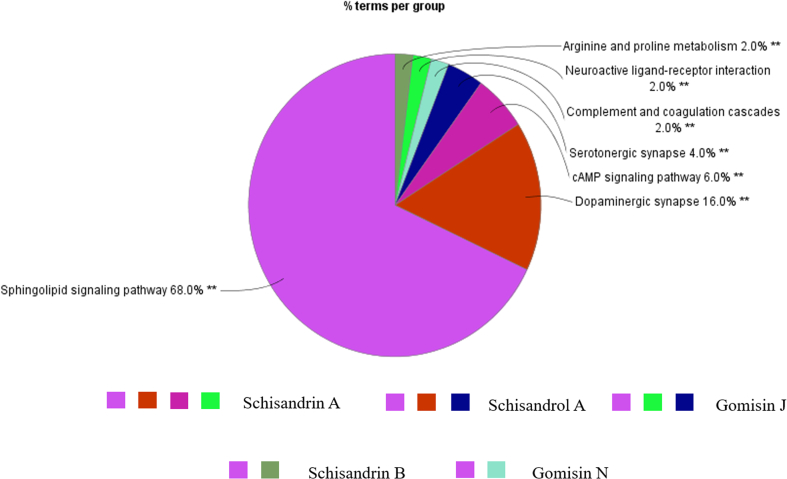
Schisandra chinensis, a widely used Chinese herbal medicine, was considered as central nervous system (CNS) drug for years. Both ethanol extracts (EES) and water extracts (WES) of it were applied clinically. Unfortunately, the difference of their efficacy and even effective material foundation of S. chinensis remains obscure. In this study, to explore the active constituents of S. chinensis, we compared pharmacodynamics and chemical profiles in vitro/in vivo of EES/WES for the first time using multiple chemical analysis, pharmacological and data processing approaches. It was proved that there was no significant difference in the anti-depressive effects between WES and EES. However, the contents of most components in vitro and in plasma were higher in EES than those in WES, which was unconvincing for their similar efficacy. Therefore, we further explored components of S. chinensis targeted onto brain and the results showed that 5 lignans were identified with definite absorptivity respectively both in EES and WES caused by the limitation of blood-brain barrier. Moreover, bioinformatic analysis predicted their anti-depressive action. Above all, the systematic strategy screened 5 brain-targeted effective substances of S. chinensis and it was suggested that exploring the components into nidi would promote the studies on herbs effective material basis.
Keywords: Chemical profiles; Components into nidi; Effective material basis; Ethanol extracts; Pharmacodynamics; Schisandra chinensis; Traditional Chinese medicine; Water extracts.
© 2020 Chinese Pharmaceutical Association and Institute of Materia Medica, Chinese Academy of Medical Sciences. Production and hosting by Elsevier B.V.
Figures
References
-
- Li M., Du Y., Wang L., Jiang L., Ma X., Zhou P. Efficient discovery of quality control markers for gastrodia elata tuber by fingerprint-efficacy relationship modelling. Phytochem Anal. 2017;28:351–359. - PubMed
-
- Zhu L., Li B., Liu X., Huang G., Meng X. Purification of six lignans from the stems of Schisandra chinensis by using high-speed counter-current chromatography combined with preparative high-performance liquid chromatography. Food Chem. 2015;186:146–152. - PubMed
-
- Liu Y., Wang Y., Wu W., Song J., Ruan H. Triterpenoids and lignans from the fruit of Schisandra sphenanthera. Fitoterapia. 2017;116:10–16. - PubMed
-
- Jiang P., Lu Y., Chen D. Authentication of Schisandra chinensis and Schisandra sphenanthera in Chinese patent medicines. J Pharm Biomed Anal. 2016;131:263–271. - PubMed
LinkOut - more resources
Full Text Sources
