Review
. 2020:137:279-305.
doi: 10.1016/bs.ctdb.2019.11.010. Epub 2020 Feb 13.

Insights into mammalian morphogen dynamics from embryonic stem cell systems

Affiliations
Review

Insights into mammalian morphogen dynamics from embryonic stem cell systems

Elena Camacho-Aguilar et al. Curr Top Dev Biol. 2020.

Abstract

Morphogens play an essential role in cell fate specification and patterning including in laying out the mammalian body plan during gastrulation. In vivo studies have shed light on the signaling pathways involved in this process and the phenotypes associated with their disruption, however, several important open questions remain regarding how morphogens function in space and time. Self-organized patterning systems based on embryonic stem cells have emerged as a powerful platform for beginning to address these questions that is complementary to in vivo approaches. Here we review recent progress in understanding morphogen signaling dynamics and patterning in early mammalian development by taking advantage of cutting-edge embryonic stem cell technology.

Keywords: Embryonic stem cells; Gastrulation; Mammalian development; Self-organization; Signaling dynamics.


Figures

Figure 1:
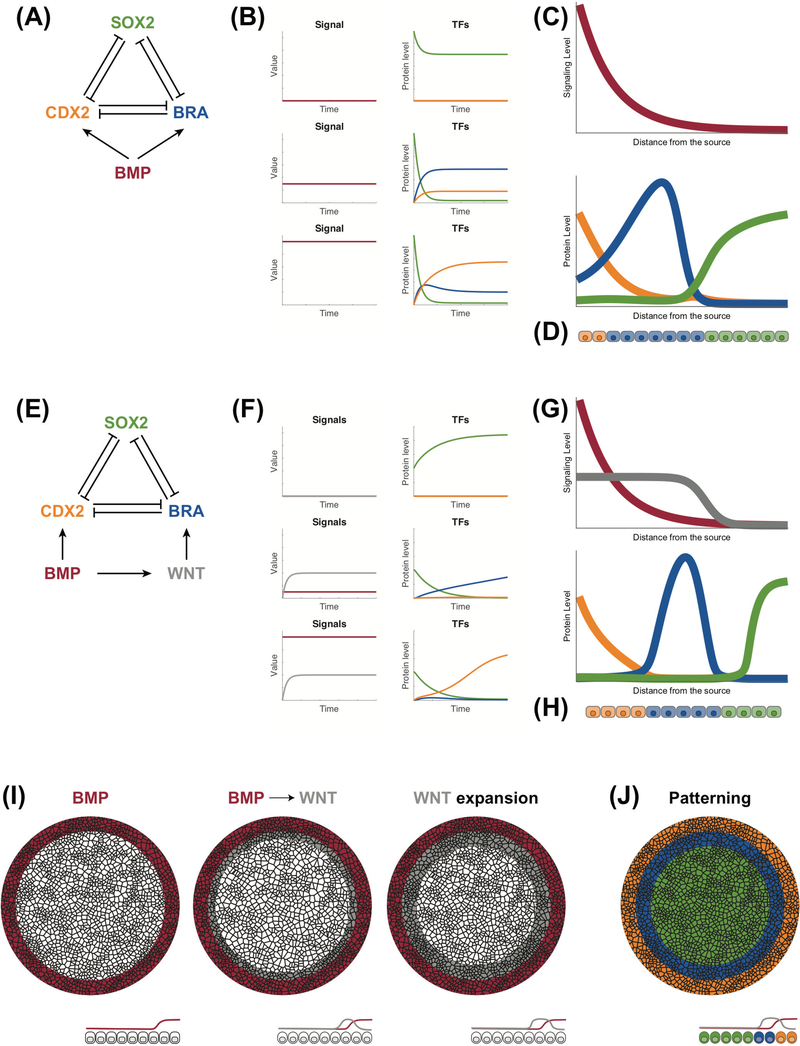
Figure 1:. Mathematical models for signal induction.
(A) Classic model for morphogen induction: three mutually repressive transcription factors (CDX2, BRA, SOX2) are activated at different rates by the morphogen ligand, in this case BMP. (B) Dynamics of the transcriptional network under different morphogen concentrations. SOX2 (green) remains active under low morphogen concentration (top). At intermediate concentrations, BRA (blue) expression quickly increases inhibiting the other two TFs (middle). High morphogen concentrations promote CDX2 (yellow) expression (bottom). (C) Morphogen signaling gradient (top) and the corresponding TF expression profile (bottom) as functions of the distance from the source. For example, a cell that is at a distance from the source will be exposed to an intermediate BMP level and will express a high level of BRA (blue). (D) Pattern created in a row of cells exposed to the gradient signal showed in (C). (E) Transcriptional network mimicking morphogen induction by induction of a secondary signal: three mutually repressive transcription factors (CDX2, BRA, SOX2) are controlled by a balance of an upstream signal (BMP) and a secondary signal (WNT). (F) Dynamics of the transcriptional network under different initial concentrations of BMP. SOX2 (green) remains active under low BMP concentration (top). At intermediate BMP concentrations, the secondary signal, WNT, is quickly induced and BRA (blue) becomes active (middle). High BMP signal promotes high CDX2 (yellow) expression which overcomes BRA (blue) inhibition (bottom). (G) Signaling levels (top) and the corresponding TF expression profile (bottom) as functions of the distance from the source of BMP. (H) Pattern created in a row of cells exposed to the signaling levels showed in (G). The blue cells are only present due to the activation of the secondary signal and not to the BMP gradient directly. (I) Sketch of the signaling dynamics of a micropattern exposed to BMP signal. First, BMP signal is restricted to the edge of the colony. Secondly, BMP signal activates the secondary signal WNT at a distance from the edge, which expands inwards in the colony. (J) The signaling dynamics result into a pattern with three regions: extra-embryonic (yellow), mesendodermal (blue) and ectodermal (green).
Figure 2:
Figure 2:. Nodal and WNT signaling dynamics in BMP treated micropatterned hESC colonies.
(A) Pie sections of a live-imaged micropatterned GFP-beta-catenin hESC colony stimulated with BMP4 showing a clockwise time evolution (17h to 47h) of non-membrane beta-catenin expression. Each section is a snapshot from time-lapse imaging at clockwise increasing time points post BMP treatment. The outer orange circumference highlights the pinned back end of the WNT wave while the white spiral approximates the inward movement of the front end of the WNT wave. Data from ref [71]. (B) Pie sections of micropatterned hESC colonies stimulated with BMP4 showing a clockwise time evolution (24h to 48h) of SMAD1 (red) and SMAD2 (cyan) expression. Each section corresponds to a micropatterned colony fixed at the indicated time point post BMP treatment. The red circumference highlights that SMAD1 stays restricted to the edge at all time points. The white spiral approximates the front end of the SMAD2 wave that moves inward in time. Data from ref. [69].

References

    1. Turing AM The Chemical Basis of Morphogenesis. Phil. Trans. R. Soc. Lond. B, 1952, 237, 37–72.
    1. Wolpert L Positional Information and the Spatial Pattern of Cellular Differentiation. J. Theor. Biol, 1969, 25, 1–47. - PubMed
    1. Dyson S; Gurdon J. The Interpretation of Position in a Morphogen Gradient as Revealed by Occupancy of Activin Receptors. Cell, 1998, 93, 557–568. - PubMed
    1. Rogers KW; Schier AF Morphogen Gradients: From Generation to Interpretation. Annu. Rev. Cell Dev. Biol, 2011, 27, 377–407. - PubMed
    1. Briscoe J; Small S Morphogen Rules: Design Principles of Gradient-Mediated Embryo Patterning. Development, 2015, 142, 3996–4009. - PMC - PubMed

Publication types

MeSH terms

Substances

LinkOut - more resources