


Selenium and selenoproteins: it's role in regulation of inflammation
- PMID: 32144521
- PMCID: PMC7222958
- DOI: 10.1007/s10787-020-00690-x
Selenium and selenoproteins: it's role in regulation of inflammation
Abstract
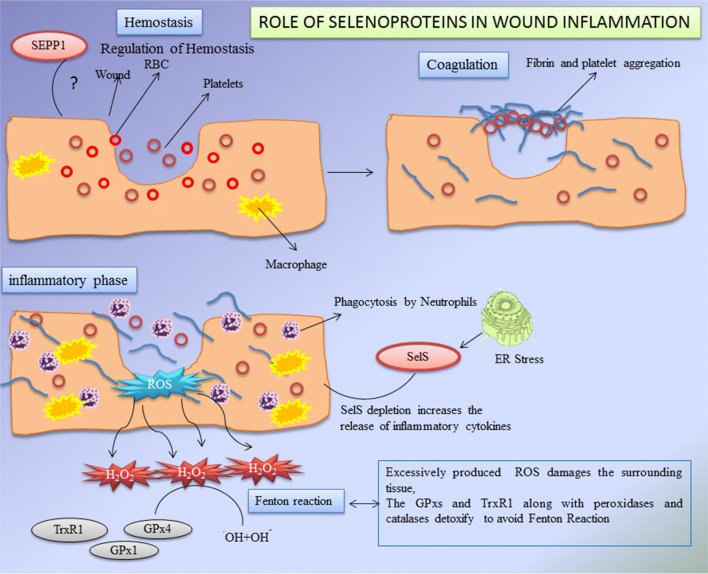
Selenium is an essential immunonutrient which holds the human's metabolic activity with its chemical bonds. The organic forms of selenium naturally present in human body are selenocysteine and selenoproteins. These forms have a unique way of synthesis and translational coding. Selenoproteins act as antioxidant warriors for thyroid regulation, male-fertility enhancement, and anti-inflammatory actions. They also participate indirectly in the mechanism of wound healing as oxidative stress reducers. Glutathione peroxidase (GPX) is the major selenoprotein present in the human body, which assists in the control of excessive production of free radical at the site of inflammation. Other than GPX, other selenoproteins include selenoprotein-S that regulates the inflammatory cytokines and selenoprotein-P that serves as an inducer of homeostasis. Previously, reports were mainly focused on the cellular and molecular mechanism of wound healing with reference to various animal models and cell lines. In this review, the role of selenium and its possible routes in translational decoding of selenocysteine, synthesis of selenoproteins, systemic action of selenoproteins and their indirect assimilation in the process of wound healing are explained in detail. Some of the selenium containing compounds which can acts as cancer preventive and therapeutics are also discussed. These compounds directly or indirectly exhibit antioxidant properties which can sustain the intracellular redox status and these activities protect the healthy cells from reactive oxygen species induced oxidative damage. Although the review covers the importance of selenium/selenoproteins in wound healing process, still some unresolved mystery persists which may be resolved in near future.
Keywords: Gpxs; ROS; SEPP1; SEPS1; Selenium; Selenium drugs; Selenoproteins; Wound healing.
Conflict of interest statement
The authors declare that they have no competing interest.
Figures
References
-
- Abbas N, Shaaban S, Abdel-latif E. Synthesis and antitumor activity of some new symmetrical diselenide derivatives. Res J Pharm Biol Chem Sci. 2015;6(2015):1655–1664.
-
- Alanne M, Kristiansson K, Auro K, Silander K, Kuulasmaa K, Peltonen L, Salomaa V, Perola M. Variation in the selenoprotein S gene locus is associated with coronary heart disease and ischemic stroke in two independent Finnish cohorts. Hum Genet. 2007;122:355–365. doi: 10.1007/s00439-007-0402-7. - DOI - PubMed
-
- Alfthan G, Eurola M, Ekholm P, Venäläinen ER, Root T, Korkalainen K, Hartikainen H, Salminen P, Hietaniemi V, Aspila P, Aro A. Effects of nationwide addition of selenium to fertilizers on foods, and animal and human health in Finland: from deficiency to optimal selenium status of the population. J Trace Elem Med Biol. 2015;31:142–147. doi: 10.1016/j.jtemb.2014.04.009. - DOI - PubMed
Publication types
MeSH terms
Substances
LinkOut - more resources
Full Text Sources
Other Literature Sources
Medical
Miscellaneous