


Caudate reactivity to smoking cues is associated with increased responding to monetary reward in nicotine-dependent individuals
- PMID: 32145666
- PMCID: PMC7127934
- DOI: 10.1016/j.drugalcdep.2020.107951
Caudate reactivity to smoking cues is associated with increased responding to monetary reward in nicotine-dependent individuals
Abstract
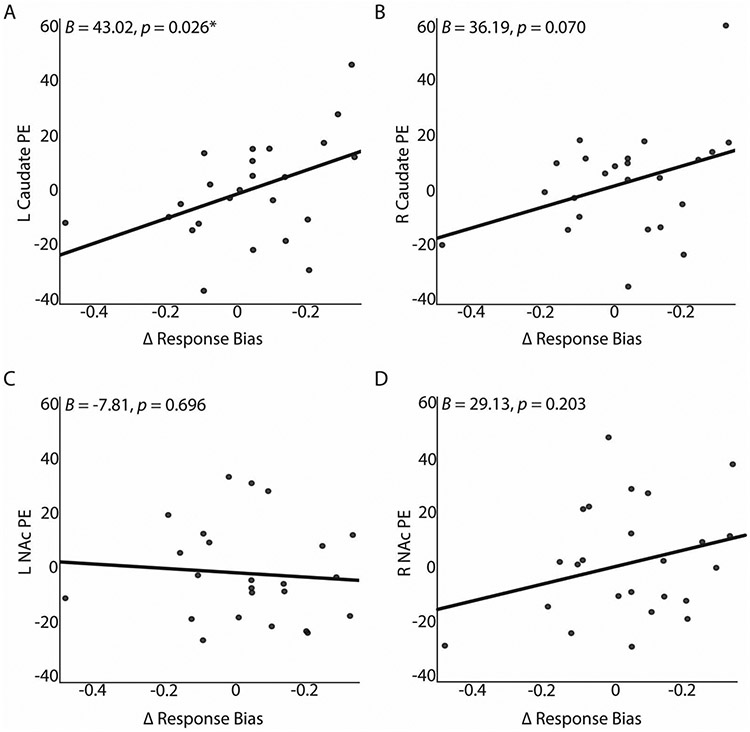
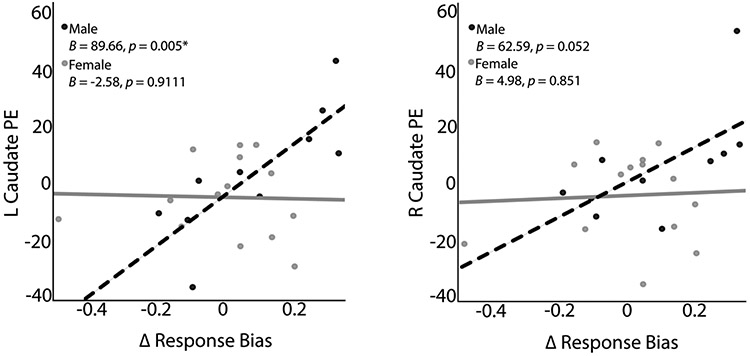
Quitting smoking is challenging in part because environmental smoking cues can trigger the desire to smoke. Neurobiological responses to smoking cues are often observed in reward-related brain regions such as the caudate and nucleus accumbens (NAc). While reward plays a well-established role in the formation of cue reactivity, whether general reward responsiveness contributes to individual differences in cue-reactivity among chronic smokers is unclear; establishing such link could provide insight into the mechanisms maintaining cue reactivity. The current study explored this relationship by assessing smoking cue reactivity during functional magnetic imaging followed by an out-of-scanner probabilistic reward task (PRT) in 24 nicotine-dependent smokers (14 women). In addition, owing to sex differences in cue reactivity and reward function, this same relationship was examined as a function of sex. Following recent smoking, greater reward responsiveness on the PRT was associated with enhanced left caudate reactivity to smoking cues. No relationship was found in any other striatal subregion. The positive relationship between reward responsiveness and caudate smoking cue reactivity was significant only in male smokers, fitting with the idea that males and females respond to the reinforcing elements of smoking cues differently. These findings are clinically relevant as they show that, following recent smoking, nicotine-dependent individuals who are more cue reactive are also more likely to be responsive to non-drug rewards, which may be useful for making individualized treatment decisions that involve behavioral reward contingencies.
Keywords: Addiction; Caudate; Cue-Reactivity; Nicotine; Nucleus accumbens; Reward responsivity; Sex differences; Smoking.
Copyright © 2020 Elsevier B.V. All rights reserved.
Conflict of interest statement
Declaration of Competing Interest Dr. Pizzagalli has received consulting fees from Blackthorn Therapeutics, Boehringer Ingelheim, Compass, Takeda and an honorarium from Alkermes for activities unrelated to the current research. Dr. Pizzagalli has a financial interest in BlackThorn Therapeutics, which has licensed the copyright to the Probabilistic Reward Task through Harvard University. Dr. Pizzagalli’s interests were reviewed and are managed by McLean Hospital and Partners HealthCare in accordance with their conflict of interest policies. All other authors report no biomedical financial interests or potential conflicts of interest.
Figures
References
Publication types
MeSH terms
Grants and funding
LinkOut - more resources
Full Text Sources
Medical
