


Prevalence of small base-pairing RNAs derived from diverse genomic loci
- PMID: 32147527
- PMCID: PMC7217754
- DOI: 10.1016/j.bbagrm.2020.194524
Prevalence of small base-pairing RNAs derived from diverse genomic loci
Abstract
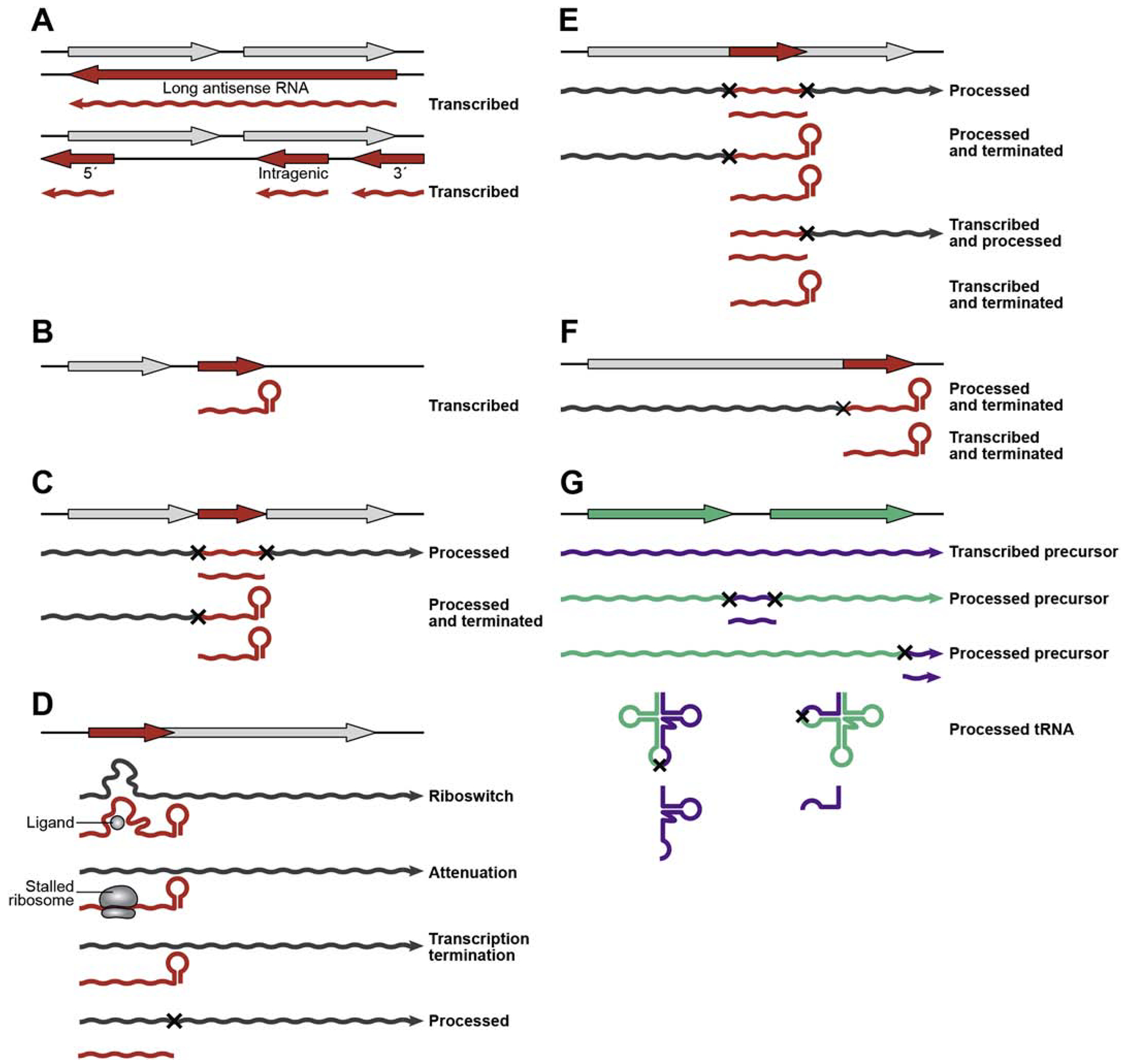
Small RNAs (sRNAs) that act by base-pairing have been shown to play important roles in fine-tuning the levels and translation of their target transcripts across a variety of model and pathogenic organisms. Work from many different groups in a wide range of bacterial species has provided evidence for the importance and complexity of sRNA regulatory networks, which allow bacteria to quickly respond to changes in their environment. However, despite the expansive literature, much remains to be learned about all aspects of sRNA-mediated regulation, particularly in bacteria beyond the well-characterized Escherichia coli and Salmonella enterica species. Here we discuss what is known, and what remains to be learned, about the identification of regulatory base-pairing RNAs produced from diverse genomic loci including how their expression is regulated. This article is part of a Special Issue entitled: RNA and gene control in bacteria edited by Dr. M. Guillier and F. Repoila.
Keywords: RNA-seq; UTR; sRNA biogenesis; small RNAs.
Published by Elsevier B.V.
Conflict of interest statement
Declaration of competing interest The authors declare that they have no known competing financial interests or personal relationships that could have appeared to influence the work reported in this paper.
Figures
References
-
- Wassarman KM, Storz G, 6S RNA regulates E. coli RNA polymerase activity, Cell, 101 (2000) 613–623. - PubMed
Publication types
MeSH terms
Substances
Grants and funding
LinkOut - more resources
Full Text Sources
