


Management of the Failed OCD
- PMID: 32147780
- PMCID: PMC7174455
- DOI: 10.1007/s12178-020-09611-5
Management of the Failed OCD
Abstract
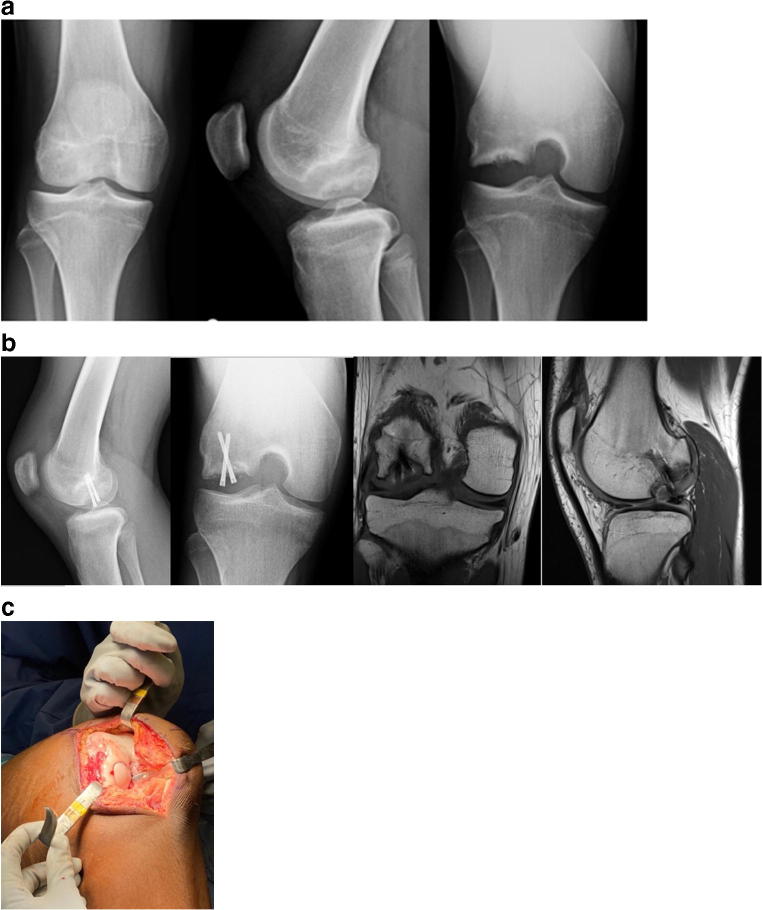
Purpose of the review: Osteochondritis dissecans (OCD) is a pathologic condition of subchondral bone most frequently occurring in the medial femoral condyle of the knee in children and adolescents. Salvage techniques are necessary when either nonoperative or typical operative treatments fail, or the OCD presents in an unsalvageable state. The purpose of this review is to describe the evaluation and management of failed OCDs.
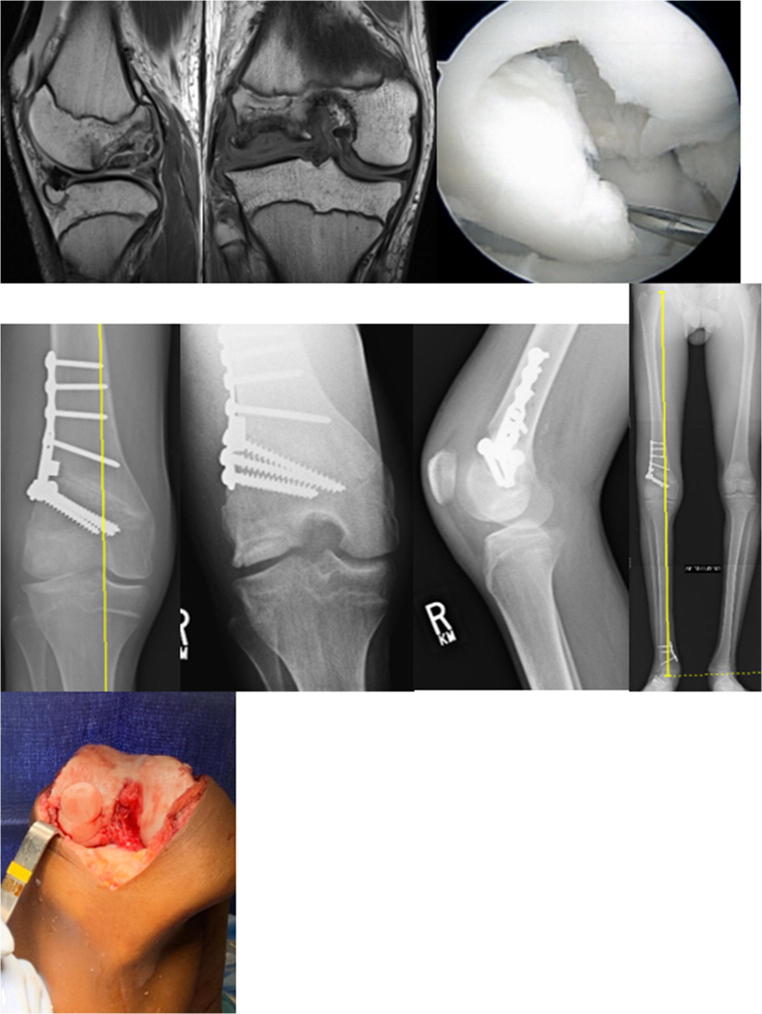
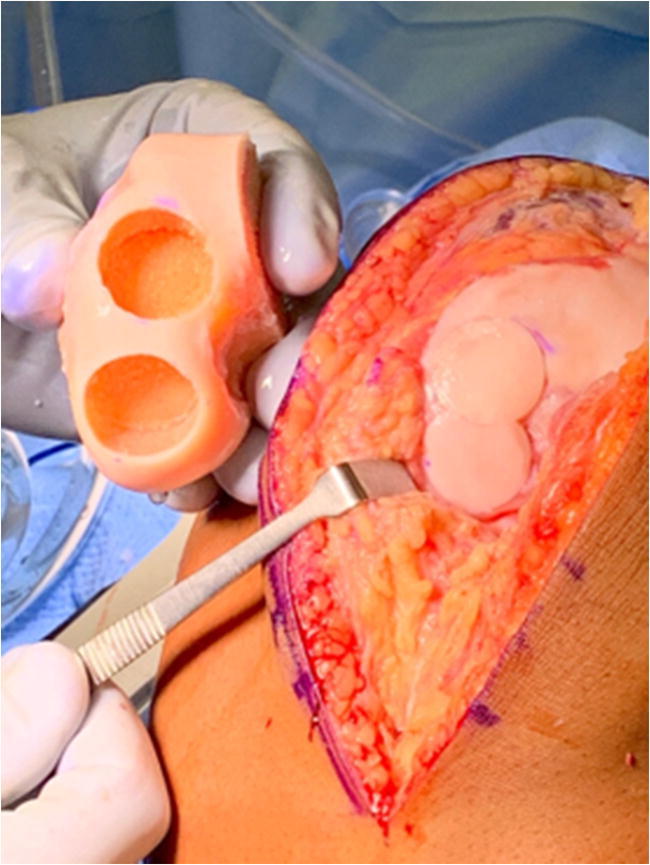
Recent findings: Thorough preoperative planning is essential to the treatment of failed OCDs. Radiographs and advanced imaging such as MRI and CT allow for a detailed assessment of subchondral bone and cartilage. Long-leg alignment radiographs are critical to assess for malalignment which may increase the contact forces on the affected condyle. Malalignment can be corrected with hemiepiphysiodesis or an osteotomy depending on the skeletal maturity of the patient. Osteochondral allografts and autologous chondrocyte implantation treat the defect in both bone and cartilage or solely cartilage and have good short to moderate term outcomes, particularly as compared to the inferior outcomes of microfracture of larger OCDs. Osteochondritis dissecans of the knee that fails to heal with initial operative measures can result in a large defect of bone and cartilage in the knee of adolescents. Treatment of the bone and cartilage defect can be accomplished with either osteochondral allograft transplantation or matrix-assisted autologous chondrocyte implantation can be performed with good outcomes. Assessment and correction of lower extremity malalignment is a critical component of treatment. Durable long-term solutions are necessary for the treatment of these difficult lesions.
Keywords: Autologous chondrocyte implantation; Cartilage; Osteochondral allograft; Osteochondritis dissecans.
Conflict of interest statement
Crystal A. Perkins declares that she has no conflict of interest pertaining to this chapter.
S. Clifton Willimon declares that he has no conflict of interest pertaining to this chapter.
Figures

References
-
- Hefti F, Beguiristain J, Krauspe R, Möller-Madsen B, Riccio V, Tschauner C, Wetzel R, Zeller R. Osteochondritis dissecans: a multicenter study of the European pediatric orthopedic society. J Pediatr Orthop B. 1999;8(4):231–245. - PubMed
-
- Chambers HG, Shea KG, Anderson AF, Jojo Brunelle TJ, Carey JL, Ganley TJ, et al. American Academy of Orthopaedic surgeons clinical practice guideline on: the diagnosis and treatment of osteochondritis dissecans. J Bone Joint Surg Am. 2012;94(14):1322–4. - PubMed
Publication types
LinkOut - more resources
Full Text Sources
Research Materials
