


Comprehensive comparative analysis of chloroplast genomes from seven Panax species and development of an authentication system based on species-unique single nucleotide polymorphism markers
- PMID: 32148396
- PMCID: PMC7033337
- DOI: 10.1016/j.jgr.2018.06.003
Comprehensive comparative analysis of chloroplast genomes from seven Panax species and development of an authentication system based on species-unique single nucleotide polymorphism markers
Abstract
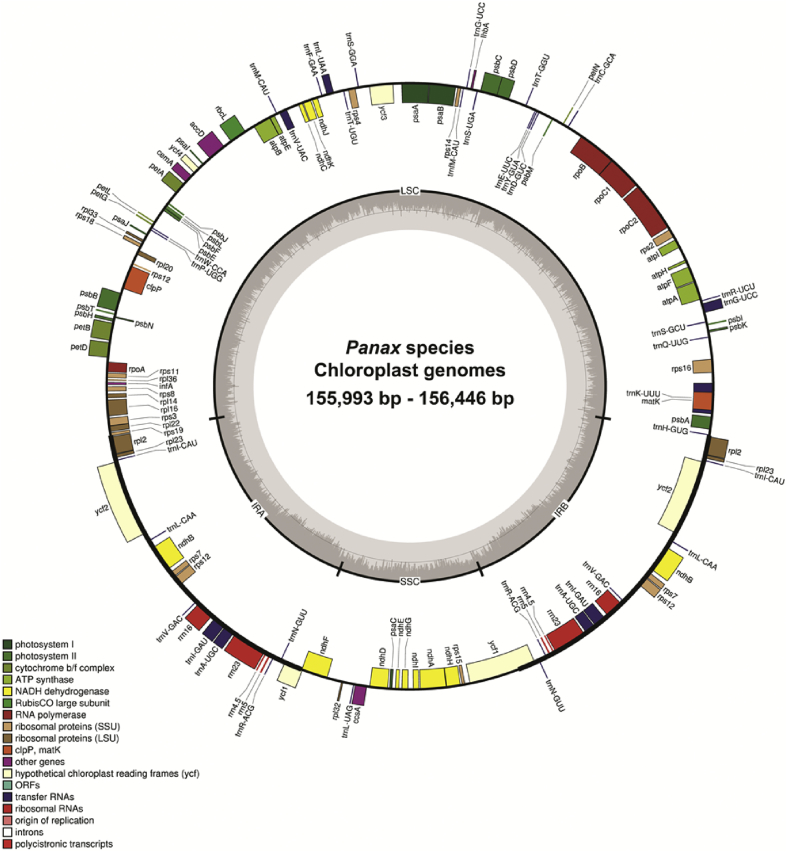
Background: Panax species are important herbal medicinal plants in the Araliaceae family. Recently, we reported the complete chloroplast genomes and 45S nuclear ribosomal DNA sequences from seven Panax species, two (P . quinqu e folius and P . trifolius) from North America and five (P . ginseng, P . notoginseng, P . japonicus, P . vietnamensis, and P . stipuleanatus) from Asia.
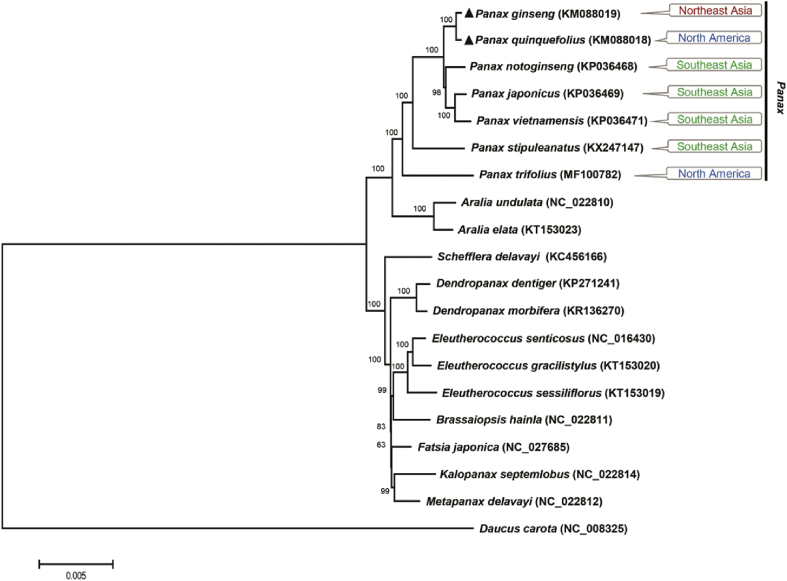
Methods: We conducted phylogenetic analysis of these chloroplast sequences with 12 other Araliaceae species and comprehensive comparative analysis among the seven Panax whole chloroplast genomes.
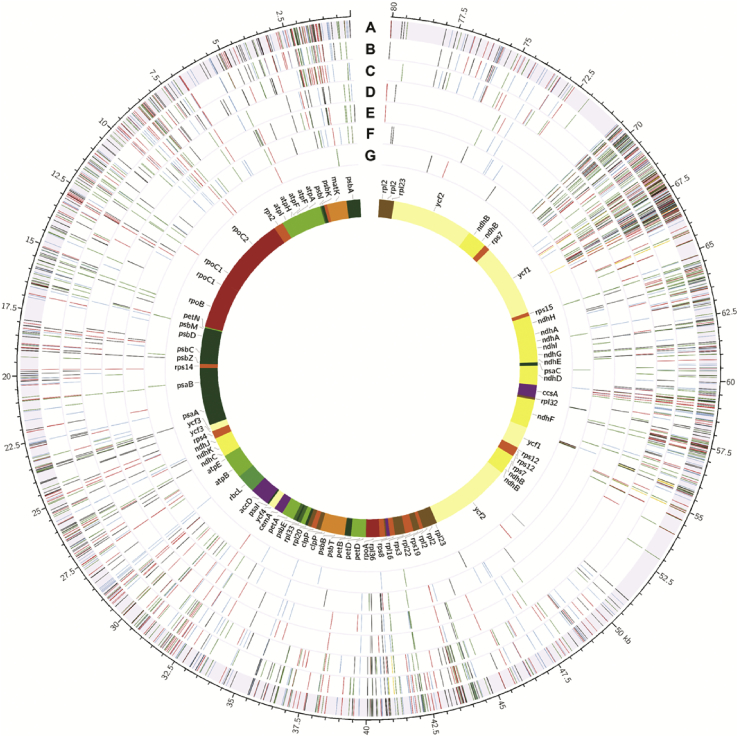
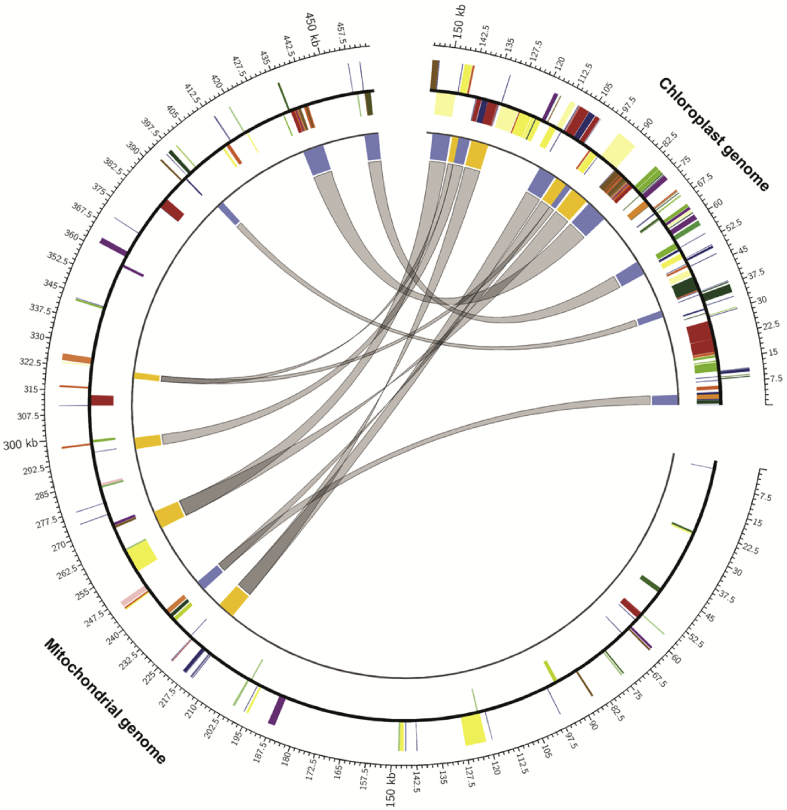
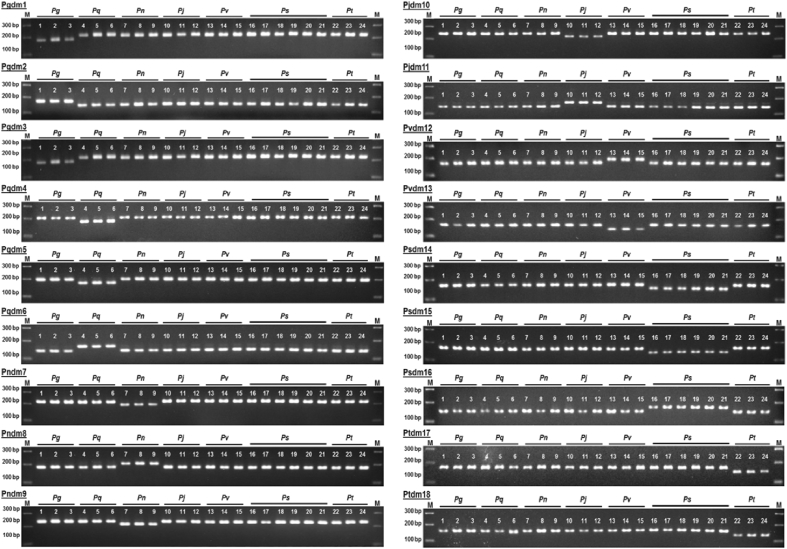
Results: We identified 1,128 single nucleotide polymorphisms (SNP) in coding gene sequences, distributed among 72 of the 79 protein-coding genes in the chloroplast genomes of the seven Panax species. The other seven genes (including psaJ, psbN, rpl23, psbF, psbL, rps18, and rps7) were identical among the Panax species. We also discovered that 12 large chloroplast genome fragments were transferred into the mitochondrial genome based on sharing of more than 90% sequence similarity. The total size of transferred fragments was 60,331 bp, corresponding to approximately 38.6% of chloroplast genome. We developed 18 SNP markers from the chloroplast genic coding sequence regions that were not similar to regions in the mitochondrial genome. These markers included two or three species-specific markers for each species and can be used to authenticate all the seven Panax species from the others.
Conclusion: The comparative analysis of chloroplast genomes from seven Panax species elucidated their genetic diversity and evolutionary relationships, and 18 species-specific markers were able to discriminate among these species, thereby furthering efforts to protect the ginseng industry from economically motivated adulteration.
Keywords: Araliaceae evolution; Chloroplast genome; Ginseng authentication; Panax species; dCAPS markers.
© 2018 The Korean Society of Ginseng. Publishing services by Elsevier B.V.
Figures
References
-
- Radad K., Gille G., Liu L., Rausch W.D. Use of ginseng in medicine with emphasis on neurodegenerative disorders. J Pharmacol Sci. 2006;100:175–186. - PubMed
-
- Zheng S.D., Wu H.J., Wu D.L. Roles and mechanisms of ginseng in protecting heart. Chin J Integr Med. 2012;18:548–555. - PubMed
-
- Xie J.T., Mehendale S.R., Li X., Quigg R., Wang X., Wang C.Z., Wu J.A., Aung H.H., A-Rue P., Bell G.I. Anti-diabetic effect of ginsenoside Re in ob/ob mice. Biochim Biophys Acta. 2005;1740:319–325. - PubMed
-
- Jung H.J., Choi H., Lim H.W., Shin D., Kim H., Kwon B., Lee J.E., Park E.H., Lim C.J. Enhancement of anti-inflammatory and antinociceptive actions of red ginseng extract by fermentation. J Pharm Pharmacol. 2012;64:756–762. - PubMed
LinkOut - more resources
Full Text Sources
