


Neither a Multi-Ingredient Pre-Workout Supplement nor Caffeine Were Effective at Improving Markers of Blood Flow or Upper-Body Resistance Exercise Performance
- PMID: 32148617
- PMCID: PMC7039476
- DOI: 10.70252/PHUM1873
Neither a Multi-Ingredient Pre-Workout Supplement nor Caffeine Were Effective at Improving Markers of Blood Flow or Upper-Body Resistance Exercise Performance
Abstract
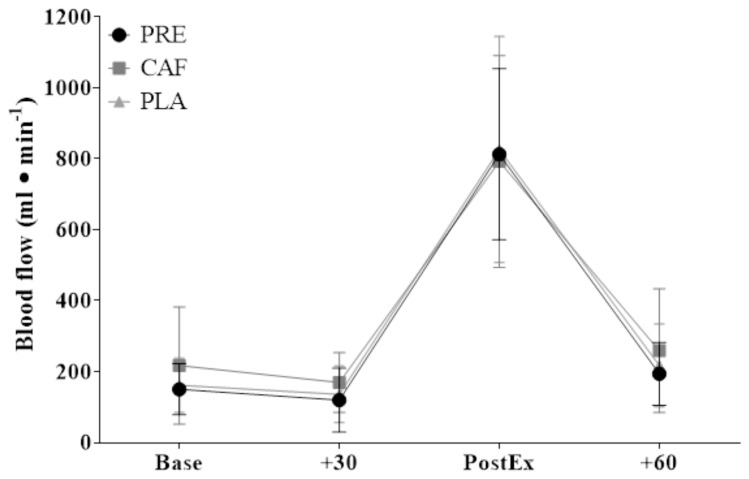
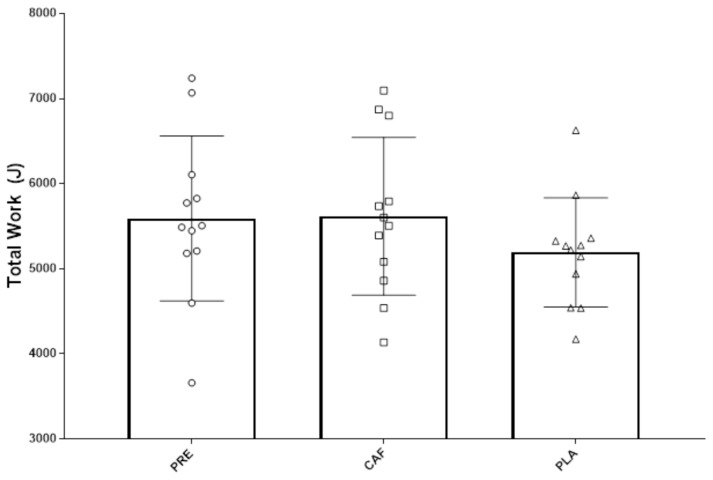
Few studies have measured the effects of multi-ingredient pre-workout supplements on blood flow or heart rate variability or have compared a multi-ingredient pre-workout supplement to a matched single ingredient. This study examined the effects of a multi-ingredient pre-workout supplement, an equivalent amount of caffeine, and placebo on markers of resistance training performance, blood flow, blood pressure, and heart rate variability. The study utilized a randomized, placebo-controlled, repeated-measures, crossover design. Twelve resistance-trained males (22.75 ± 4.51 yrs; 183.4 ± 7.37 cm; 91.05 ± 17.77 kg) completed the study. Resistance exercise performance was defined as total work performed during elbow flexion and extension on an isokinetic dynamometer. Blood flow was calculated using time-averaged mean velocity and blood vessel diameter of the right brachial artery, which were measured via Doppler ultrasound. Heart rate was recorded using an electrocardiogram. Neither a multi-ingredient pre-workout supplement nor caffeine alone improved upper-body resistance exercise performance or markers of blood flow relative to placebo. No differences in heart rate variability were observed across treatments. A multi-ingredient pre-workout supplement was not effective at improving performance or blood flow and did not alter autonomic nervous system function.
Keywords: L-arginine; blood flow; heart rate variability; nitrate; vasodilation.
Figures
References
-
- Anselme F, Collomp K, Mercier B, Ahmaidi S, Prefaut C. Caffeine increases maximal anaerobic power and blood lactate concentration. Eur J Appl Physiol Occup Physiol. 1992;65(2):188–91. - PubMed
-
- Astorino TA, Roberson DW. Efficacy of acute caffeine ingestion for short-term high-intensity exercise performance: A systematic review. J Strength Cond Res. 2010;24(1):257–65. - PubMed
-
- Astorino TA, Terzi MN, Roberson DW, Burnett TR. Effect of two doses of caffeine on muscular function during isokinetic exercise. Med Sci Sport Exerc. 2010;42(12):2205–10. - PubMed
-
- Bailey SJ, Fulford J, Vanhatalo A, Winyard PG, Blackwell JR, DiMenna FJ, et al. Dietary nitrate supplementation enhances muscle contractile efficiency during knee-extensor exercise in humans. J Appl Physiol. 2010;109(1):135–48. - PubMed
-
- Bailey SJ, Winyard P, Vanhatalo A, Blackwell JR, DiMenna FJ, Wilkerson DP, et al. Dietary nitrate supplementation reduces the O2 cost of low-intensity exercise and enhances tolerance to high-intensity exercise in humans. J Appl Physiol. 2009;107(4):1144–55. - PubMed
LinkOut - more resources
Full Text Sources