


Arginine Derivatives in Cerebrovascular Diseases: Mechanisms and Clinical Implications
- PMID: 32150996
- PMCID: PMC7084464
- DOI: 10.3390/ijms21051798
Arginine Derivatives in Cerebrovascular Diseases: Mechanisms and Clinical Implications
Abstract
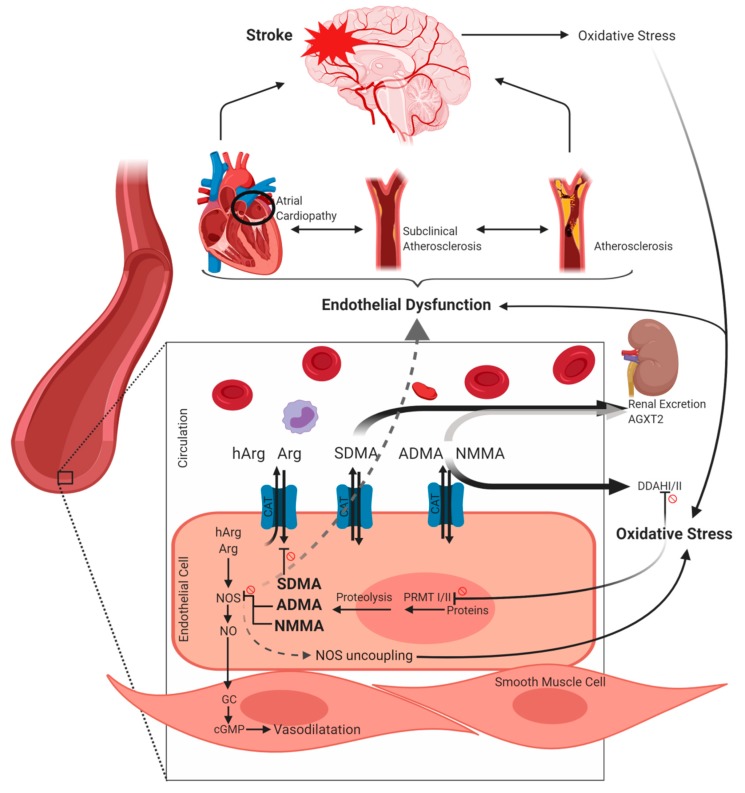
The amino acid L-arginine serves as substrate for the nitric oxide synthase which is crucial in vascular function and disease. Derivatives of arginine, such as asymmetric (ADMA) and symmetric dimethylarginine (SDMA), are regarded as markers of endothelial dysfunction and have been implicated in vascular disorders. While there is a variety of studies consolidating ADMA as biomarker of cerebrovascular risk, morbidity and mortality, SDMA is currently emerging as an interesting metabolite with distinct characteristics in ischemic stroke. In contrast to dimethylarginines, homoarginine is inversely associated with adverse events and mortality in cerebrovascular diseases and might constitute a modifiable protective risk factor. This review aims to provide an overview of the current evidence for the pathophysiological role of arginine derivatives in cerebrovascular ischemic diseases. We discuss the complex mechanisms of arginine metabolism in health and disease and its potential clinical implications in diverse aspects of ischemic stroke.
Keywords: ADMA; ESUS; SDMA; arginine; atherosclerosis; atrial fibrillation; biomarker; endothelial dysfunction; homoarginine; stroke.
Conflict of interest statement
C.U.C. received a lecture fee from Pfizer. The other authors declare no conflict of interest.
Figures
References
-
- GBD 2016 Lifetime Risk of Stroke Collaborators. Feigin V.L., Nguyen G., Cercy K., Johnson C.O., Alam T., Parmar P.G., Abajobir A.A., Abate K.H., Abd-Allah F., et al. Global, Regional, and Country-Specific Lifetime Risks of Stroke, 1990 and 2016. N. Engl. J. Med. 2018;379:2429–2437. doi: 10.1056/NEJMoa1804492. - DOI - PMC - PubMed
Publication types
MeSH terms
Substances
Grants and funding
LinkOut - more resources
Full Text Sources
