Transradial approach for neurointerventions: a systematic review of the literature
- PMID: 32152185
- PMCID: PMC7476364
- DOI: 10.1136/neurintsurg-2019-015764
Transradial approach for neurointerventions: a systematic review of the literature
Abstract
Background: Despite the recent increase in the number of publications on diagnostic cerebral angiograms using transradial access (TRA), there have been relatively few regarding TRA for neurointerventional cases. Questions of feasibility and safety may still exist among physicians considering TRA for neurointerventional procedures.
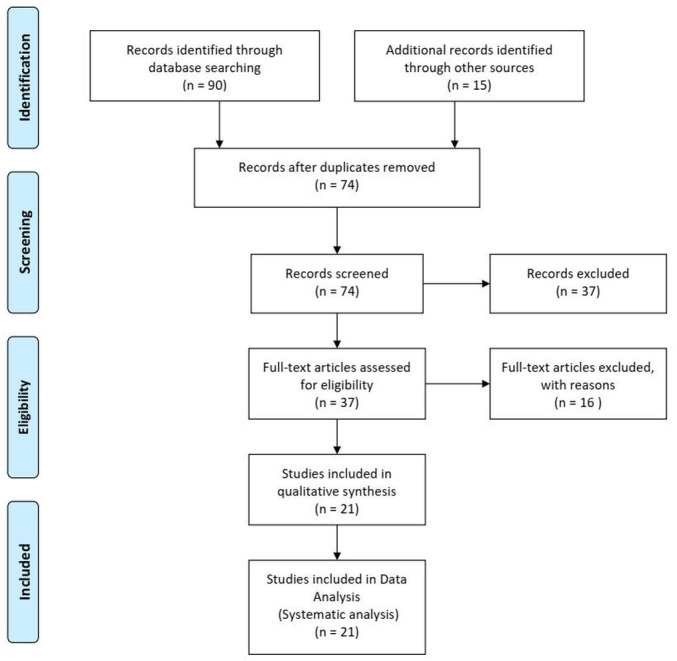
Methods: A systematic literature review was performed following PRISMA guidelines. Three online databases (MedLine via PubMed, Scopus and Embase) were searched for articles published between January 2000 and December 2019. Search terms included "Transradial access", "Radial Access", "Radial artery" AND "Neurointerventions". The reference lists of selected articles and pertinent available non-systematic analysis were reviewed for other potential citations. Primary outcomes measured were access site complications and crossover rates.
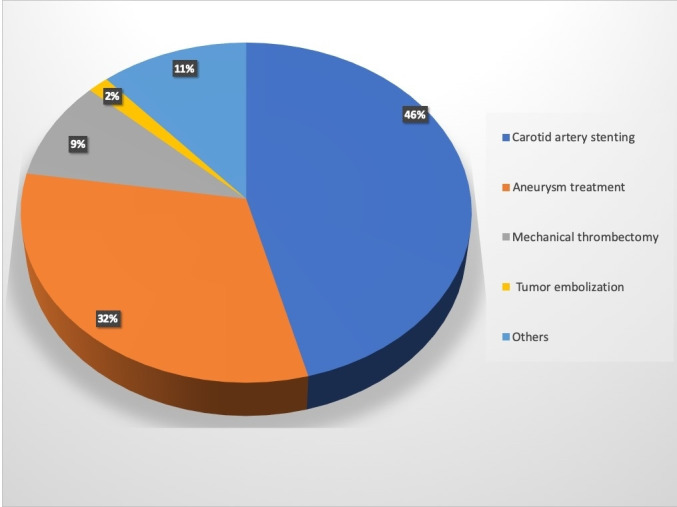
Results: Twenty-one studies (n=1342 patients) were included in this review. Two of the studies were prospective while the remaining 19 were retrospective. Six studies (n=616 patients) included TRA carotid stenting only. The rest of the studies included treatment for cerebral aneurysms (n=423), mechanical thrombectomy (n=127), tumor embolization (n=22), and other indications (n=154) such as angioplasty and stenting for vertebrobasilar stenosis, balloon test occlusion, embolization of dural arteriovenous fistula and arteriovenous malformation, chemotherapeutic drug delivery, intra-arterial thrombolysis, and arterial access during a venous stenting procedure. Two (0.15%) major complications and 37 (2.75%) minor complications were reported. Sixty-four (4.77%) patients crossed over to transfemoral access for completion of the procedure. Seven (0.52%) patients crossed over due to access failure and 57 (4.24%) patients crossed over to TFA due to inability to cannulate the target vessel.
Conclusion: This systematic review demonstrates that TRA has a relatively low rate of access site complications and crossovers. With increasing familiarity, development of TRA-specific neuroendovascular devices, and the continued reports of its success in the literature, TRA is expected to become more widely used by neurointerventionalists.
Keywords: angiography; complication; device; intervention; technique.
© Author(s) (or their employer(s)) 2020. Re-use permitted under CC BY-NC. No commercial re-use. See rights and permissions. Published by BMJ.
Conflict of interest statement
Competing interests: None declared.
Figures
References
-
- Feldman DN, Swaminathan RV, Kaltenbach LA, et al. Adoption of radial access and comparison of outcomes to femoral access in percutaneous coronary intervention: an updated report from the National Cardiovascular Data Registry (2007-2012). Circulation 2013;127:2295–306. 10.1161/CIRCULATIONAHA.112.000536 - DOI - PubMed
Publication types
MeSH terms
LinkOut - more resources
Full Text Sources
Medical