Review
. 2020 Apr;30(4):315-327.
doi: 10.1038/s41422-020-0295-8. Epub 2020 Mar 9.

Toward targeting inflammasomes: insights into their regulation and activation

Affiliations
Review

Toward targeting inflammasomes: insights into their regulation and activation

Shelbi Christgen et al. Cell Res. 2020 Apr.

Abstract

Inflammasomes are multi-component signaling complexes critical to the initiation of pyroptotic cell death in response to invading pathogens and cellular damage. A number of innate immune receptors have been reported to serve as inflammasome sensors. Activation of these sensors leads to the proteolytic activation of caspase-1, a proinflammatory caspase responsible for the cleavage of proinflammatory cytokines interleukin-1β and interleukin-18 and the effector of pyroptotic cell death, gasdermin D. Though crucial to the innate immune response to infection, dysregulation of inflammasome activation can lead to the development of inflammatory diseases, neurodegeneration, and cancer. Therefore, clinical interest in the modulation of inflammasome activation is swiftly growing. As such, it is imperative to develop a mechanistic understanding of the regulation of these complexes. In this review, we divide the regulation of inflammasome activation into three parts. We discuss the transcriptional regulation of inflammasome components and related proteins, the post-translational mechanisms of inflammasome activation, and advances in the understanding of the structural basis of inflammasome activation.


Conflict of interest statement

The authors declare no competing interests.

Figures
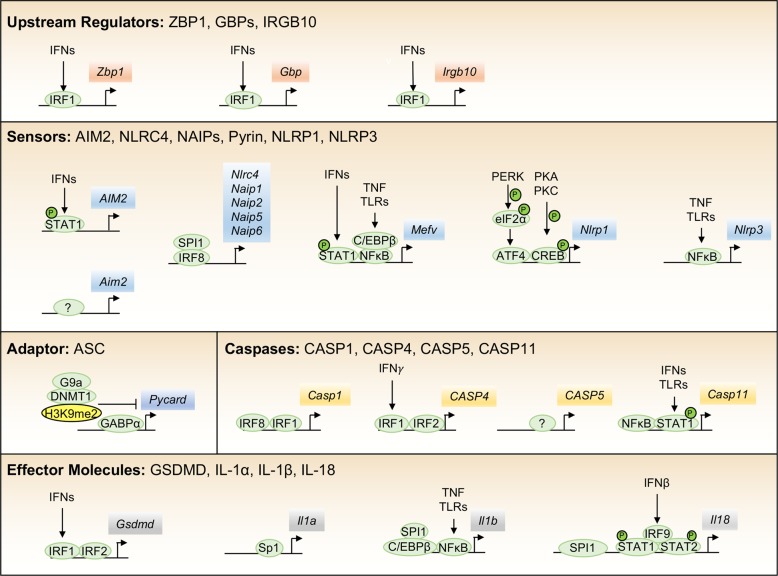
Fig. 1
Fig. 1. Proposed transcriptional regulators of inflammasome components.
Inflammasome activity is tightly regulated at the transcriptional level, and a number of factors have been proposed to regulate the expression of inflammasome components, molecules required upstream of activation, and downstream effector molecules.
Fig. 2
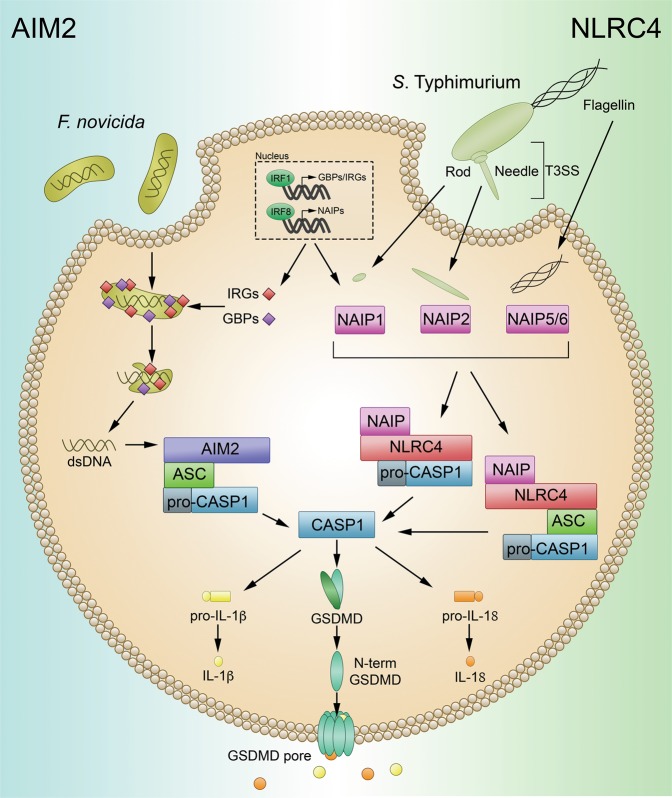
Fig. 2. Activation of AIM2 and NAIP–NLRC4 by direct ligand binding.
AIM2: GBPs and IRGs mediate the bacteriolysis of intracellular bacteria, including F. novicida, leading to the exposure of dsDNA. Binding of dsDNA to AIM2 leads to AIM2 inflammasome activation. Active AIM2 recruits and activates CASP1 in an ASC-dependent manner to initiate pyroptosis through GSDMD and proinflammatory cytokine cleavage. NAIP–NLRC4: T3SS and flagellin proteins activate different murine NAIPs through direct binding interactions. NAIPs then activate NLRC4, which directly interacts with CASP1, leading to its autoactivation and the induction of pyroptosis.
Fig. 3
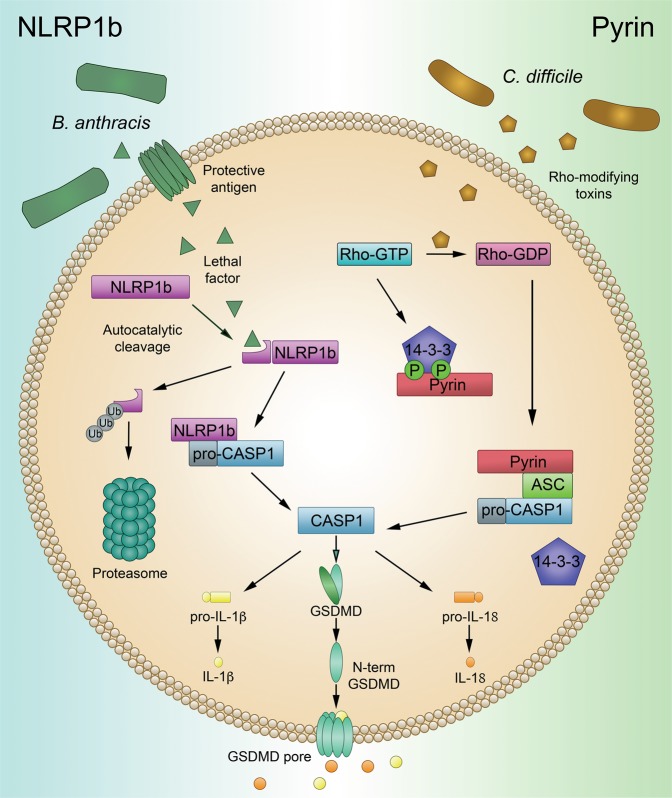
Fig. 3. Activation of NLRP1b and Pyrin through indirect mechanisms.
NLRP1b: NLRP1b undergoes auto-processing at the FIIND domain to form two peptide fragments that continue to interact. NLRP1b-activating stimuli, such as LF from B. anthracis, cleave the N-terminal fragment of NLRP1b, targeting this fragment for ubiquitination and subsequent degradation. Degradation of the N-terminal fragment of NLRP1b relieves the C-terminal fragment from autoinhibition and allows the NLRP1b inflammasome to activate. Pyrin: Under homeostatic conditions, Pyrin is kept inactivated through phosphorylation-mediated interactions with 14-3-3. Rho-modifying toxins, such as TcdB from C. difficile, lead to the inactivation of Rho-GTPase. Loss of Rho-GTPase activity leads to unphosphorylated Pyrin. This allows Pyrin to disassociate from 14-3-3 and become active.
Fig. 4
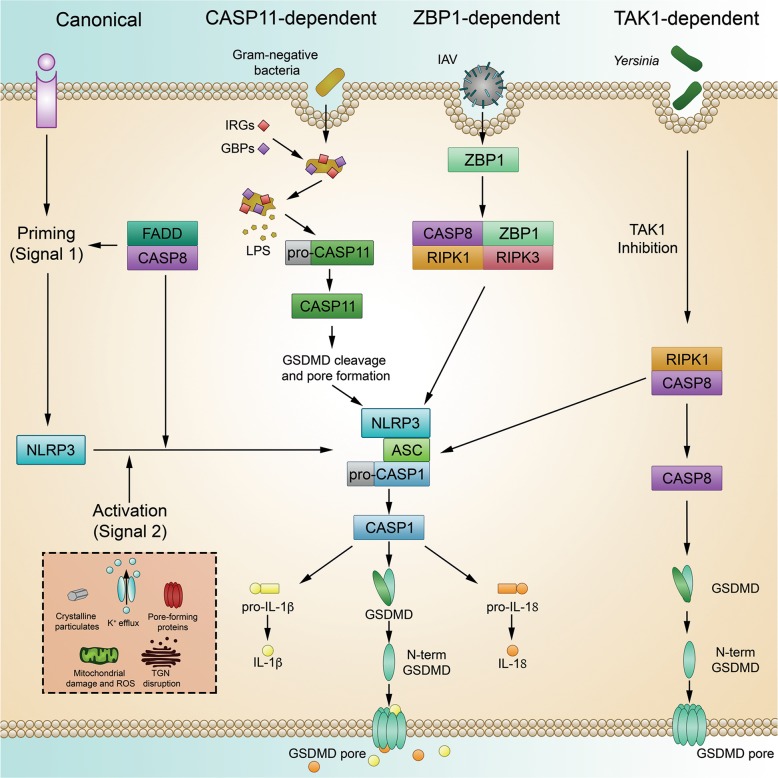
Fig. 4. Activation of the NLRP3 inflammasome.
In response to a wide range of stimuli and live pathogens, NLRP3 becomes activated through canonical, CASP11-dependent, ZBP1-dependent, and TAK1-dependent mechanisms.
Fig. 5
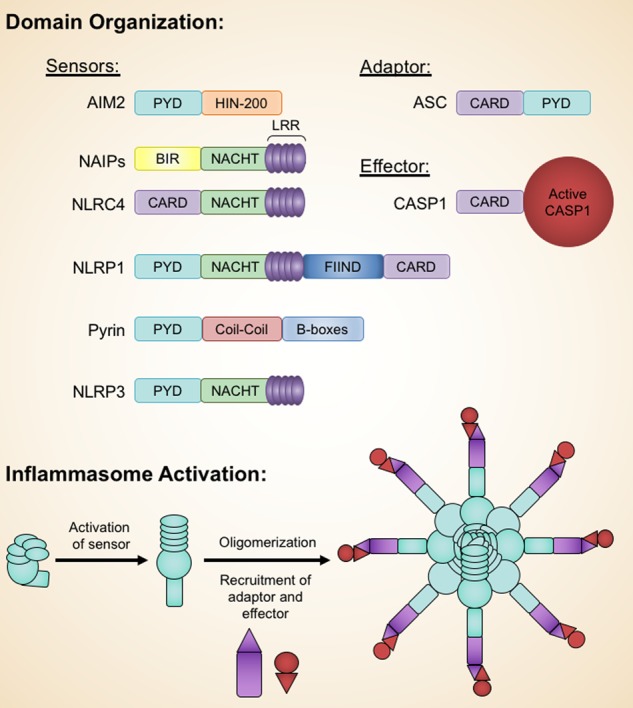
Fig. 5. Domain organization and basic inflammasome assembly.
The domains of AIM2, NAIPs, NLRC4, NLRP1, Pyrin, NLRP3, ASC, and CASP1 are shown. The archetype inflammasome structure is comprised of a sensor, adapter, and effector protein. After activation, the sensor oligomerizes and recruits the adapter and effector proteins to the inflammasome complex. LRR, leucine rich repeat; BIR, baculoviral inhibitor of apoptosis protein repeat.

References

    1. Martinon F, Burns K, Tschopp J. The inflammasome: a molecular platform triggering activation of inflammatory caspases and processing of proIL-β. Mol. Cell. 2002;10:417–426. doi: 10.1016/S1097-2765(02)00599-3. - DOI - PubMed
    1. Janowski, A. M., Sutterwala, F. S. A typical inflammasomes. In: Di Virgilio, F., Pelegrín, P., eds. NLR Proteins: Methods and Protocols. Methods in Molecular Biology. New York, NY: Springer New York; 2016:45–62. - PubMed
    1. Minkiewicz J, Vaccari JP, de R, Keane RW. Human astrocytes express a novel NLRP2 inflammasome. Glia. 2013;61:1113–1121. doi: 10.1002/glia.22499. - DOI - PubMed
    1. Levy M, et al. Microbiota-modulated metabolites shape the intestinal microenvironment by regulating NLRP6 inflammasome signaling. Cell. 2015;163:1428–1443. doi: 10.1016/j.cell.2015.10.048. - DOI - PMC - PubMed
    1. Khare S, et al. An NLRP7-containing inflammasome mediates recognition of microbial lipopeptides in human macrophages. Immunity. 2012;36:464–476. doi: 10.1016/j.immuni.2012.02.001. - DOI - PMC - PubMed

Publication types

MeSH terms