


Characterizing Sugar-Sweetened Beverage Consumption for US Children and Adolescents by Race/Ethnicity
- PMID: 32152835
- PMCID: PMC7483241
- DOI: 10.1007/s40615-020-00733-7
Characterizing Sugar-Sweetened Beverage Consumption for US Children and Adolescents by Race/Ethnicity
Abstract
Objectives: To examine racial/ethnic differences in type of SSB most frequently consumed and in correlates of youth sugar-sweetened beverage (SSB) intake.
Methods: Data were obtained from the National Health and Nutrition Examination Survey (NHANES), 2011-2016, for children and adolescents aged 5-17 years (n = 6507). The main outcome was SSB consumption (i.e., sodas, sweetened fruit drinks, nectars, sports and energy drinks, sweetened coffees and teas, enhanced waters). Mean and proportions of SSB intake were estimated accounting for complex sampling strategy and weighting. Multivariable regression models were developed for each race/ethnicity and age group.
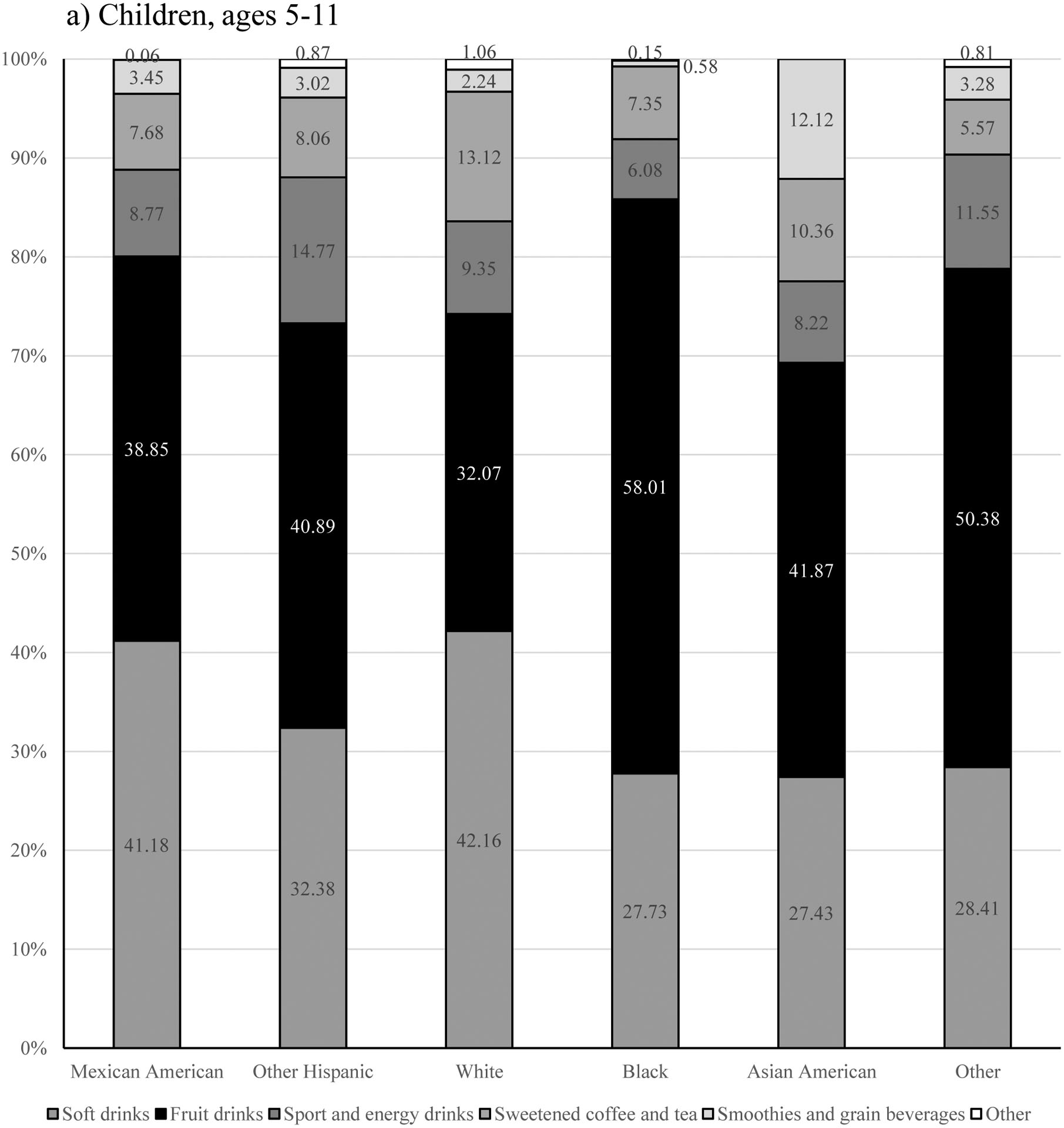
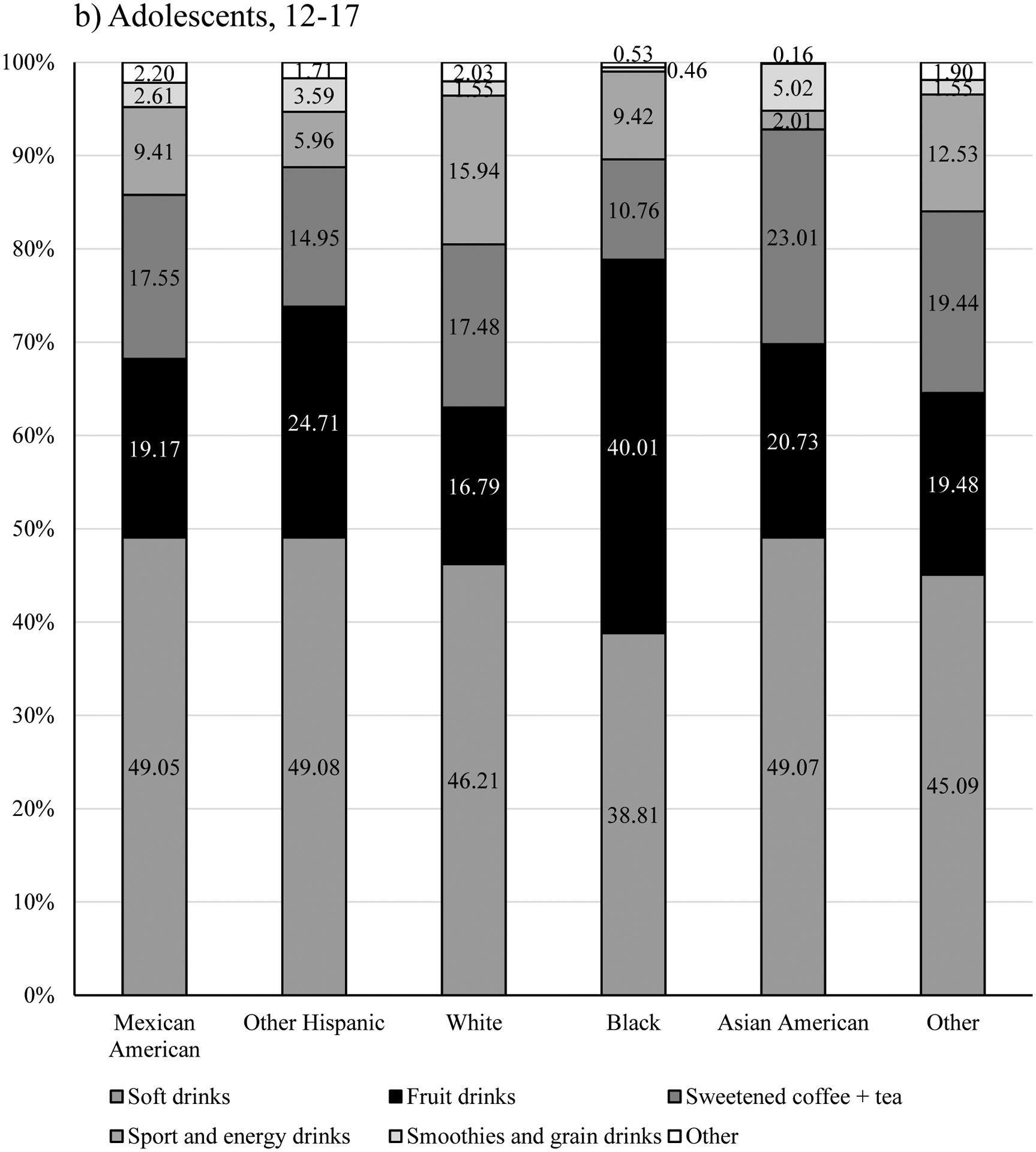
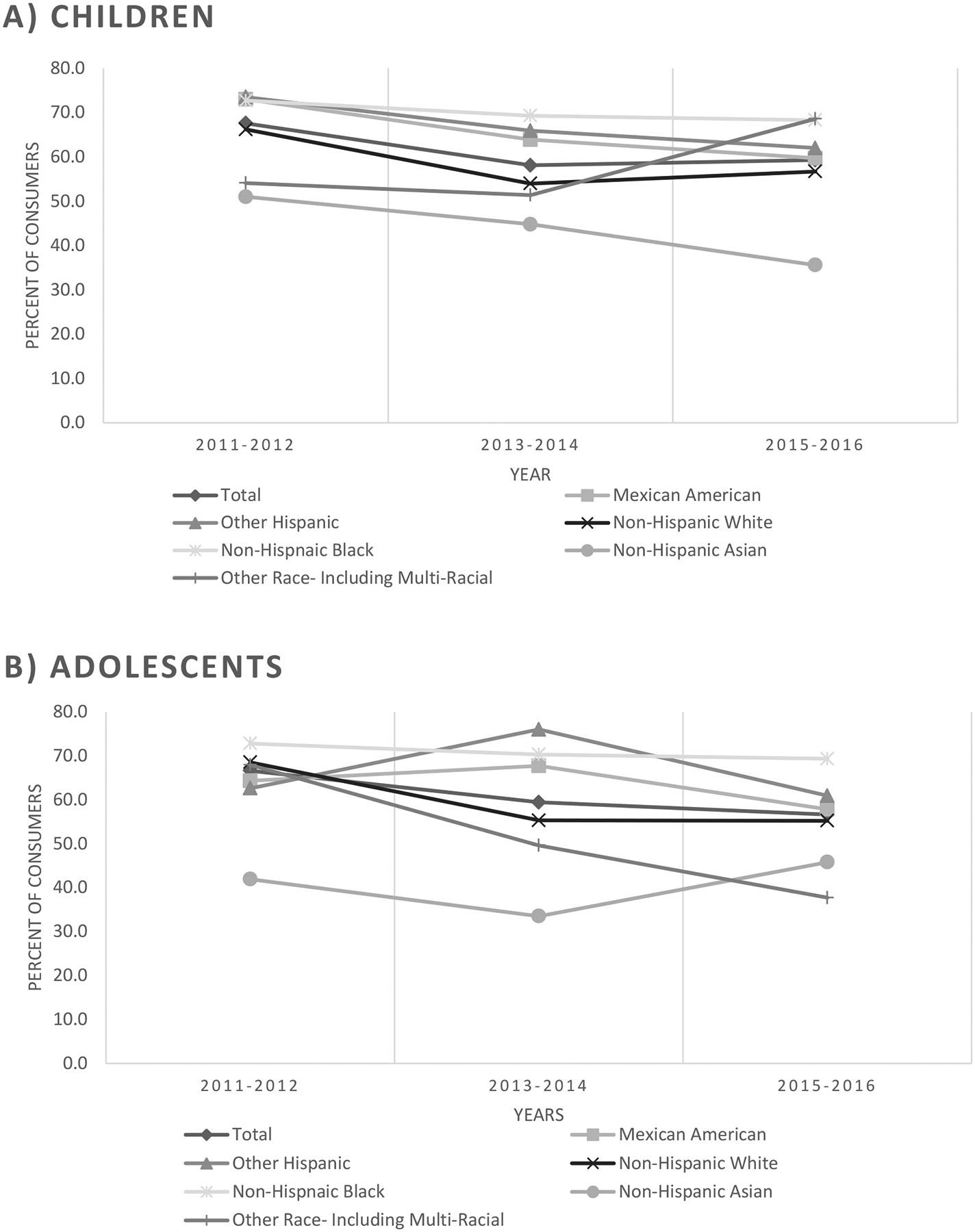
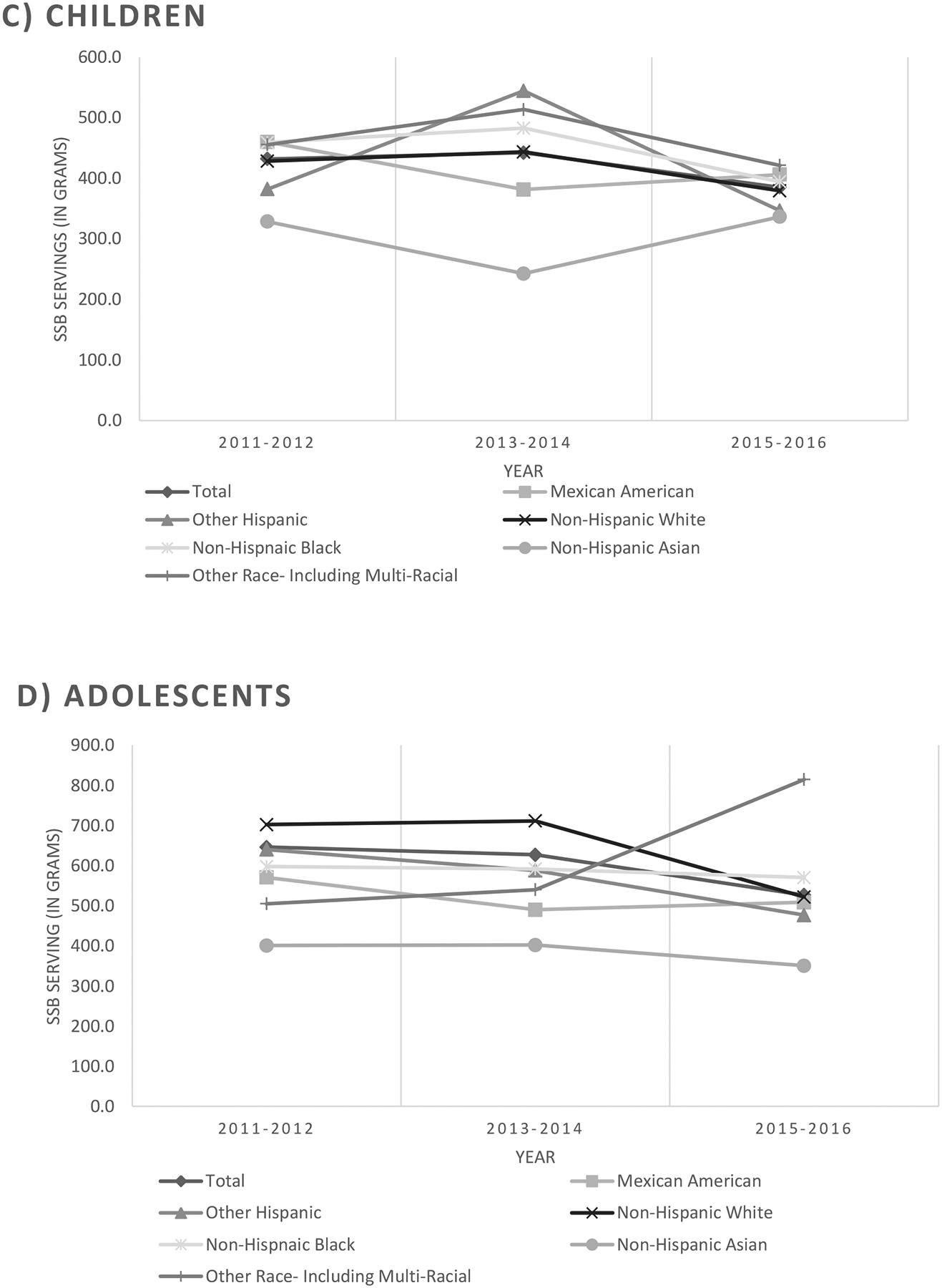
Results: Two-thirds of children and adolescents reported consuming SSB on a given day. Among consumers, mean SSB consumption was greatest for Black children and White adolescents and lowest for Asian American children and adolescents. The most popular type of SSB consumed was sweetened fruit drinks among children and soda among adolescents, except among White and Mexican American children for whom soda and Black adolescents for whom sweetened fruit drinks were most popular. Female sex and water intake were negatively associated with SSB consumption across most races/ethnicities. Screen time, dentist visits, nativity, and guardian education were associated with SSB intake among a subset of races/ethnicities.
Conclusions: Associations between covariates and SSB intake as well as types of beverages preferred vary by race/ethnicity, as such chronic disease policies should not be 'one size fits all'. Targeted interventions for specific groups of vulnerable youths hold promise for further reducing SSB consumption, including directing efforts towards reducing sweetened fruit drinks for Black children.
Keywords: Adolescents; Children; Dietary behaviors; Racial disparities.
Conflict of interest statement
Figures
References
Publication types
MeSH terms
Grants and funding
LinkOut - more resources
Full Text Sources