


Mechanical and biological properties of Ti-(0-25 wt%)Nb alloys for biomedical implants application
- PMID: 32153995
- PMCID: PMC7053259
- DOI: 10.1093/rb/rbz042
Mechanical and biological properties of Ti-(0-25 wt%)Nb alloys for biomedical implants application
Abstract
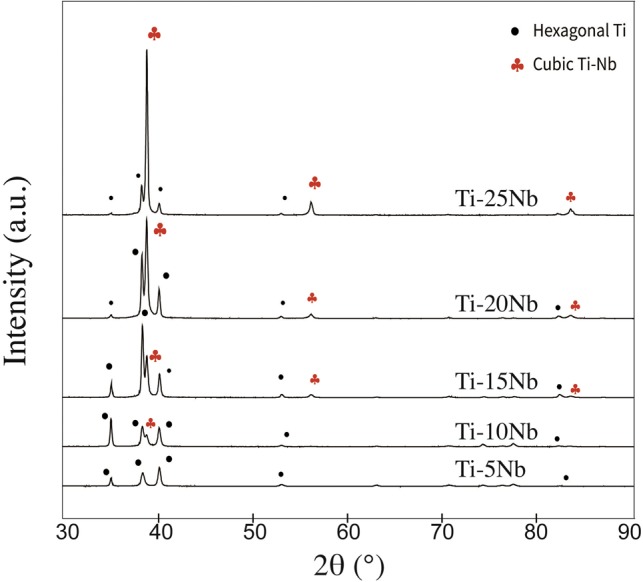
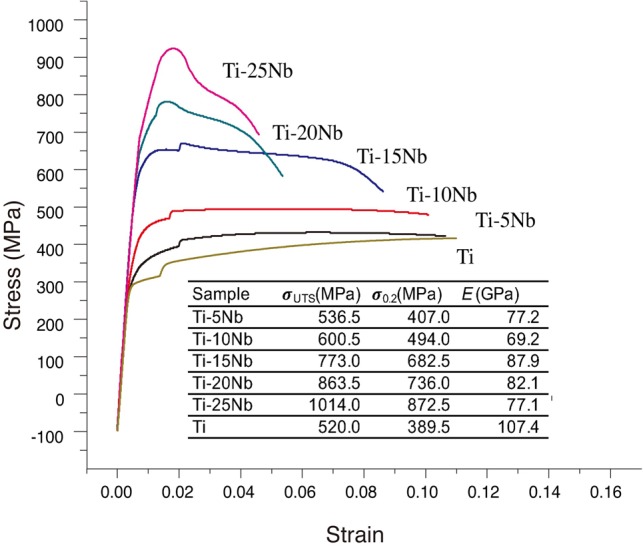
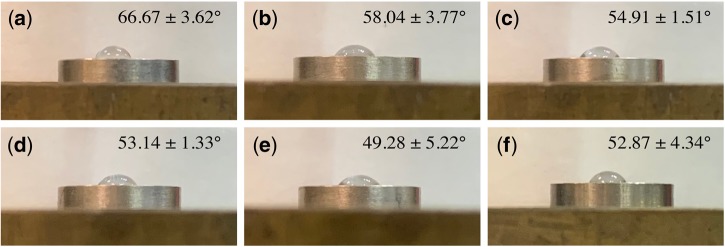
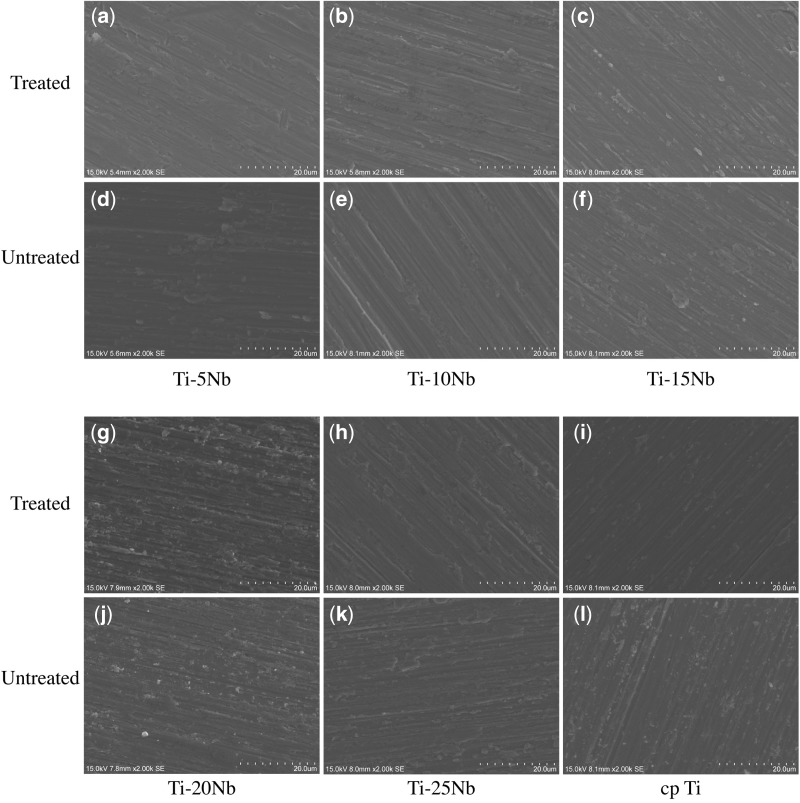
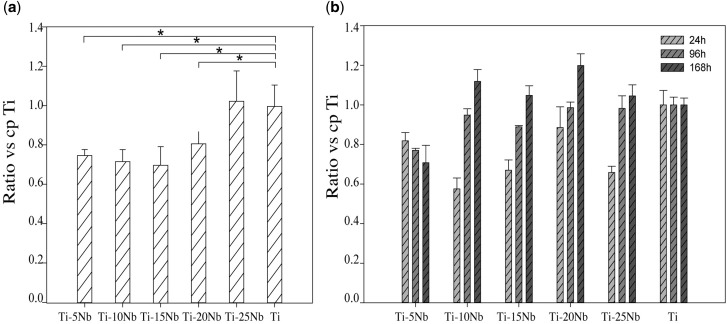
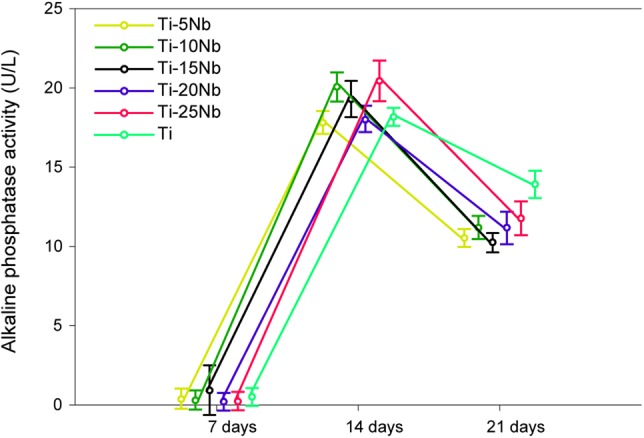
Binary titanium-niobium (Ti-Nb) alloys have recently been attracted due to low Young's moduli and non-toxic properties. This study explores the influence of low Nb content (0-25 wt%) on the comprehensive parameters of tensile stress-strain relationships (ultimate strength (σUTS), yield strength (σ0.2) and elastic modulus (E)), surfaces properties (Vickers microhardness, surface roughness (R a), water contact angle (WCA), X-ray diffraction (XRD) and scanning electron microscopy (SEM)), corrosion resistance (in artificial saliva and lactic acid) and biological properties (cytotoxicity and alkaline phosphatase activity of MC3T3-E1 pre-osteoblasts) of Ti-xNb alloys (x = 5, 10, 15, 20 and 25 wt%), with using commercially pure grade 2 titanium (cp-Ti) as control. XRD results shown that all the Ti-xNb alloys comprised α + β Ti alloy phases, such that the β phase increased correspondingly with the increased amount of Nb in the alloy, as well as the reduction of E (69-87 GPa). Except Ti-5Nb, all other Ti-xNb alloys showed a significantly higher hardness, increased σUTS and σ0.2, and decreased WCA compared with cp-Ti. No corrosion was detected on Ti-xNb alloys and cp-Ti in artificial saliva and lactic acid solutions. The cytotoxicity of Ti-xNb alloys was comparable to that of cp-Ti in MC3T3-E1 pre-osteoblasts without interference from differentiation behaviour, but the proliferation rate of the Ti-5Nb alloy was lower than other groups. In overall, binary Ti-(10-25 wt%)Nb alloys are promising candidate for orthopaedic and dental implants due to their improved mechanical properties and comparable biological performance, while Ti-5Nb should be used with caution.
Keywords: binary titanium alloys; biocompatibility; biomaterial; low Young’s modulus; titanium–niobium.
© The Author(s) 2019. Published by Oxford University Press.
Figures
References
-
- Eisenbarth E, Velten D, Müller M. et al. Biocompatibility of β-stabilizing elements of titanium alloys. Biomaterials 2004;25:5705–13. - PubMed
-
- Cordeiro JM, Beline T, Ribeiro ALR. et al. Development of binary and ternary titanium alloys for dental implants. Dent Mater 2017;33:1244–57. - PubMed
-
- Iijima D, Yoneyama T, Doi H. et al. Wear properties of Ti and Ti-6Al-7Nb castings for dental prostheses. Biomaterials 2003;24:1519–24. - PubMed
-
- Ponsonnet L, Reybier K, Jaffrezic N. et al. Relationship between surface properties (roughness, wettability) of titanium and titanium alloys and cell behaviour. Mater Sci Eng C 2003;23:551–60.
LinkOut - more resources
Full Text Sources
Miscellaneous
