. 2020 Mar 26;5(6):e135204.
doi: 10.1172/jci.insight.135204.

Tet2-mediated clonal hematopoiesis in nonconditioned mice accelerates age-associated cardiac dysfunction

Affiliations

Tet2-mediated clonal hematopoiesis in nonconditioned mice accelerates age-associated cardiac dysfunction

Ying Wang et al. JCI Insight. .

Erratum in

Abstract

Clonal hematopoiesis of indeterminate potential is prevalent in elderly individuals and associated with increased risks of all-cause mortality and cardiovascular disease. However, mouse models to study the dynamics of clonal hematopoiesis and its consequences on the cardiovascular system under homeostatic conditions are lacking. We developed a model of clonal hematopoiesis using adoptive transfer of unfractionated ten-eleven translocation 2-mutant (Tet2-mutant) bone marrow cells into nonirradiated mice. Consistent with age-related clonal hematopoiesis observed in humans, these mice displayed a progressive expansion of Tet2-deficient cells in multiple hematopoietic stem and progenitor cell fractions and blood cell lineages. The expansion of the Tet2-mutant fraction was also observed in bone marrow-derived CCR2+ myeloid cell populations within the heart, but there was a negligible impact on the yolk sac-derived CCR2- cardiac-resident macrophage population. Transcriptome profiling revealed an enhanced inflammatory signature in the donor-derived macrophages isolated from the heart. Mice receiving Tet2-deficient bone marrow cells spontaneously developed age-related cardiac dysfunction characterized by greater hypertrophy and fibrosis. Altogether, we show that Tet2-mediated hematopoiesis contributes to cardiac dysfunction in a nonconditioned setting that faithfully models human clonal hematopoiesis in unperturbed bone marrow. Our data support clinical findings that clonal hematopoiesis per se may contribute to diminished health span.

Keywords: Aging; Bone marrow transplantation; Cardiology; Hematopoietic stem cells; Macrophages.


Conflict of interest statement

Conflict of interest: The authors have declared that no conflict of interest exists.

Figures

Figure 1
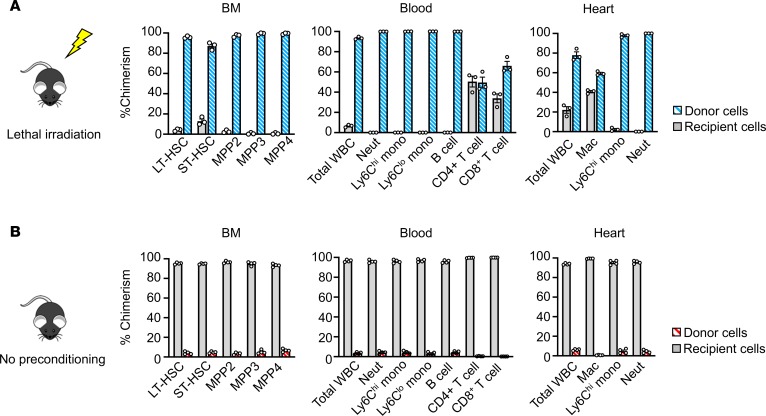
Figure 1. Hematopoietic stem/progenitor cells are engraftable in a nonmyeloablative manner.
(A) Flow cytometric analyses of bone marrow, peripheral blood and heart digests 1 month after the transplantation of 5 million bone marrow cells into recipient mice preconditioned with lethal irradiation as specified in Methods (n = 3). (B) Flow cytometric analysis of bone marrow, peripheral blood, and heart digests 1 month after the transplantation of 1.5 × 10⁷ unfractionated bone marrow cells over 3 consecutive days to recipient mice without preconditioning as specified in Methods (n = 4).
Figure 2
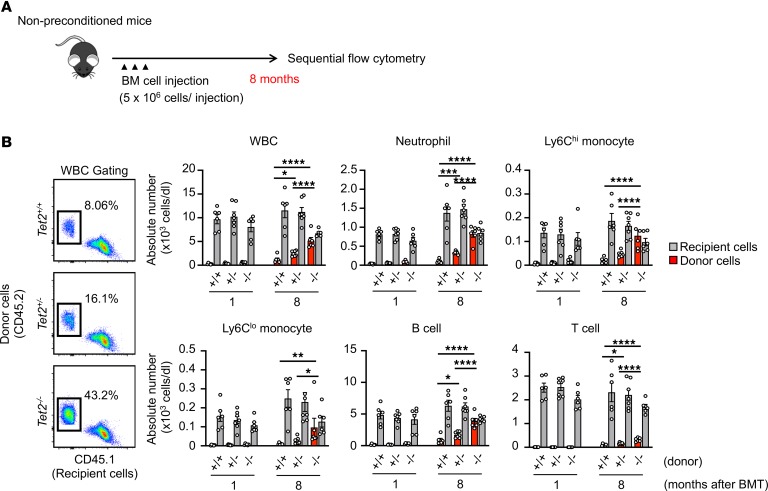
Figure 2. Transplantation of Tet2 loss-of-function cells in nonconditioned mice leads to a dose-dependent increase in chimerism in peripheral blood.
(A) Schematic of this study. A total of 1.5 × 10⁷ unfractionated donor bone marrow cells were sequentially injected into non-preconditioned B6 CD45.1 Pep Boy recipients over 3 consecutive days. Donor cells were obtained from either C57BL/6J WT mice (Tet2+/+) or Tet2-deficient mice (Tet2+/– and Tet2–/–). Absolute number and the chimerism of test cells in peripheral blood were evaluated by sequential flow cytometry analysis. (B) Representative flow data for WBCs and quantitation of flow cytometry analysis of peripheral blood at 1 month and 8 months to show increased chimerism of donor-derived cells in mice transplanted with Tet2-deficient cells (n = 6–7 per genotype). Statistical analysis was performed with 2-way repeated-measures ANOVA with Tukey’s multiple-comparisons tests. *P < 0.05, **P < 0.01, ***P < 0.001, and ****P < 0.0001.
Figure 3
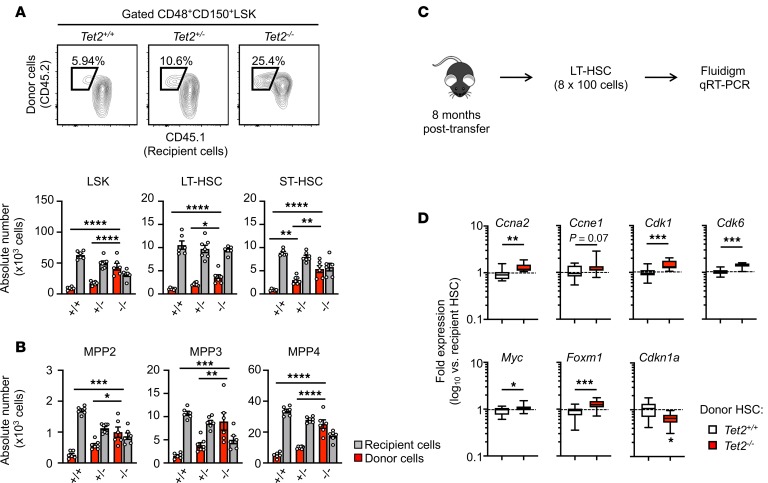
Figure 3. Transferred Tet2-deficient HSCs regulate the transcript signatures of their WT counterparts.
Flow cytometry analysis data of bone marrow at 8 months after BMT showing increased chimerism of donor-derived cells in mice transplanted with Tet2-deficient cells (n = 6–7 per genotype) in (A) HSCs, with representative long-term (LT-) and short-term (ST-) HSC data shown, and (B) multipotent progenitors (MPPs). Statistical analysis was performed with 1-way ANOVA with Tukey’s multiple-comparisons tests. (C) Experimental design and (D) gene expression analysis of cell cycle regulators in Tet2-sufficient and Tet2-deficient donor HSCs isolated from bone marrow (n = 13–16 per genotype). The box plots depict the minimum and maximum values (whiskers), the upper and lower quartiles, and the median. The length of the box represents the interquartile range. Data are expressed as log10 fold change relative to recipient HSCs. Statistical analysis was performed with Mann-Whitney U test. *P <0.05, **P <0.01, ***P < 0.001, and ****P < 0.0001.
Figure 4
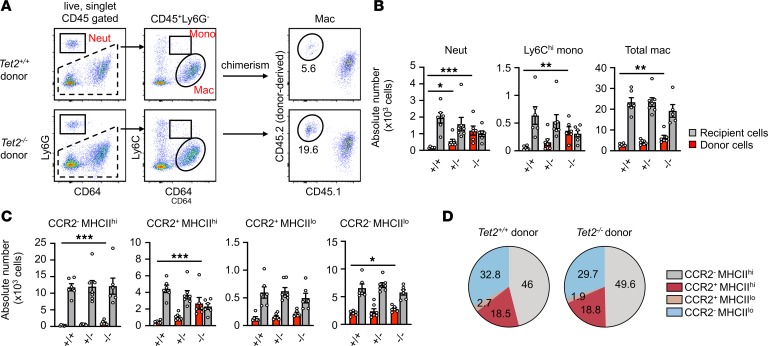
Figure 4. Tet2-mediated clonal hematopoiesis modulates age-related immunological remodeling of the heart.
(A) Representative flow cytometry data of heart digests at 8 months after BMT. Cells were defined as neutrophils (Neut; CD45+Ly6G+), Ly6Chi monocytes (Ly6Chi mono; CD45+Ly6GCD64+Ly6Chi), or macrophages (Mac; CD45+Ly6GCD64+Ly6Clo). (B) Flow cytometry analysis of immune cells in the heart shows increased chimerism of donor-derived cardiac immune cells in mice transplanted with Tet2-deficient cells (n = 6-7 per genotype). Statistical analysis was performed with Kruskal-Wallis H test with Dunn’s multiple-comparisons tests (Neut, Total mac) and 1-way ANOVA with Tukey’s multiple-comparisons test (Ly6Chi mono). (C) Flow cytometry analysis of subpopulations of cardiac macrophages shows the higher replacement of resident macrophage in mice transplanted with Tet2-deficient cells (n = 6–7 per genotype). Statistical analysis was performed with Kruskal-Wallis H test with Dunn’s multiple-comparisons tests (Neut, Total mac) and 1-way ANOVA with Tukey’s multiple-comparisons test (Ly6Chi mono). (D) Flow cytometry analysis of cardiac macrophages showing the fractions of total CD45+ macrophage subpopulations (n = 6 per genotype). *P < 0.05, **P < 0.01, and ***P < 0.001.
Figure 5
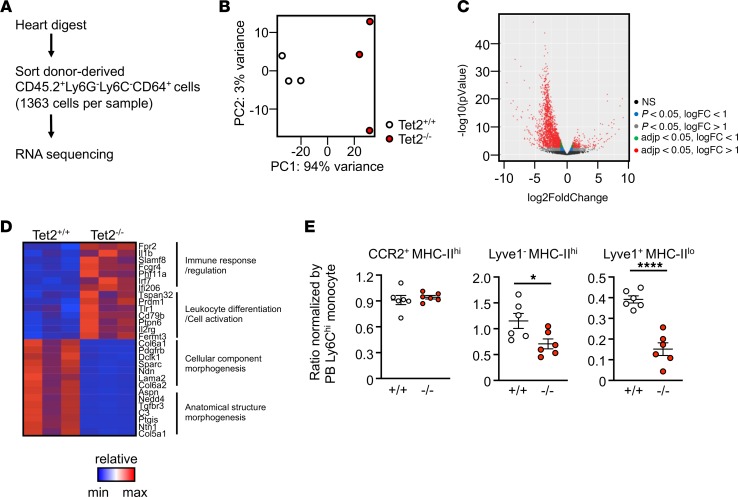
Figure 5. RNA-Seq analysis of Tet2-sufficient and Tet2-deficient donor-derived cardiac macrophages.
(A) Scheme of the study. Donor bone marrow–derived macrophages were defined as the CD45.2+CD64+Ly6GLy6C population. At 8 months after adoptive transfer, 1363 cells were sorted from mice and used for ultralow-input RNA-Seq. (B) Principal component analysis of ultralow-input RNA-Seq data obtained from sorted donor bone marrow–derived cardiac macrophages of Tet2-sufficient and Tet2-deficient mice (n = 3 per genotype). (C) Volcano plots showing the number of genes differentially expressed between cardiac macrophages derived from WT versus Tet2-deficient bone marrow cells. (D) Heatmap of a select group of the most highly differentially expressed genes from the highest ranked annotation categories comparing cardiac macrophages derived from WT versus Tet2-deficient bone marrow cells. (E) Result of donor chimerism of cardiac subpopulations normalized by donor chimerism of peripheral blood Ly6Chi monocytes (n = 6 per genotype). Statistical analysis was performed with 2-tailed unpaired Student’s t test. *P < 0.05, and ****P < 0.0001.
Figure 6
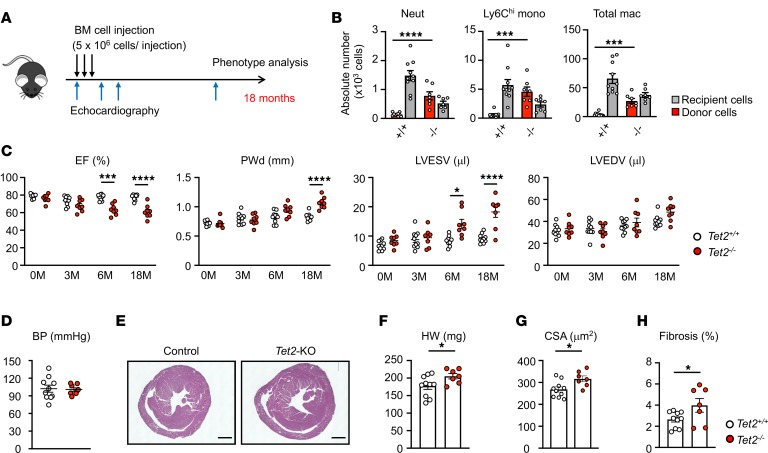
Figure 6. Tet2-mediated clonal hematopoiesis accelerates age-related cardiomyopathy.
(A) Schematic of this study. A total of 1.5 × 10⁷ unfractionated donor bone marrow cells were sequentially injected into non-preconditioned B6 CD45.1 Pep Boy recipients. Donor cells were obtained from either C57BL/6J WT mice (Tet2+/+) or Tet2-deficient mice (Tet2–/–). Echocardiography was performed at the indicated time points. Mice were euthanized for the analysis 18 months after BMT. (B) Flow cytometry analysis of immune cells in the heart shows increased chimerism of donor-derived cardiac immune cells in mice transplanted with Tet2-deficient cells (n = 7–10 per genotype). Statistical analysis was performed with 2-tailed unpaired Student’s t test (Neut) and Mann-Whitney U tests (Ly6Chi mono, Total mac). (C) Data of sequential echocardiography analysis to show progressive decrease in cardiac function in mice with Tet2-mediated clonal hematopoiesis (n = 7–10 per genotype). Statistical analysis was performed with 2-way repeated-measures ANOVA with Holm-Šídák multiple-comparisons tests. (D) Tail cuff–measured blood pressure of each group at study end to show no obvious difference in each group (n = 7–10 per genotype). Statistical analysis was performed with 2-tailed unpaired Student’s t test. (E) Representative data of histological analysis of the heart from mice transplanted with Tet2-sufficient and -deficient bone marrow cells at the end of study. Scale bar: 600 μm. (F) Heart weight of the mice from each group (n = 7–10 per genotype). Statistical analysis was performed with 2-tailed unpaired Student’s t test. (G) Cross-sectional area (CSA) in left ventricles 18 months after BMT was assessed by wheat germ agglutinin staining from heart of Tet2+/+ BMT (n = 10) mice and Tet2–/– BMT mice (n = 7). Staining shows that the heart displays greater hypertrophy of the cardiac myocytes in Tet2–/– BMT mice. Statistical analysis was performed with 2-tailed unpaired Student’s t test. (H) Quantitative analysis of cardiac sections stained with Picrosirius red showing that mice with Tet2-mediated clonal hematopoiesis exhibit enhanced fibrosis (n = 7–10 per genotype). Statistical analysis was performed with 2-tailed unpaired Student’s t test. *P < 0.05, ***P < 0.001, and ****P < 0.0001.

References

    1. Shlush LI. Age-related clonal hematopoiesis. Blood. 2018;131(5):496–504. doi: 10.1182/blood-2017-07-746453. - DOI - PubMed
    1. Steensma DP, et al. Clonal hematopoiesis of indeterminate potential and its distinction from myelodysplastic syndromes. Blood. 2015;126(1):9–16. doi: 10.1182/blood-2015-03-631747. - DOI - PMC - PubMed
    1. Fuster JJ, et al. Clonal hematopoiesis associated with TET2 deficiency accelerates atherosclerosis development in mice. Science. 2017;355(6327):842–847. doi: 10.1126/science.aag1381. - DOI - PMC - PubMed
    1. Sano S, Oshima K, Wang Y, Katanasaka Y, Sano M, Walsh K. CRISPR-mediated gene editing to assess the roles of Tet2 and Dnmt3a in clonal hematopoiesis and cardiovascular disease. Circ Res. 2018;123(3):335–341. doi: 10.1161/CIRCRESAHA.118.313225. - DOI - PMC - PubMed
    1. Sano S, et al. Tet2-mediated clonal hematopoiesis accelerates heart failure through a mechanism involving the IL-1β/NLRP3 inflammasome. J Am Coll Cardiol. 2018;71(8):875–886. doi: 10.1016/j.jacc.2017.12.037. - DOI - PMC - PubMed

Publication types