


Is long-term PM1 exposure associated with blood lipids and dyslipidemias in a Chinese rural population?
- PMID: 32155508
- PMCID: PMC7152799
- DOI: 10.1016/j.envint.2020.105637
Is long-term PM1 exposure associated with blood lipids and dyslipidemias in a Chinese rural population?
Abstract
Background: Air pollution has been shown to be associated with blood lipid levels. However, studies on long-term ambient particulate matter with aerodynamic diameter ≤1 μm (PM1) exposure in high-exposure areas are still limited. This study aimed to explore the associations among long-term PM1 exposure, blood lipids and dyslipidemias.
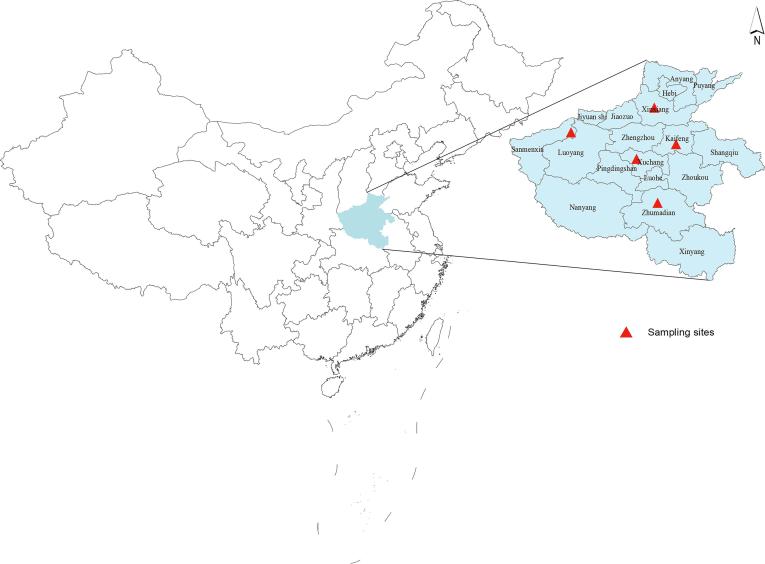
Methods: Baseline data of The Henan Rural Cohort study was used in present study, including a total of 39,259 participants aged from 18 to 79 years. Daily levels of PM1 were estimated by a spatiotemporal model using ground-level measurements of PM1, satellite remote sensing data and other predictors, according to participants' home addresses. Individual exposure to PM1 was the 3-year average before baseline investigation. Linear regression and logistic regression models were applied to examine the associations among PM1, blood lipids ((total cholesterol (TC), triglyceride (TG), high-density lipoprotein cholesterol (HDL-C) and low-density lipoprotein cholesterol (LDL-C)), and prevalence of dyslipidemias.
Results: The 3-year concentration of PM1 was 55.7 ± 2.1 μg/m3. Each 1 μg/m3 increment of PM1 was associated with an increase of 0.21% (95% confidence interval (CI): 0.11%-0.31%) in TC and 0.75% (95% CI: 0.61%-0.90%) in LDL-C, while decrease of 2.68% (95% CI: 2.43%-2.93%) in TG and 0.47% (95% CI: 0.35%-0.59%) in HDL-C. Each 1 μg/m3 increase in PM1 was associated with 6% (95% CI: 4%-8%), 3% (95% CI: 2%-5%) and 5% (95% CI: 3%-7%) higher risks of hypercholesterolemia, hyperbetalipoproteinemia and hypoalphalipoproteinemia. Sex, age and BMI statistically modified the associations between PM1 with blood lipid levels and dyslipidemias.
Conclusions: Higher PM1 exposure was associated with adverse changes of blood lipid levels and dyslipidemias. Males, older and overweight participants were susceptive to the adverse effects of PM1.
Keywords: Blood lipids; Cohort study; Dyslipidemia; PM(1); Rural areas.
Copyright © 2020 The Authors. Published by Elsevier Ltd.. All rights reserved.
Conflict of interest statement
Declaration of Competing Interest The authors declare that they have no known competing financial interests or personal relationships that could have appeared to influence the work reported in this paper.
Figures


References
-
- Anderson K.M., Castelli W.P., Levy D. Cholesterol and mortality. 30 years of follow-up from the Framingham study. JAMA. 1987;257:2176–2180. - PubMed
-
- Awad K., Mikhailidis D.P., Toth P.P., Jones S.R., Moriarty P., Lip G.Y.H., Muntner P., Catapano A.L., Pencina M.J., Rosenson R.S., Rysz J., Banach M., Lipid, Blood Pressure Meta-analysis Collaboration, G. Efficacy and safety of alternate-day versus daily dosing of statins: a systematic review and meta-analysis. Cardiovasc. Drugs Ther. 2017;31:419–431. - PubMed
-
- Bind M.A., Lepeule J., Zanobetti A., Gasparrini A., Baccarelli A., Coull B.A., Tarantini L., Vokonas P.S., Koutrakis P., Schwartz J. Air pollution and gene-specific methylation in the Normative Aging Study: association, effect modification, and mediation analysis. Epigenetics. 2014;9:448–458. - PMC - PubMed
Publication types
MeSH terms
Substances
LinkOut - more resources
Full Text Sources
Miscellaneous
