


Coagulation of Chitin Production Wastewater from Shrimp Scraps with By-Product Chitosan and Chemical Coagulants
- PMID: 32155925
- PMCID: PMC7182843
- DOI: 10.3390/polym12030607
Coagulation of Chitin Production Wastewater from Shrimp Scraps with By-Product Chitosan and Chemical Coagulants
Abstract
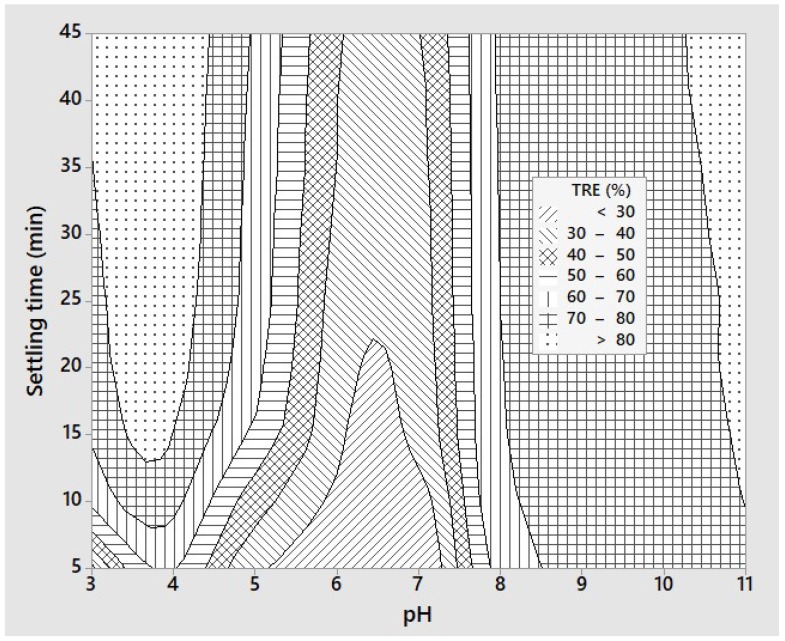
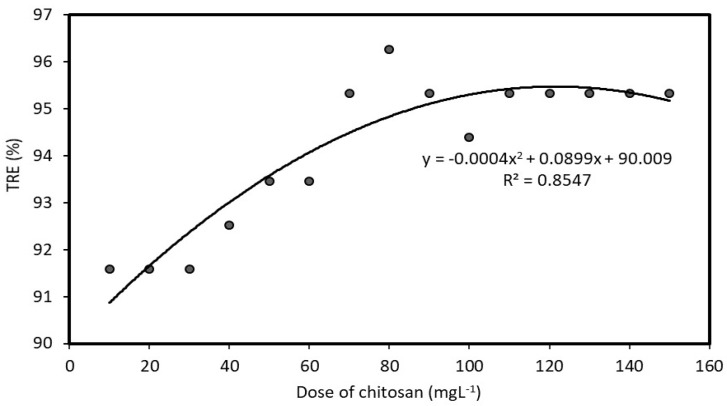
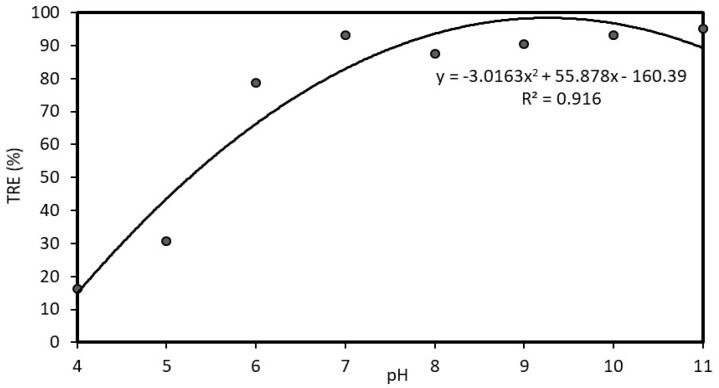
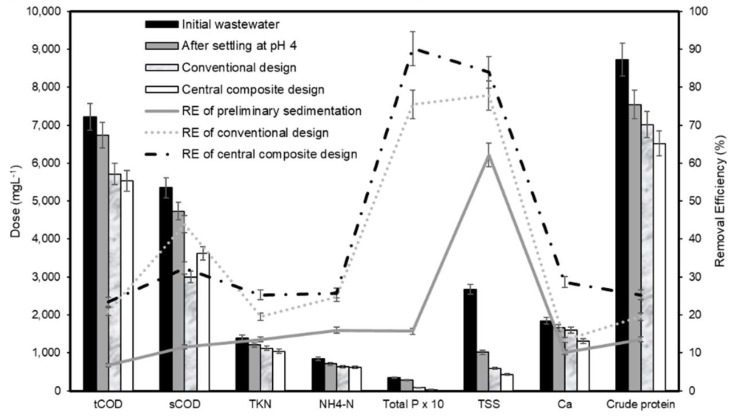
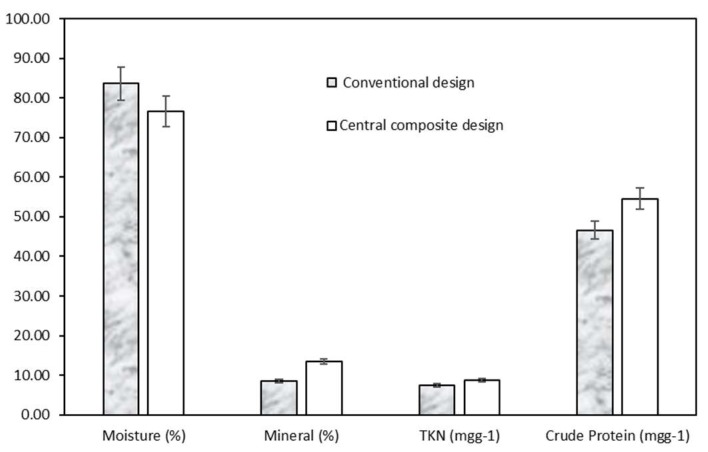
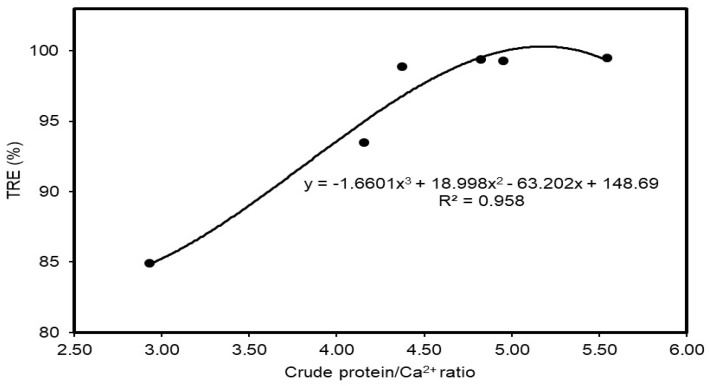
Chitin production wastewater contains nutrient-rich organic and mineral contents. Coagulation of the wastewater with a natural coagulant such as by-product chitosan would be an economical and environmentally friendly method of treatment. This study investigated the treatment efficiencies of a preliminary sedimentation process followed by coagulation. The removal efficiencies for wastewater parameters were evaluated and compared for coagulants including by-product chitosan, polyaluminum chloride, and polyacryamide. The evaluation was based on the removal of wastewater turbidity and other criteria, including tCOD, sCOD, TKN, NH4+-N, TP, TSS, calcium, and crude protein. The results showed that the preliminary sedimentation (before coagulation) can remove over 80% of turbidity and more than 93% of TSS at pH 4 in 30 min. At optimal conditions, when the ratio of crude protein and calcium was 4.95, by-product chitosan dose of 77.5 mg·L-1 and pH = 8.3, the wastewater characteristics changes were tCOD 23%, sCOD 32%, TKN and ammonium 25%, TP 90%, TSS 84%, Ca2+ 29%, and crude protein 25%. The residue recovered through coagulation consists of up to 55 mg·g-1 crude protein, which is used for animal feed or crop fertilizer.
Keywords: chemical coagulation; chitin and chitosan; crude protein recovery; high strength wastewater treatment; turbidity removal.
Conflict of interest statement
The authors declare no conflict of interest.
Figures
References
-
- Trung T.S., Bao H.N.D. Physicochemical properties and antioxidant activity of chitin and chitosan prepared from pacific white shrimp waste. Int. J. Carbohydr. Chem. 2015;2015 doi: 10.1155/2015/706259. - DOI
-
- Mao X., Guo N., Sun J. Cleaner production guide of chito/chitin oligosaccharides and its monomer. In: Zhao L., editor. Oligosaccharides of Chitin and Chitosan: Bio-Manufacture and Applications. Springer; Singapore: 2019. pp. 107–127. - DOI
-
- Wang S.-L., Liang T.-W. Microbial reclamation of squid pens and shrimp shells. Res. Chem. Intermed. 2017;43:3445–3462. doi: 10.1007/s11164-016-2425-y. - DOI
-
- Doan C.T., Tran T.N., Wen I., Nguyen V.B., Nguyen A.D., Wang S.-L. Conversion of shrimp head waste for production of a thermotolerant, detergent-stable, alkaline protease by paenibacillus sp. Catalysts. 2019;9:798. doi: 10.3390/catal9100798. - DOI
Grants and funding
LinkOut - more resources
Full Text Sources
Miscellaneous
