


An integrative approach to the regulation of mitochondrial respiration during exercise: Focus on high-intensity exercise
- PMID: 32156501
- PMCID: PMC7284910
- DOI: 10.1016/j.redox.2020.101478
An integrative approach to the regulation of mitochondrial respiration during exercise: Focus on high-intensity exercise
Abstract
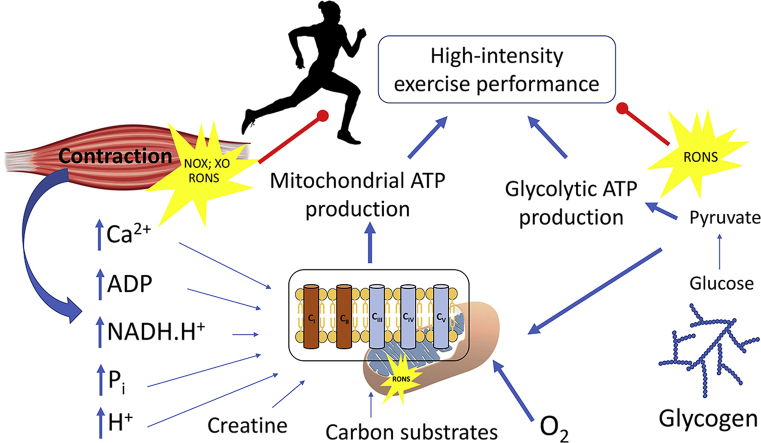
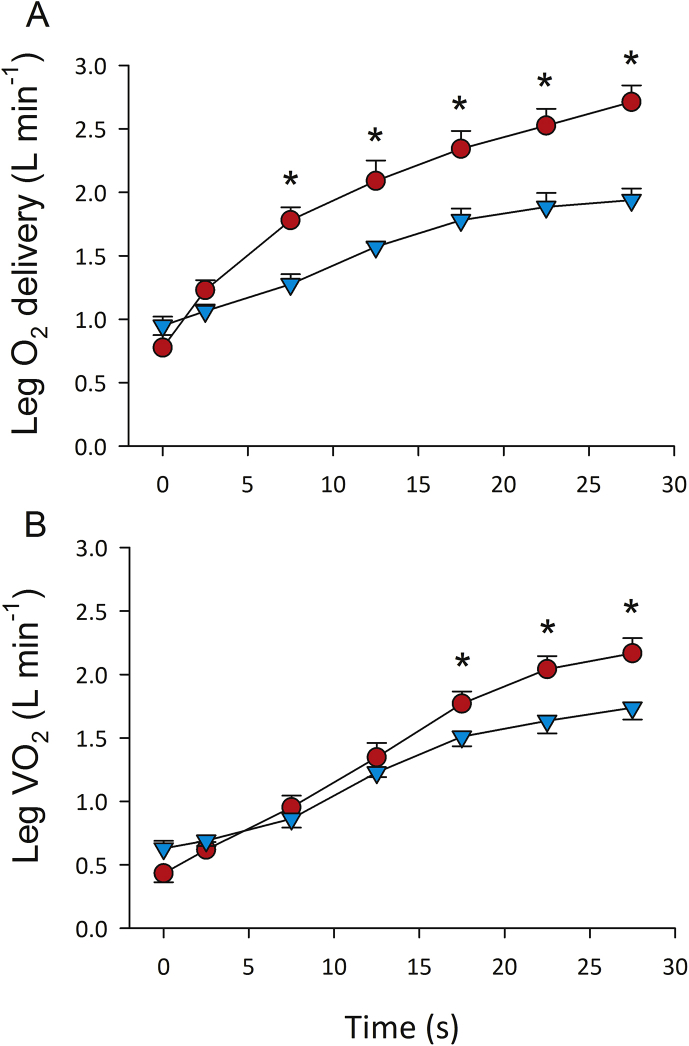
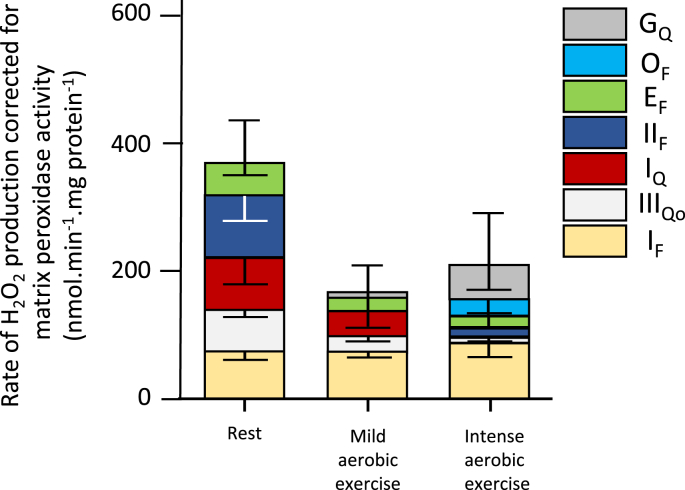
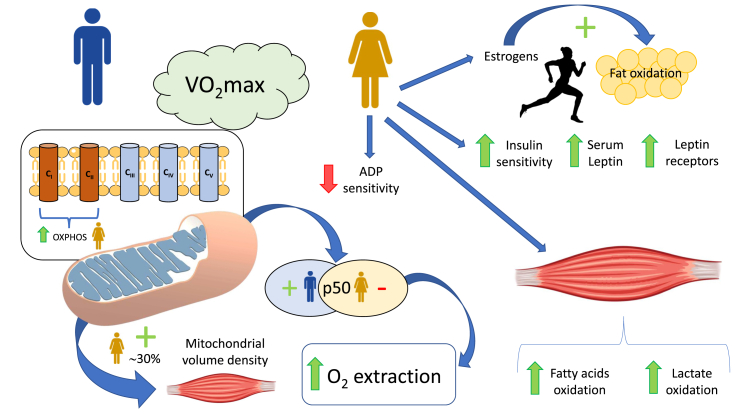
During exercise, muscle ATP demand increases with intensity, and at the highest power output, ATP consumption may increase more than 100-fold above the resting level. The rate of mitochondrial ATP production during exercise depends on the availability of O2, carbon substrates, reducing equivalents, ADP, Pi, free creatine, and Ca2+. It may also be modulated by acidosis, nitric oxide and reactive oxygen and nitrogen species (RONS). During fatiguing and repeated sprint exercise, RONS production may cause oxidative stress and damage to cellular structures and may reduce mitochondrial efficiency. Human studies indicate that the relatively low mitochondrial respiratory rates observed during sprint exercise are not due to lack of O2, or insufficient provision of Ca2+, reduced equivalents or carbon substrates, being a suboptimal stimulation by ADP the most plausible explanation. Recent in vitro studies with isolated skeletal muscle mitochondria, studied in conditions mimicking different exercise intensities, indicate that ROS production during aerobic exercise amounts to 1-2 orders of magnitude lower than previously thought. In this review, we will focus on the mechanisms regulating mitochondrial respiration, particularly during high-intensity exercise. We will analyze the factors that limit mitochondrial respiration and those that determine mitochondrial efficiency during exercise. Lastly, the differences in mitochondrial respiration between men and women will be addressed.
Keywords: Fatigue; High-intensity exercise; Mitochondrial respiration; Oxidative stress; Sprint performance.
Copyright © 2020 The Authors. Published by Elsevier B.V. All rights reserved.
Conflict of interest statement
Declaration of competing interest The authors declare that they have no competing financial interests or personal relationships that could have appeared to influence the work reported in this paper.
Figures
References
-
- Mitchell P. Coupling of phosphorylation to electron and hydrogen transfer by a chemi-osmotic type of mechanism. Nature. 1961;191:144–148. - PubMed
-
- Vercesi A.E., Castilho R.F., Kowaltowski A.J., de Oliveira H.C.F., de Souza-Pinto N.C., Figueira T.R. Mitochondrial calcium transport and the redox nature of the calcium-induced membrane permeability transition. Free Radic. Biol. Med. 2018;129:1–24. - PubMed
Publication types
MeSH terms
LinkOut - more resources
Full Text Sources
Medical
Research Materials
Miscellaneous
