


Tailoring plant-associated microbial inoculants in agriculture: a roadmap for successful application
- PMID: 32157287
- PMCID: PMC7450670
- DOI: 10.1093/jxb/eraa111
Tailoring plant-associated microbial inoculants in agriculture: a roadmap for successful application
Abstract
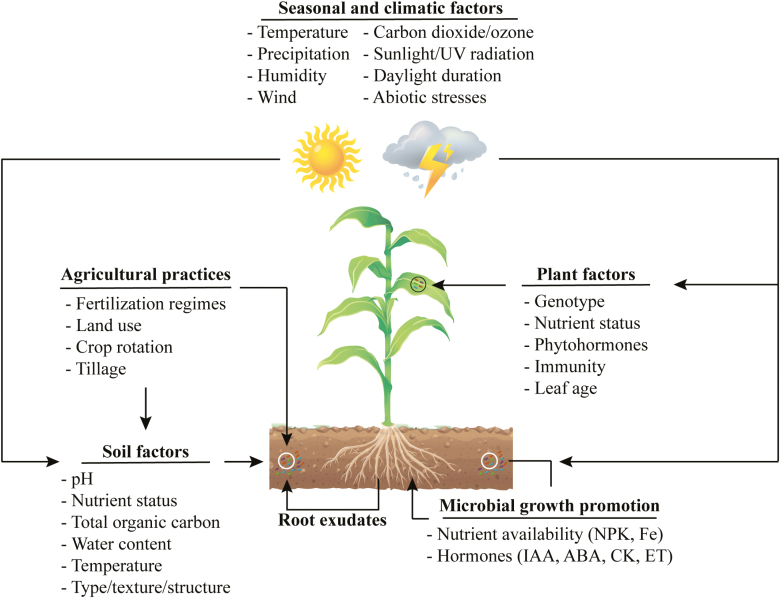
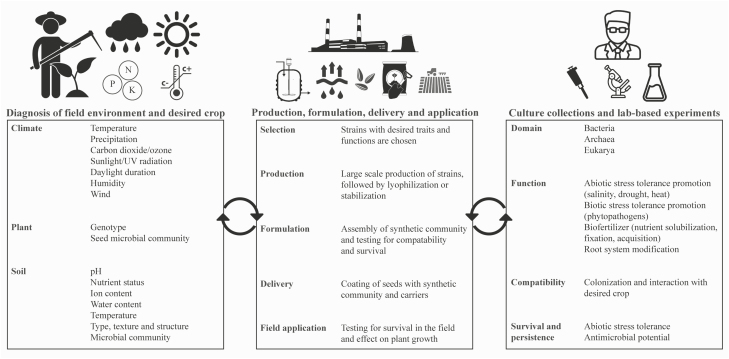
Plants are now recognized as metaorganisms which are composed of a host plant associated with a multitude of microbes that provide the host plant with a variety of essential functions to adapt to the local environment. Recent research showed the remarkable importance and range of microbial partners for enhancing the growth and health of plants. However, plant-microbe holobionts are influenced by many different factors, generating complex interactive systems. In this review, we summarize insights from this emerging field, highlighting the factors that contribute to the recruitment, selection, enrichment, and dynamic interactions of plant-associated microbiota. We then propose a roadmap for synthetic community application with the aim of establishing sustainable agricultural systems that use microbial communities to enhance the productivity and health of plants independently of chemical fertilizers and pesticides. Considering global warming and climate change, we suggest that desert plants can serve as a suitable pool of potentially beneficial microbes to maintain plant growth under abiotic stress conditions. Finally, we propose a framework for advancing the application of microbial inoculants in agriculture.
Keywords: Abiotic and biotic stress; DARWIN21; desert bacteria; endophytes; plant growth-promoting rhizobacteria (PGPRs); plant microbiome; plant–microbe interaction; soil microbial community; synthetic community (SynCom).
© The Author(s) 2020. Published by Oxford University Press on behalf of the Society for Experimental Biology. All rights reserved. For permissions, please email: journals.permissions@oup.com.
Figures
References
-
- Abeles FB, Morgan PW, Saltveit ME. 1992. Roles and physiological effects of ethylene in plant physiology: dormancy, growth, and development. In: Abeles FB, Morgan PW, Saltveit ME, eds. Ethylene in plant biology, 2nd edn New York: Academic Press, 120–181.
-
- Achouak W, Conrod S, Cohen V, Heulin T. 2004. Phenotypic variation of Pseudomonas brassicacearum as a plant root-colonization strategy. Molecular Plant-Microbe Interactions 17, 872–879. - PubMed
-
- Adam E, Bernhart M, Müller H, Winkler J, Berg G. 2018. The Cucurbita pepo seed microbiome: genotype-specific composition and implications for breeding. Plant and Soil 422, 35–49.
-
- Adams PD, Kloepper JW. 2002. Effect of host genotype on indigenous bacterial endophytes of cotton (Gossypium hirsutum L.). Plant and Soil 240, 181–189.
-
- Aira M, Gómez-Brandón M, Lazcano C, Bååth E, Domínguez J. 2010. Plant genotype strongly modifies the structure and growth of maize rhizosphere microbial communities. Soil Biology and Biochemistry 42, 2276–2281.
Publication types
MeSH terms
Substances
LinkOut - more resources
Full Text Sources
Other Literature Sources
