


Older Adults Can Successfully Monitor Symptoms Using an Inclusively Designed Mobile Application
- PMID: 32157679
- PMCID: PMC7323569
- DOI: 10.1111/jgs.16403
Older Adults Can Successfully Monitor Symptoms Using an Inclusively Designed Mobile Application
Abstract
Objectives: Patient-Reported Outcomes Measurement Information System (PROMIS) measures can monitor patients with chronic illnesses outside of healthcare settings. Unfortunately, few applications that collect electronic PROMIS measures are designed using inclusive design principles that ensure wide accessibility and usability, thus limiting use by older adults with chronic illnesses. Our aim was to establish the feasibility of using an inclusively designed mobile application tailored to older adults to report PROMIS measures by examining (1) PROMIS scores collected with the application, (2) patient-reported usability of the application, and (3) differences in usability by age.
Design: Cross-sectional feasibility study.
Setting: Inpatient and outpatient cardiac units at an urban academic medical center.
Participants: A total of 168 English- and Spanish-speaking older adults with heart failure.
Intervention: Participants used an inclusively designed mobile application to self-report PROMIS measures.
Measurements: Eleven PROMIS Short-Form questionnaires (Anxiety, Ability to Participate in Social Roles and Activities, Applied Cognition-Abilities, Depression, Emotional Distress-Anger, Fatigue, Global Mental Health, Global Physical Health; Pain Interference, Physical Function, Sleep Disturbance), and a validated health technology usability survey measuring Perceived Ease-of-Use and Usefulness of the application.
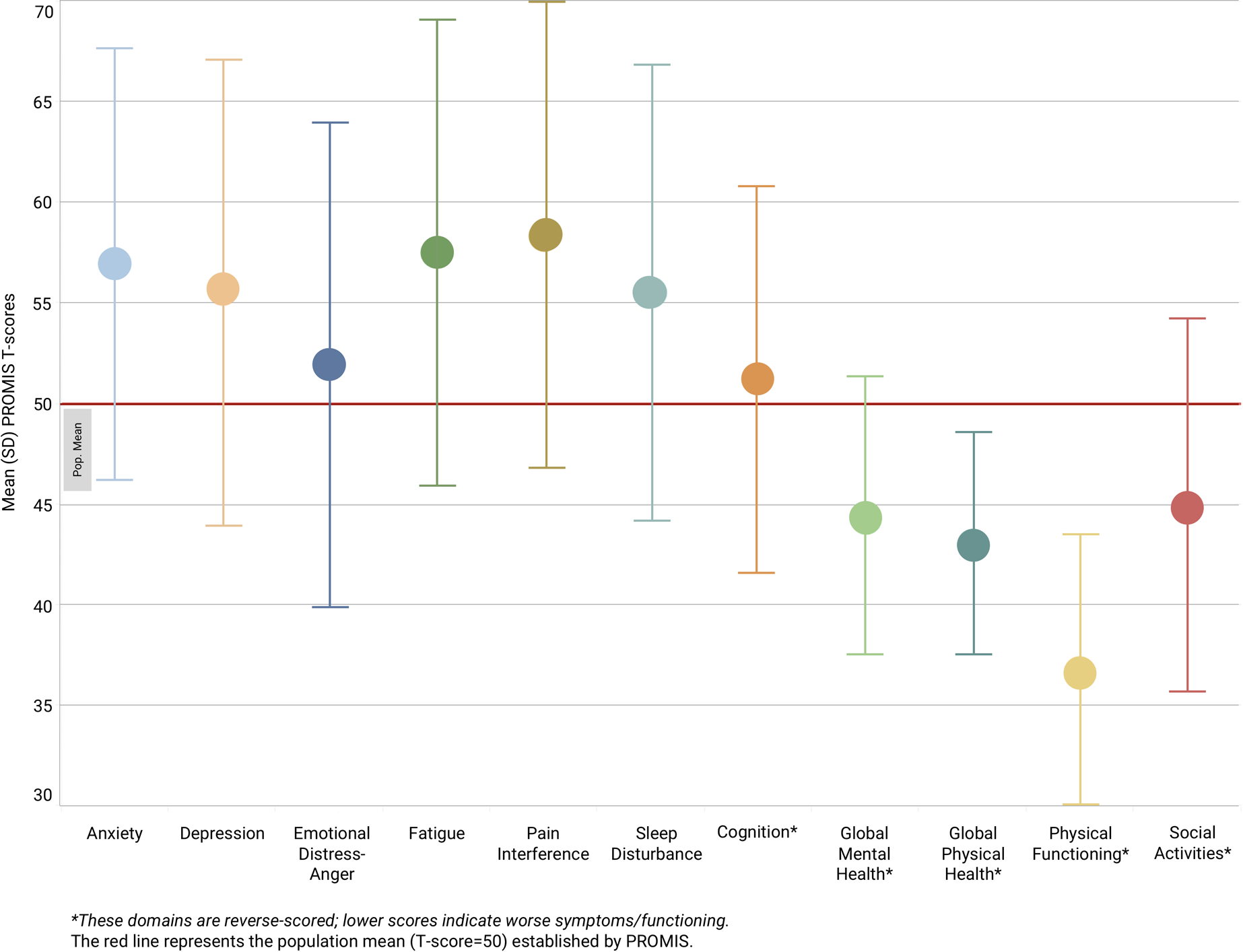
Results: Overall, 27% of participants were between 65 and 74 years of age, 10% were 75 years or older, 63% were male, 32% were white, and 96% had two or more medical conditions. There was no missing PROMIS data, and mean PROMIS scores showed the greatest burden of pain, fatigue, and physical function in the sample. Usability scores were high and not associated with age (Perceived Ease-of-Use P = .77; Perceived Usefulness P = .91).
Conclusion: It is feasible for older adults to use an inclusively designed application to report complete PROMIS data with high perceived usability. To ensure data completeness and the opportunity to study multiple domains of physical, mental, and social health, future work should use inclusive design principles for applications collecting PROMIS measures among older adults. J Am Geriatr Soc 68:1313-1318, 2020.
Keywords: health status; heart failure; mobile health; patient-reported outcome measures; symptoms.
© 2020 The American Geriatrics Society.
Conflict of interest statement
Figures
References
-
- Lavallee DC, Chenok KE, Love RM, et al. Incorporating Patient-Reported Outcomes Into Health Care To Engage Patients And Enhance Care. Health affairs (Project Hope). 2016;35(4):575–582. - PubMed
-
- Lapin B, Thompson NR, Schuster A, Katzan IL. Clinical Utility of Patient-Reported Outcome Measurement Information System Domain Scales. Circ Cardiovasc Qual Outcomes. 2019;12(1):e004753. - PubMed
-
- Anderson M, Perrin A. Tech Adoption Climbs Among Older Adults. 2017; https://www.pewresearch.org/internet/2017/05/17/tech-adoption-climbs-amo....
Publication types
MeSH terms
Grants and funding
LinkOut - more resources
Full Text Sources
Medical
