


Future Fire Impacts on Smoke Concentrations, Visibility, and Health in the Contiguous United States
- PMID: 32159016
- PMCID: PMC7038896
- DOI: 10.1029/2018GH000144
Future Fire Impacts on Smoke Concentrations, Visibility, and Health in the Contiguous United States
Abstract
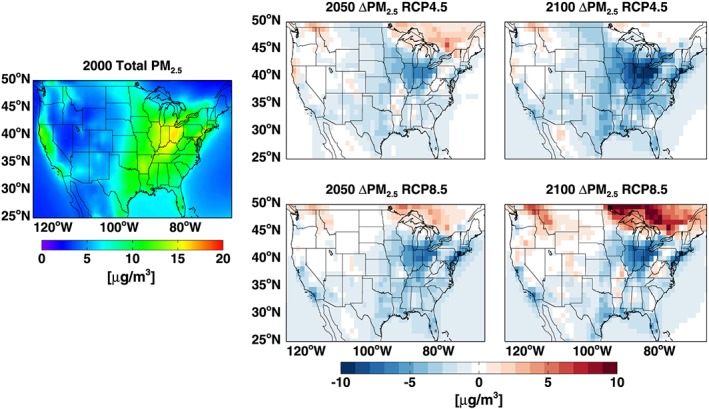
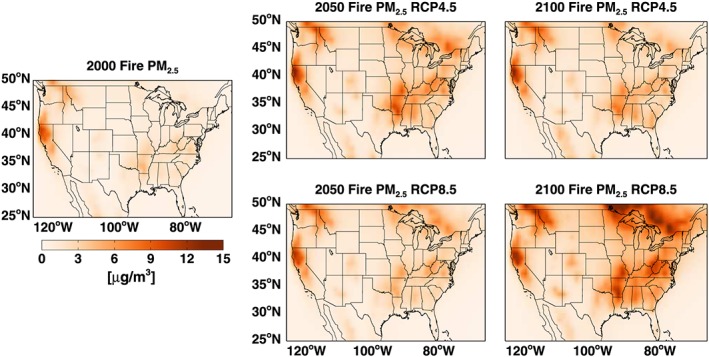
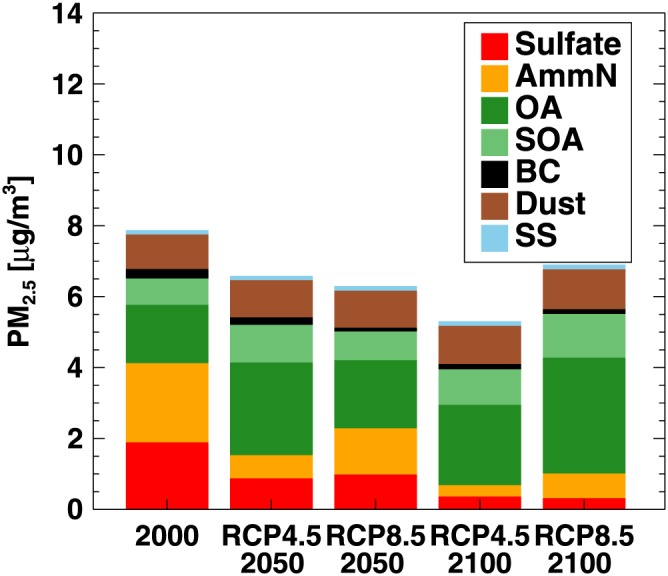
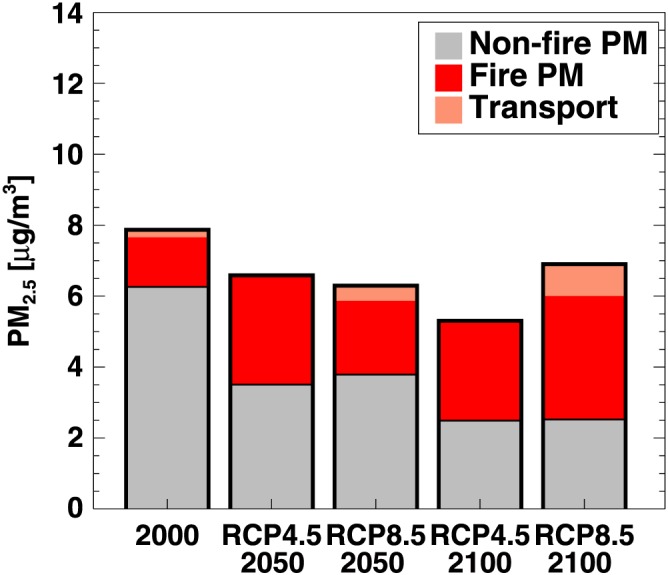
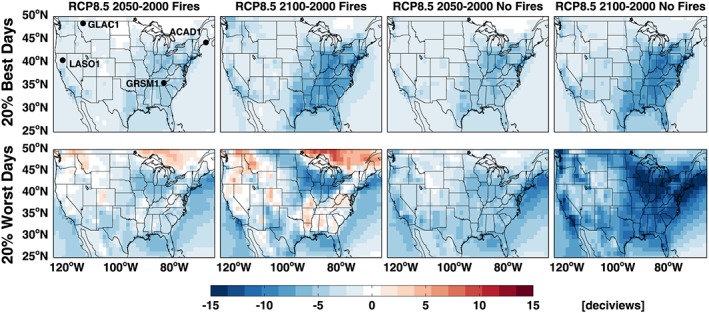
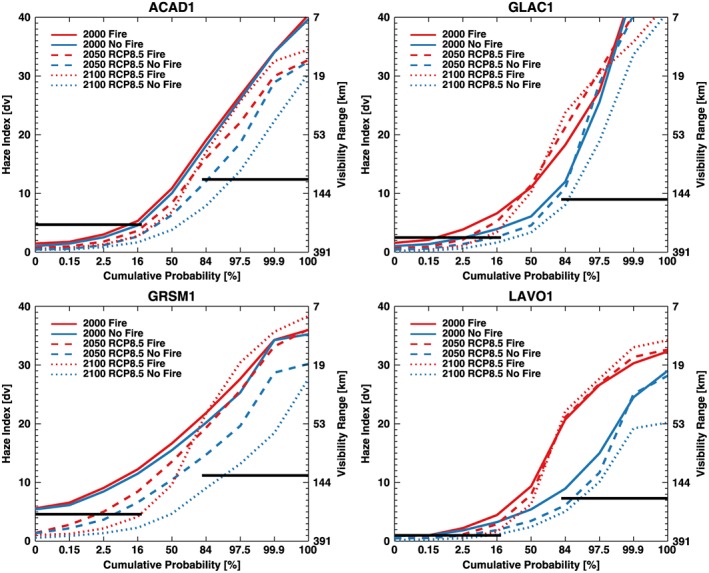
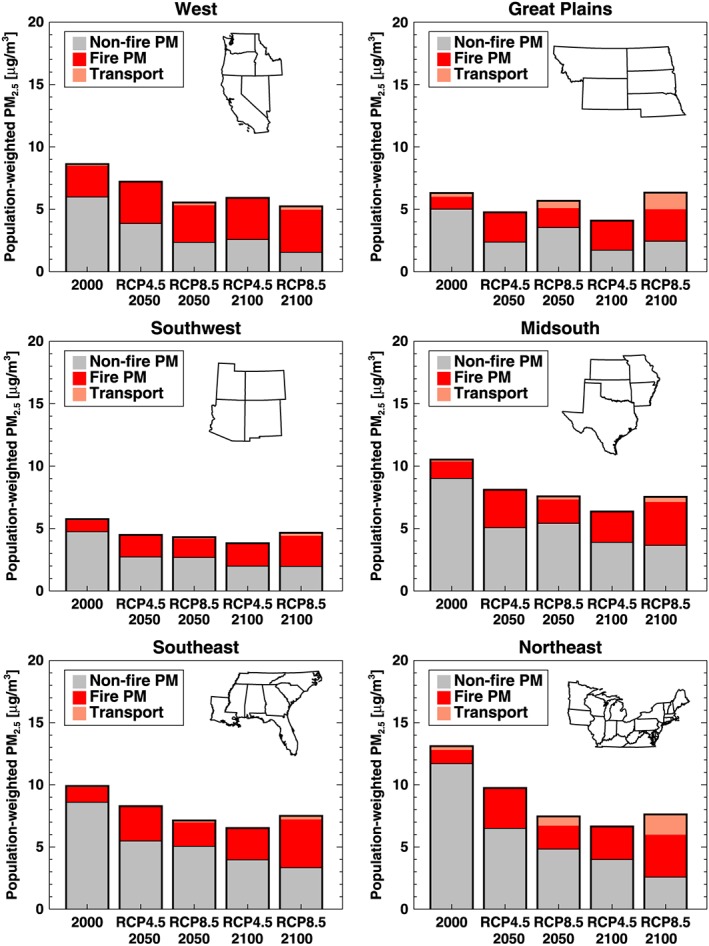
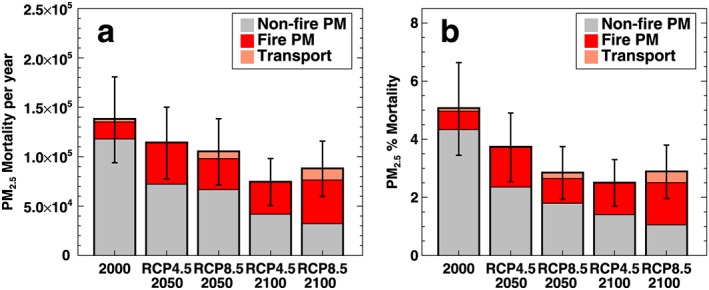
Fine particulate matter (PM2.5) from U.S. anthropogenic sources is decreasing. However, previous studies have predicted that PM2.5 emissions from wildfires will increase in the midcentury to next century, potentially offsetting improvements gained by continued reductions in anthropogenic emissions. Therefore, some regions could experience worse air quality, degraded visibility, and increases in population-level exposure. We use global climate model simulations to estimate the impacts of changing fire emissions on air quality, visibility, and premature deaths in the middle and late 21st century. We find that PM2.5 concentrations will decrease overall in the contiguous United States (CONUS) due to decreasing anthropogenic emissions (total PM2.5 decreases by 3% in Representative Concentration Pathway [RCP] 8.5 and 34% in RCP4.5 by 2100), but increasing fire-related PM2.5 (fire-related PM2.5 increases by 55% in RCP4.5 and 190% in RCP8.5 by 2100) offsets these benefits and causes increases in total PM2.5 in some regions. We predict that the average visibility will improve across the CONUS, but fire-related PM2.5 will reduce visibility on the worst days in western and southeastern U.S. regions. We estimate that the number of deaths attributable to total PM2.5 will decrease in both the RCP4.5 and RCP8.5 scenarios (from 6% to 4-5%), but the absolute number of premature deaths attributable to fire-related PM2.5 will double compared to early 21st century. We provide the first estimates of future smoke health and visibility impacts using a prognostic land-fire model. Our results suggest the importance of using realistic fire emissions in future air quality projections.
©2018. The Authors.
Figures
References
-
- Anenberg, S. C. , Horowitz, L. W. , Tong, D. Q. , & West, J. J. (2010). An estimate of the global burden of anthropogenic ozone and fine particulate matter on premature human mortality using atmospheric modeling. Environmental Health Perspectives, 118(9), 1189–1195. 10.1289/ehp.0901220 - DOI - PMC - PubMed
-
- Anenberg, S. C. , West, J. J. , Yu, H. , Chin, M. , Schulz, M. , Bergmann, D. , et al. (2014). Impacts of intercontinental transport of anthropogenic fine particulate matter on human mortality. Air Quality, Atmosphere and Health, 7(3), 369–379. 10.1007/s11869-014-0248-9 - DOI
-
- Burnett, R. T. , Pope, C. A. III , Ezzati, M. , Olives, C. , Lim, S. S. , Mehta, S. , et al. (2014). An integrated risk function for estimating the global burden of disease attributable to ambient fine particulate matter exposure. Environmental Health Perspectives. 10.1289/ehp.1307049 - DOI - PMC - PubMed
-
- Crouse, D. L. , Peters, P. A. , van Donkelaar, A. , Goldberg, M. S. , Villeneuve, P. J. , Brion, O. , et al. (2012). Risk of nonaccidental and cardiovascular mortality in relation to long‐term exposure to low concentrations of fine particulate matter: A Canadian National‐Level Cohort Study. Environmental Health Perspectives, 120(5), 708–714. 10.1289/ehp.1104049 - DOI - PMC - PubMed
LinkOut - more resources
Full Text Sources