


Operative and nonoperative management of anterior cruciate ligament injury: Differences in gait biomechanics at 5 years
- PMID: 32159239
- PMCID: PMC7808330
- DOI: 10.1002/jor.24652
Operative and nonoperative management of anterior cruciate ligament injury: Differences in gait biomechanics at 5 years
Abstract
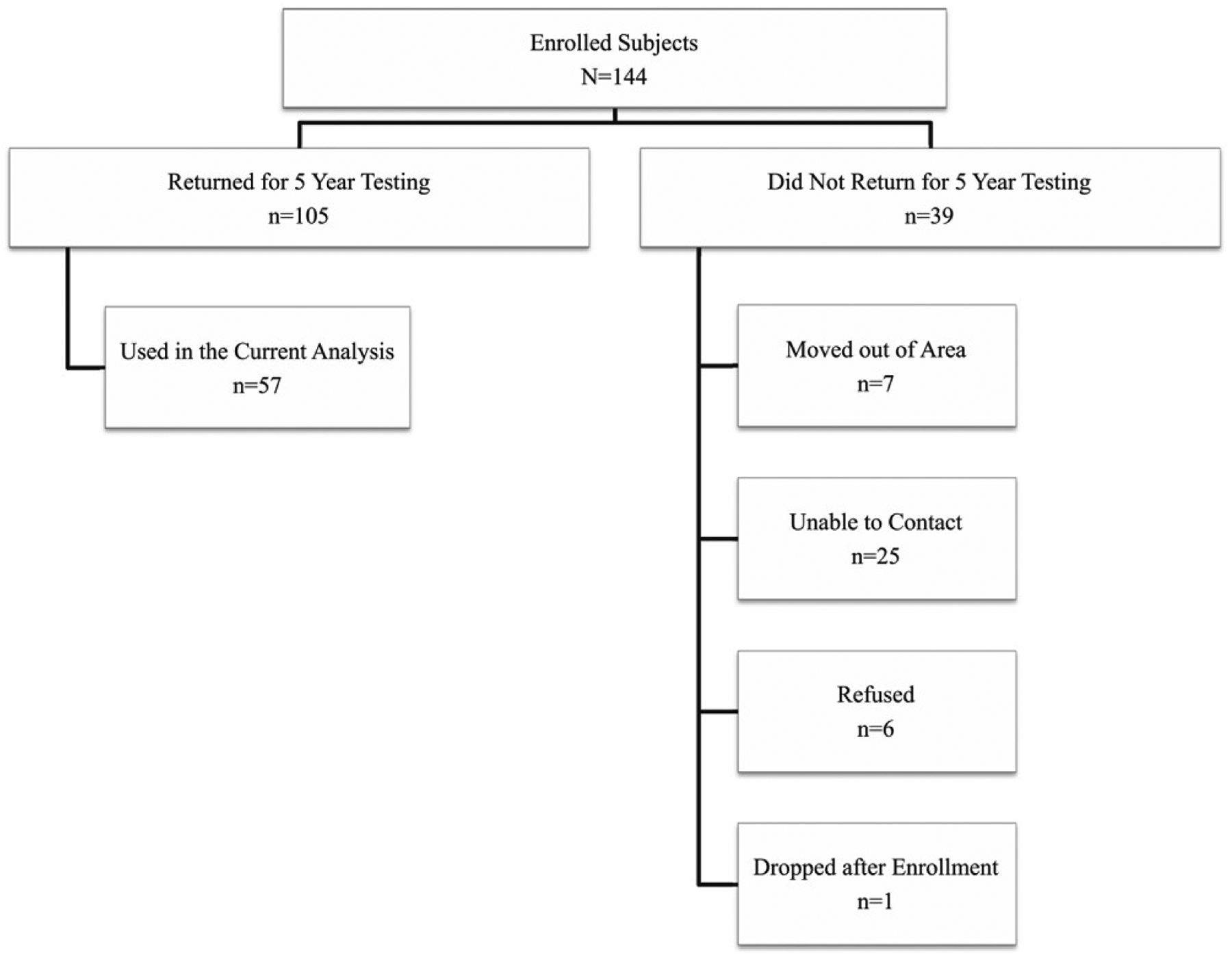
Gait biomechanics after anterior cruciate ligament (ACL) injury are associated with functional outcomes and the development of posttraumatic knee osteoarthritis. However, biomechanical outcomes between patients treated nonoperatively compared with operatively are not well understood. The primary purpose of this study was to compare knee joint contact forces, angles, and moments during loading response of gait between individuals treated with operative compared with nonoperative management at 5 years after ACL injury. Forty athletes treated operatively and 17 athletes treated nonoperatively completed gait analysis at 5 years after ACL reconstruction or completion of nonoperative rehabilitation. Medial compartment joint contact forces were estimated using a previously validated, patient-specific electromyography-driven musculoskeletal model. Knee joint contact forces, angles, and moments were compared between the operative and nonoperative group using mixed model 2 × 2 analyses of variance. Peak medial compartment contact forces were larger in the involved limb of the nonoperative group (Op: 2.37 ± 0.47 BW, Non-Op: 3.03 ± 0.53 BW; effect size: 1.36). Peak external knee adduction moment was also larger in the involved limb of the nonoperative group (Op: 0.25 ± 0.08 Nm/kg·m, Non-Op: 0.32 ± 0.09 Nm/kg·m; effect size: 0.89). No differences in radiographic tibiofemoral osteoarthritis were present between the operative and nonoperative groups. Overall, participants treated nonoperatively walked with greater measures of medial compartment joint loading than those treated operatively, while sagittal plane group differences were not present. Statement of clinical relevance: The differences in medial knee joint loading at 5 years after operative and nonoperative management of ACL injury may have implications on the development of posttraumatic knee osteoarthritis.
Keywords: ACL; joint contact force; kinematics and kinetics; knee; rehabilitation.
© 2020 Orthopaedic Research Society. Published by Wiley Periodicals, Inc.
References
-
- Gornitzky AL, Lott A, Yellin JL, et al. Sport-specific yearly risk and incidence of anterior cruciate ligament tears in high school athletes: A systematic review and meta-analysis. Am J Sports Med. 2016;44(10):2716–2723. - PubMed
-
- Chmielewski TL, Rudolph KS, Fitzgerald GK, et al. Biomechanical evidence supporting a differential response to acute ACL injury. Clin Biomech (Bristol, Avon). 2001;16:586–591. - PubMed
-
- Hart HF, Culvenor AG, Collins NJ, et al. Knee kinematics and joint moments during gait following anterior cruciate ligament reconstruction: A systematic review and meta-analysis. Br J Sports Med. 2016;50(10):597–612. - PubMed
Publication types
MeSH terms
Grants and funding
- R01AR048212/AR/NIAMS NIH HHS/United States
- R01 AR046386/AR/NIAMS NIH HHS/United States
- R01 AR048212/AR/NIAMS NIH HHS/United States
- F30HD096830/Eunice Kennedy Shriver National Institute of Child Health and Human Development/International
- R01AR046386/AR/NIAMS NIH HHS/United States
- P30 GM103333/GM/NIGMS NIH HHS/United States
- R01HD087459/Eunice Kennedy Shriver National Institute of Child Health and Human Development/International
- R37 HD037985/HD/NICHD NIH HHS/United States
- R01 HD087459/HD/NICHD NIH HHS/United States
- P30GM103333/GM/NIGMS NIH HHS/United States
- F30 HD096830/HD/NICHD NIH HHS/United States
- R37HD037985/Eunice Kennedy Shriver National Institute of Child Health and Human Development/International
LinkOut - more resources
Full Text Sources
Medical
Miscellaneous
