


Outpatient treatment of worsening heart failure with intravenous and subcutaneous diuretics: a systematic review of the literature
- PMID: 32159279
- PMCID: PMC7261522
- DOI: 10.1002/ehf2.12677
Outpatient treatment of worsening heart failure with intravenous and subcutaneous diuretics: a systematic review of the literature
Abstract
Aims: In the coming decade, heart failure (HF) represents a major global healthcare challenge due to an ageing population and rising prevalence combined with scarcity of medical resources and increasing healthcare costs. A transitional care strategy within the period of clinical worsening of HF before hospitalization may offer a solution to prevent hospitalization. The outpatient treatment of worsening HF with intravenous or subcutaneous diuretics as an alternative strategy for hospitalization has been described in the literature.
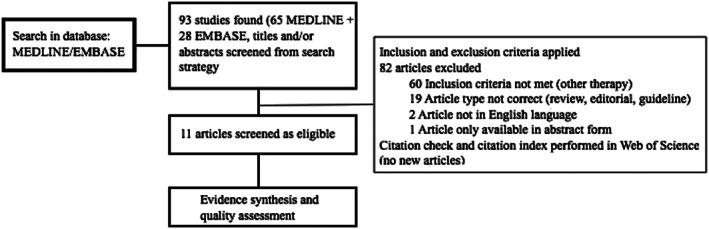
Methods and results: In this systematic review, the available evidence for the efficacy and safety of outpatient treatment with intravenous or subcutaneous diuretics of patients with worsening HF is analysed. A search was performed in the electronic databases MEDLINE and EMBASE. Of the 11 included studies 10 were single-centre, using non-randomized, observational registries of treatment with intravenous or subcutaneous diuretics for patients with worsening HF with highly variable selection criteria, baseline characteristics, and treatment design. One study was a randomized study comparing subcutaneous furosemide with intravenous furosemide. In a total of 984 unique individual patients treated in the reviewed studies, only a few adverse events were reported. Re-hospitalization rates for HF at 30 and 180 days were 28 and 46%, respectively. All-cause re-hospitalization rates at 30 and 60 days were 18-37 and 22%, respectively. The highest HF re-hospitalization was 52% in 30 days in the subcutaneous diuretic group and 42% in 30 days in the intravenous diuretic group.
Conclusions: The reviewed studies present practice-based results of treatment of patients with worsening HF with intravenous or subcutaneous diuretics in an outpatient HF care unit and report that it is effective by relieving symptoms with a low risk of adverse events. The studies do not provide satisfactory evidence for reduction in rates of re-hospitalization or improvement in mortality or quality of life. The conclusions drawn from these studies are limited by the quality of the individual studies. Prospective randomized studies are needed to determine the safety and effectiveness of outpatient intravenous or subcutaneous diuretic treatment for patient with worsening HF.
Keywords: Acute heart failure; Ambulatory treatment; Intravenous diuretics; Outpatient treatment; Subcutaneous diuretics; Worsening heart failure.
© 2020 The Authors. ESC Heart Failure published by John Wiley & Sons Ltd on behalf of European Society of Cardiology.
Conflict of interest statement
None declared.
Figures

References
-
- Berry C, Murdoch DR, McMurray JJ. Economics of chronic heart failure. Eur J Heart Fail 2001; 3: 283–291. - PubMed
-
- Levy D, Kenchaiah S, Larson MG, Benjamin EJ, Kupka MJ, Ho KKL, Murabito JM, Vasan RS. Long‐term trends in the incidence of and survival with heart failure. N Engl J Med 2002; 347: 1397–1402. - PubMed
-
- Maggioni AP, Dahlström U, Filippatos G, Chioncel O, Crespo Leiro M, Drozdz J, Fruhwald F, Gullestad L, Logeart D, Fabbri G, Urso R, Metra M, Parissis J, Persson H, Ponikowski P, Rauchhaus M, Voors AA, Nielsen OW, Zannad F, Tavazzi L, Heart Failure Association of the European Society of Cardiology (HFA) . EURObservational Research Programme: regional differences and 1‐year follow‐up results of the Heart Failure Pilot Survey (ESC‐HF Pilot). Eur J Heart Fail 2013; 15: 808–817. - PubMed
-
- Setoguchi S, Stevenson LW, Schneeweiss S. Repeated hospitalizations predict mortality in the community population with heart failure. Am Heart J 2007; 154: 260–266. - PubMed
Publication types
MeSH terms
Substances
LinkOut - more resources
Full Text Sources
Other Literature Sources
Medical
Research Materials
Miscellaneous
