


High sPLA2-IIA level is associated with eicosanoid metabolism in patients with bacterial sepsis syndrome
- PMID: 32160261
- PMCID: PMC7065791
- DOI: 10.1371/journal.pone.0230285
High sPLA2-IIA level is associated with eicosanoid metabolism in patients with bacterial sepsis syndrome
Abstract
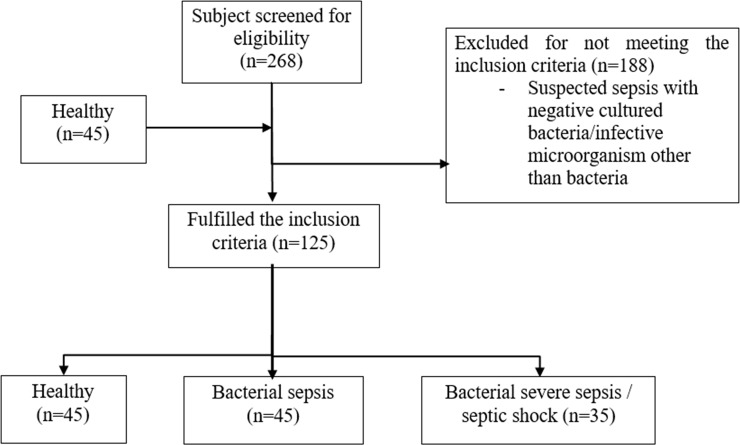
The aim of this study was to determine the association between secretory phospholipase A2 group IIA (sPLA2-IIA) and eicosanoid pathway metabolites in patients with bacterial sepsis syndrome (BSS). Levels of sPLA2-IIA, eicosanoids prostaglandin (PG)E2, PGD synthase were quantified in the sera from patients confirmed to have bacterial sepsis (BS; N = 45), bacterial severe sepsis/septic shock (BSS/SS; N = 35) and healthy subjects (N = 45). Cyclooxygenase (COX)-1 and COX-2 activities were analyzed from cell lysate. Serum levels of sPLA2-IIA, PGE2, and PGDS increased significantly in patients with BS and BSS/SS compared to healthy subjects (p<0.05). COX-2 activity was significantly increased in patients with BS compared to healthy subjects (p<0.05), but not COX-1 activity. Binary logistic regression analysis showed that sPLA2-IIA and PGE2 were independent factors predicting BSS severity. In conclusion, high level of sPLA2-IIA is associated with eicosanoid metabolism in patients with BSS.
Conflict of interest statement
The authors have declared that no competing interests exist.
References
Publication types
MeSH terms
Substances
LinkOut - more resources
Full Text Sources
Research Materials
Miscellaneous
