


Uncontrolled hypertension in Ethiopia: a systematic review and meta-analysis of institution-based observational studies
- PMID: 32160859
- PMCID: PMC7066819
- DOI: 10.1186/s12872-020-01414-3
Uncontrolled hypertension in Ethiopia: a systematic review and meta-analysis of institution-based observational studies
Abstract
Background: Uncontrolled hypertension is one of the major risk factors of cardiovascular and cerebrovascular diseases. The prevalence of hypertension in Ethiopia is expected to reach up to 30%. The aim of this study was to determine the prevalence of uncontrolled hypertension among hypertensive patients on treatment in Ethiopia.
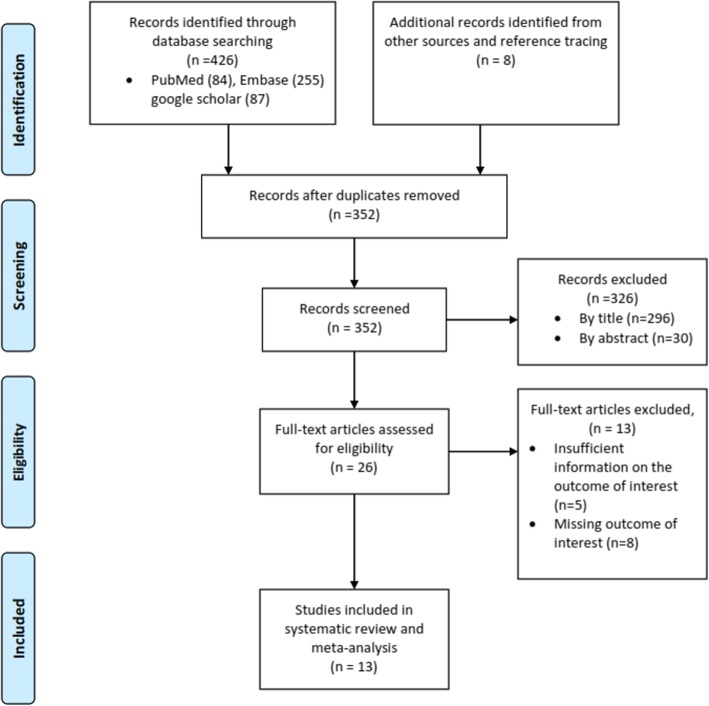
Methods: Electronic databases and search engines including EMBASE (Ovid), PubMed/Medline, and Google Scholar were searched for original records in the English language addressing hypertension control in Ethiopia from 2000 to 2018. Data were extracted using a format prepared in Microsoft Excel and exported to STATA 15.0 software for analyses. The study protocol is registered at PROSPERO with reference number ID: CRD42018116336.
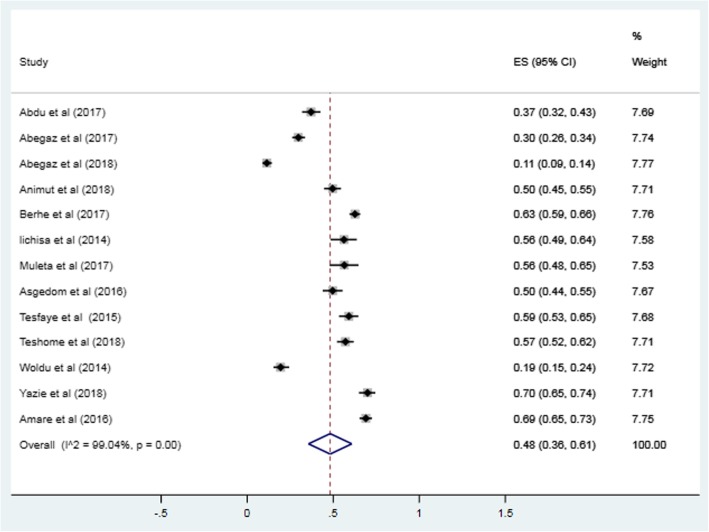
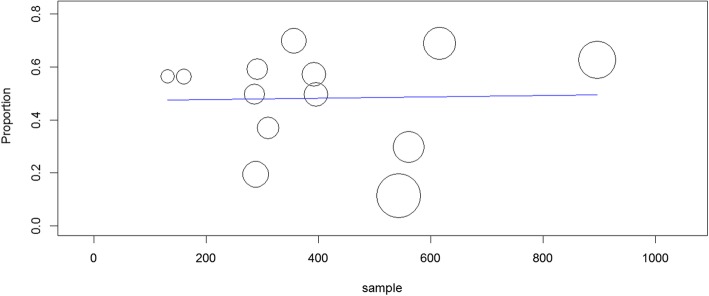
Results: A total of 13 studies with 5226 hypertension patients were included for systematic review and meta-analysis. The pooled prevalence of uncontrolled hypertension in Ethiopia was 48% (95% confidence interval (CI): 36, 61%). The result of the sub-group analysis, based on the year of publications, revealed that the prevalence of uncontrolled BP was highest in 2016 (63%; CI: 60, 67%) and in 2015 (59%; CI: 53, 65%). Univariate meta-regression revealed that sampling distribution was not a source of heterogeneity for the pooled estimate as well as the sub group analysis.
Conclusion: The prevalence of uncontrolled hypertension was high in Ethiopia. This alarming public health issue fuels the ever-increasing cardiovascular and cerebrovascular diseases. The ministry of health has to design a policy and implementation mechanisms to reduce uncontrolled hypertension prevalence and improve awareness on blood pressure control.
Keywords: Cardiovascular disease; Ethiopia; Hypertension.
Conflict of interest statement
The authors declare that they have no competing interests.
Figures


References
-
- WHO . A global brief on hypertension. Silent killer, global public health crisis. 2013.
-
- WHO . Global status report on non-communicable diseases: Description of the global burden of NCDs, their risk factors and determinants. 2010.
-
- WHO . Global status report on noncommunicable diseases 2014. 2014.
Publication types
MeSH terms
LinkOut - more resources
Full Text Sources
Medical
