


Incidence and general hospital costs of self-harm across England: estimates based on the multicentre study of self-harm
- PMID: 32160934
- PMCID: PMC7214546
- DOI: 10.1017/S2045796020000189
Incidence and general hospital costs of self-harm across England: estimates based on the multicentre study of self-harm
Abstract
Aims: The aim of this study was to estimate incidence of self-harm presentations to hospitals and their associated hospital costs across England.
Methods: We used individual patient data from the Multicentre Study of Self-harm in England of all self-harm presentations to the emergency departments of five general hospitals in Oxford, Manchester and Derby in 2013. We also obtained cost data for each self-harm presentation from the hospitals in Oxford and Derby, as well as population and geographical estimates from the Office for National Statistics. First, we estimated the rate of self-harm presentations by age and gender in the Multicentre Study and multiplied this with the respective populations to estimate the number of self-harm presentations by age and gender for each local Clinical Commissioning Group (CCG) area in England. Second, we performed a regression analysis on the cost data from Oxford and Derby to predict the hospital costs of self-harm in Manchester by age, gender, receipt of psychosocial assessment, hospital admission and type of self-harm. Third, the mean hospital cost per age year and gender were combined with the respective number of self-harm presentations to estimate the total hospital costs for each CCG in England. Sensitivity analysis was performed to address uncertainty in the results due to the extrapolation of self-harm incidence and cost from the Multicentre Study to England.
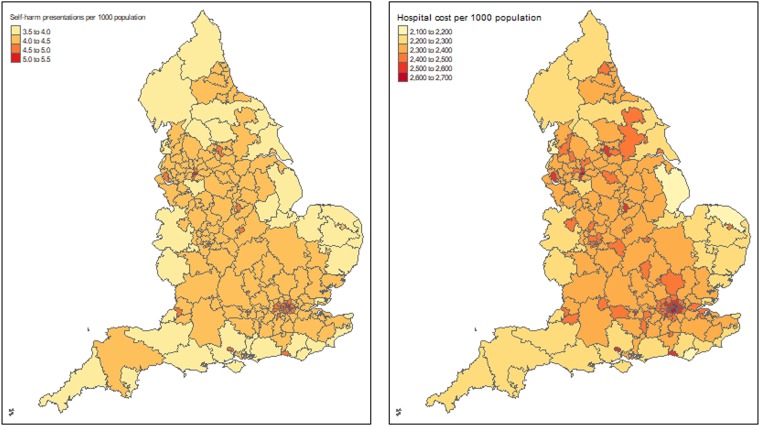
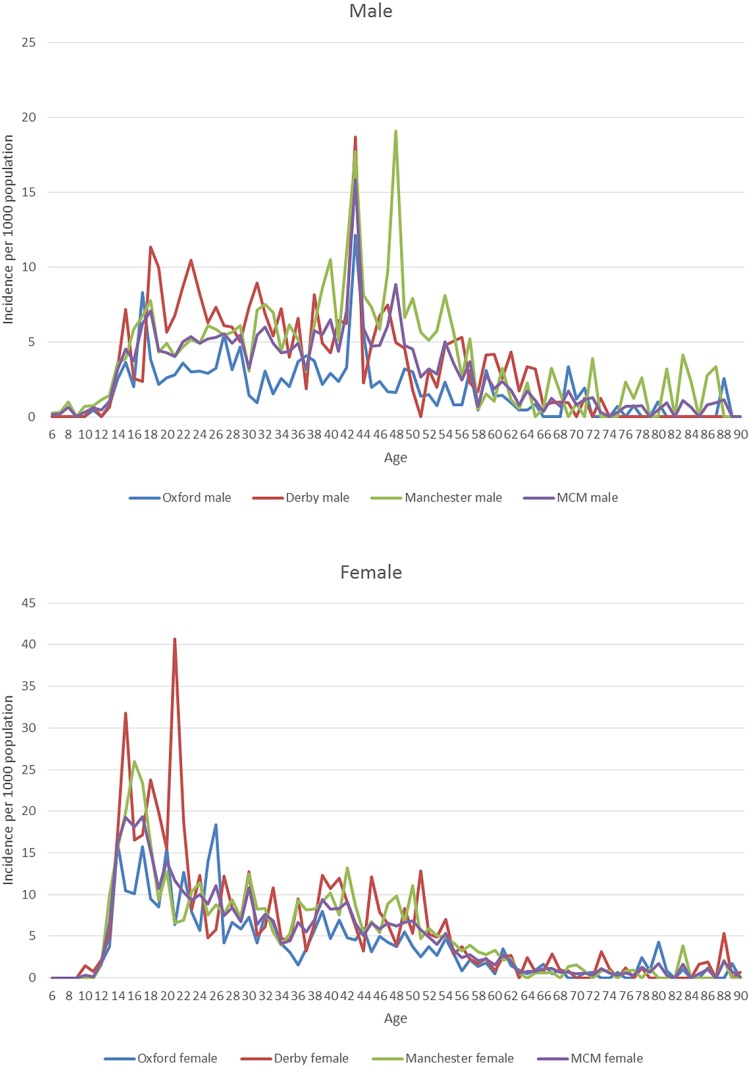
Results: There were 228 075 estimated self-harm presentations (61% were female) by 159 857 patients in 2013 in England. The largest proportions of self-harm presentations were in the age group 40-49 years (30%) for men and 19-29 years (28%) for women. Associated hospital costs were approximately £128.6 (95% CI 117.8-140.9) million in 2013. The estimated incidence of self-harm and associated hospital costs were lower in the majority of English coastal areas compared to inland regions but the highest costs were in Greater London. Costs were also higher in more socio-economically deprived areas of the country compared with areas that are more affluent. The sensitivity analyses provided similar results.
Conclusions: The results of this study highlight the extent, hospital costs and distribution of self-harm presentations to hospitals in England and identify potential sub-populations that might benefit from targeted actions to help prevent self-harm and assist those who have self-harmed. They can support national as well as local health stakeholders in allocating funds and prioritising interventions in areas with the greatest need for preventing and managing self-harm.
Keywords: Economic issues; emergency departments; health economics; incidence; suicide.
Conflict of interest statement
We declare no competing interests.
Figures
References
-
- Appleby L, Hunt IM and Kapur N (2017) New policy and evidence on suicide prevention. The Lancet. Psychiatry 4, 658–660. - PubMed
-
- Ayre K, Dutta R and Howard LM (2019) Perinatal self-harm: an overlooked public health issue. The Lancet. Public Health 4, e125. - PubMed
-
- Bateman DN, Carroll R, Pettie J, Yamamoto T, Elamin MEMO, Peart L, Dow M, Coyle J, Cranfield KR, Hook C, Sandilands EA, Veiraiah A, Webb D, Gray A, Dargan PI, Wood DM, Thomas SHL, Dear JW and Eddleston M (2014) Effect of the UK's revised paracetamol poisoning management guidelines on admissions, adverse reactions and costs of treatment. British Journal of Clinical Pharmacology 78, 610–618. - PMC - PubMed
-
- Bergen H, Hawton K, Waters K, Ness J, Cooper J, Steeg S and Kapur N (2012) Premature death after self-harm: a multicentre cohort study. Lancet 380, 1568–1574. - PubMed
MeSH terms
LinkOut - more resources
Full Text Sources
Medical
