


Skin-interfaced biosensors for advanced wireless physiological monitoring in neonatal and pediatric intensive-care units
- PMID: 32161411
- PMCID: PMC7315772
- DOI: 10.1038/s41591-020-0792-9
Skin-interfaced biosensors for advanced wireless physiological monitoring in neonatal and pediatric intensive-care units
Abstract
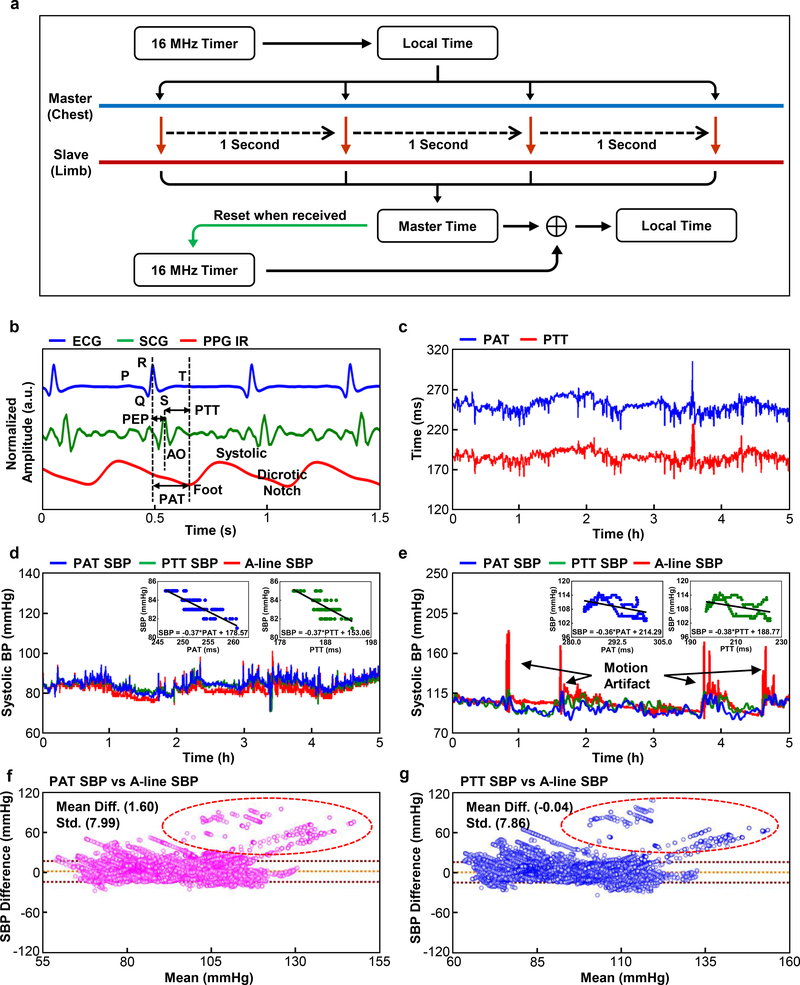
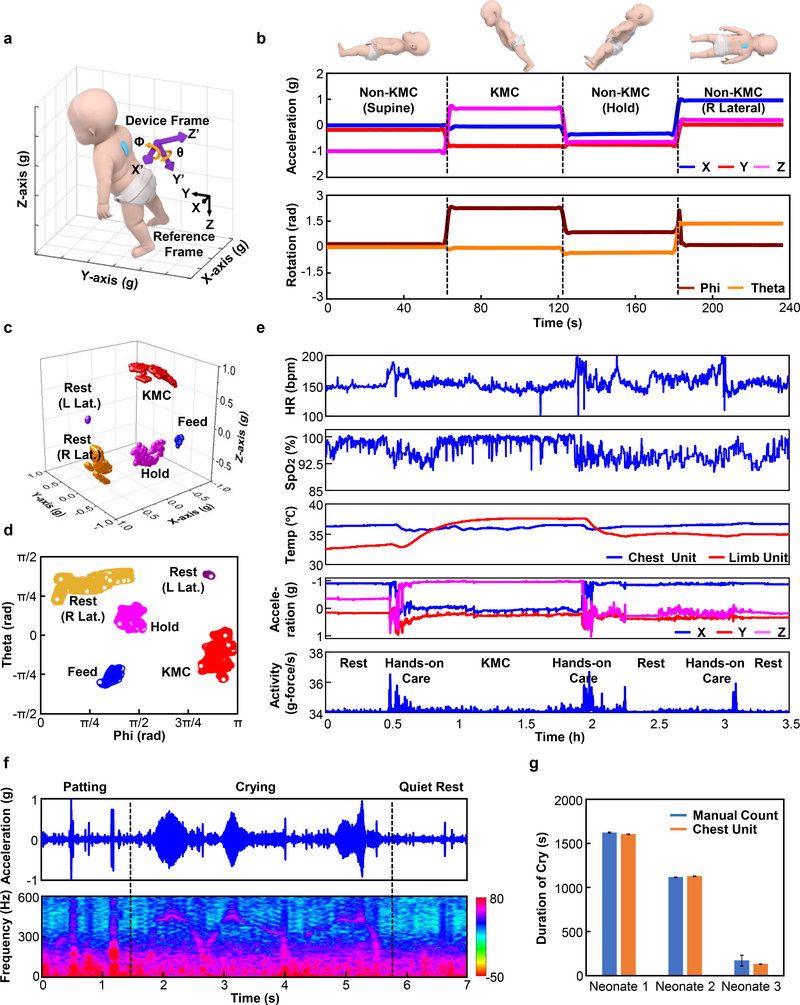
Standard clinical care in neonatal and pediatric intensive-care units (NICUs and PICUs, respectively) involves continuous monitoring of vital signs with hard-wired devices that adhere to the skin and, in certain instances, can involve catheter-based pressure sensors inserted into the arteries. These systems entail risks of causing iatrogenic skin injuries, complicating clinical care and impeding skin-to-skin contact between parent and child. Here we present a wireless, non-invasive technology that not only offers measurement equivalency to existing clinical standards for heart rate, respiration rate, temperature and blood oxygenation, but also provides a range of important additional features, as supported by data from pilot clinical studies in both the NICU and PICU. These new modalities include tracking movements and body orientation, quantifying the physiological benefits of skin-to-skin care, capturing acoustic signatures of cardiac activity, recording vocal biomarkers associated with tonality and temporal characteristics of crying and monitoring a reliable surrogate for systolic blood pressure. These platforms have the potential to substantially enhance the quality of neonatal and pediatric critical care.
Figures
Comment in
-
Wireless monitoring in the ICU on the horizon.Nat Med. 2020 Mar;26(3):316-317. doi: 10.1038/s41591-020-0798-3. Nat Med. 2020. PMID: 32161410 No abstract available.
References
-
- Wheeler DS, Wong HR & Shanley TP Pediatric critical care medicine : basic science and clinical evidence, (Springer, London, 2007).
-
- Xu J, Murphy SL, Kochanek KD, Bastian B & Arias E Deaths: final data for 2016. Natl. Vital Stat. Rep. 67, 1–76 (2018). - PubMed
-
- Bowdle TA Complications of invasive monitoring. Anesthesiol. Clin. N. A. 20, 571–588 (2002). - PubMed
-
- Cilley R Arterial access in infants and children. in Seminars in pediatric surgery, Vol. 1 174–180 (1992). - PubMed
Publication types
MeSH terms
Grants and funding
LinkOut - more resources
Full Text Sources
Other Literature Sources
Medical
