


Long-term work retention after treatment for cancer: a systematic review and meta-analysis
- PMID: 32162193
- PMCID: PMC7182621
- DOI: 10.1007/s11764-020-00862-2
Long-term work retention after treatment for cancer: a systematic review and meta-analysis
Abstract
Purpose: Almost half of people diagnosed with cancer are working age. Survivors have increased risk of unemployment, but little is known about long-term work retention. This systematic review and meta-analysis assessed work retention and associated factors in long-term cancer survivors.
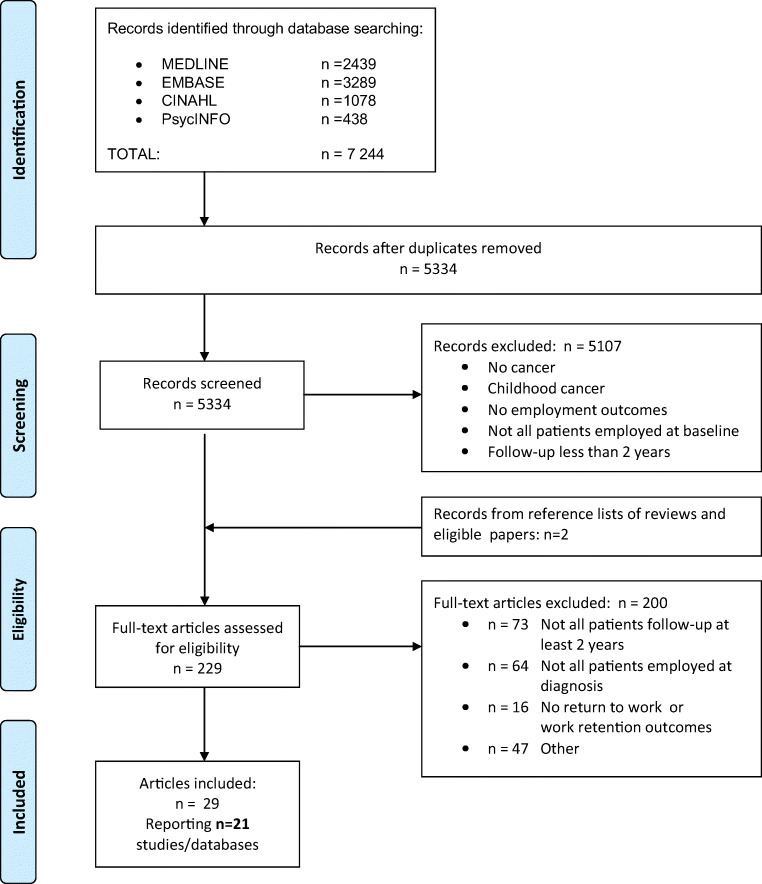
Methods: We searched Medline/Pubmed, Embase, PsychINFO, and CINAHL for studies published 01/01/2000-08/01/2019 reporting work retention in adult cancer survivors ≥ 2 years post-diagnosis. Survivors had to be in paid work at diagnosis. Pooled prevalence of long-term work retention was estimated. Factors associated with work retention from multivariate analysis were synthesized.
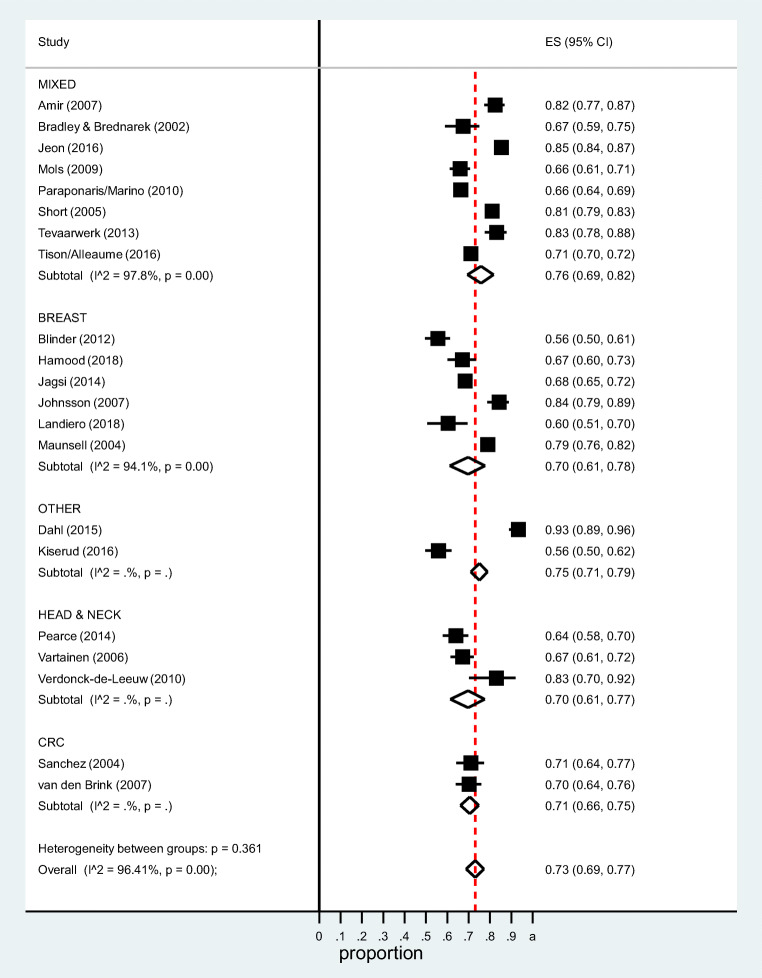
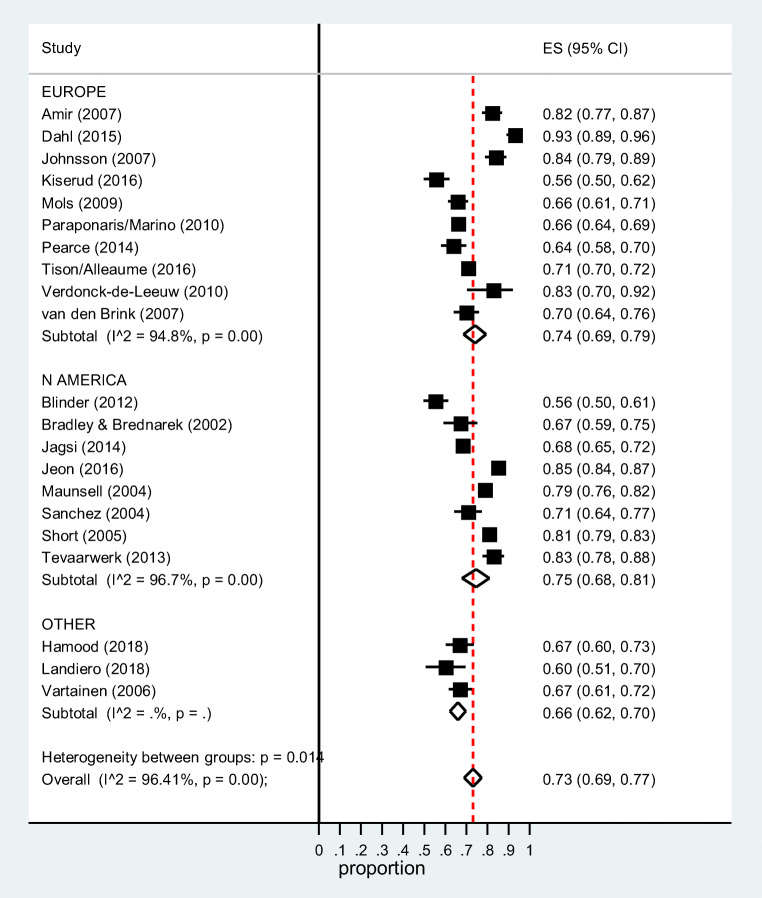
Results: Twenty-nine articles, reporting 21 studies/datasets including 14,207 cancer survivors, were eligible. Work retention was assessed 2-14 years post-diagnosis. Fourteen studies were cross-sectional, five were prospective, and two contained both cross-sectional and prospective elements. No studies were scored as high quality. The pooled estimate of prevalence of long-term work retention in cancer survivors working at diagnosis was 0.73 (95%CI 0.69-0.77). The proportion working at 2-2.9 years was 0.72; at 3-3.9 years 0.80; at 4-4.9 years 0.75; at 5-5.9 years 0.74; and 6+ years 0.65. Pooled estimates did not differ by cancer site, geographical area, or study design. Seven studies assessed prognostic factors for work retention: older age, receiving chemotherapy, negative health outcomes, and lack of work adjustments were associated with not working.
Conclusion: Almost three-quarters of long-term cancer survivors working at diagnosis retain work.
Implications for cancer survivors: These findings are pertinent for guidelines on cancer survivorship care. Professionals could focus support on survivors most likely to have poor long-term work outcomes.
Keywords: Cancer; Employment; Longitudinal studies; Meta-analysis; Prospective studies; Return-to-work; Work ability; Work retention.
Conflict of interest statement
The authors declare that they have no conflicts of interest.
Figures
References
-
- Ferlay J, Ervik M, Lam F, Colombet M, Mery L, Piñeros M, Znaor A, Soerjomataram I, Bray F. Global Cancer Observatory: Cancer Today. Lyon, France: International Agency for Research on Cancer. 2018. Available from: https://gco.iarc.fr/today. Accessed 26/11/2019.
-
- Wells M, Amir Z, Cox T, Eva G, Greenfield D, Hubbard G, Kyle R, McLennan S, Munir F, Scott S, Sharp L, Taskila T, Wiseman T. Time to act: the challenges of working during and after cancer, initiatives in research and practice. Eur J Oncol Nurs. 2014;18:1–2. doi: 10.1016/j.ejon.2014.01.001. - DOI - PubMed
Publication types
MeSH terms
LinkOut - more resources
Full Text Sources
Medical
