


HDAC inhibitors overcome immunotherapy resistance in B-cell lymphoma
- PMID: 32162275
- PMCID: PMC7305292
- DOI: 10.1007/s13238-020-00694-x
HDAC inhibitors overcome immunotherapy resistance in B-cell lymphoma
Abstract
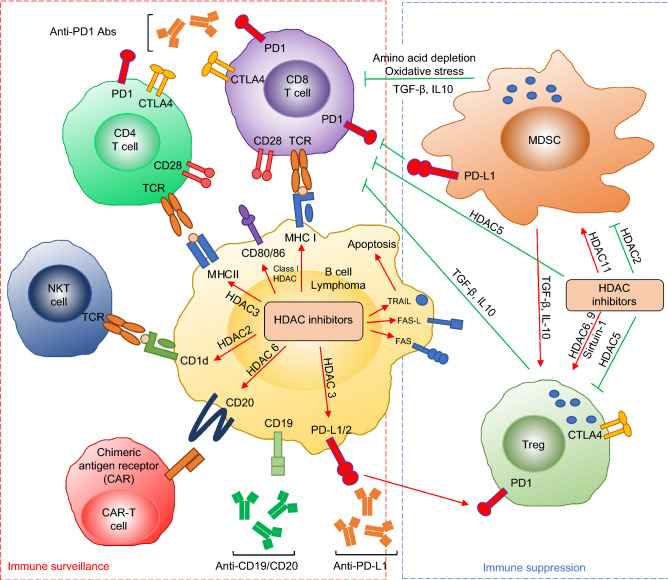
Immunotherapy has been applied successfully to treat B-cell lymphomas in preclinical models or clinical settings. However, immunotherapy resistance is a major challenge for B-cell lymphoma treatment. To overcome this issue, combinatorial therapeutic strategies have been pursued to achieve a better efficacy for treating B-cell lymphomas. One of such strategies is to combine immunotherapy with histone deacetylase (HDAC) inhibitors. HDAC inhibitors can potentially increase tumor immunogenicity, promote anti-tumor immune responses, or reverse immunosuppressive tumor environments. Thus, the combination of HDAC inhibitors and immunotherapy has drawn much attention in current cancer treatment. However, not all HDAC inhibitors are created equal and their net effects are highly dependent on the specific inhibitors used and the HDACs they target. Hence, we suggest that optimal treatment efficacy requires personalized design and rational combination based on prognostic biomarkers and unique profiles of HDAC inhibitors. Here, we discuss the possible mechanisms by which B-cell lymphomas acquire immunotherapy resistance and the effects of HDAC inhibitors on tumor cells and immune cells that could help overcome immunotherapy resistance.
Keywords: B-cell lymphomas; HDAC inhibitor; anti-PD1 resistance; cancer immunotherapy; tumor immunogenicity.
Figures
References
-
- Azzaoui I, Uhel F, Rossille D, Pangault C, Dulong J, Le Priol J, Lamy T, Houot R, Le Gouill S, Cartron G, et al. T-cell defect in diffuse large B-cell lymphomas involves expansion of myeloid-derived suppressor cells. Blood. 2016;128:1081–1092. - PubMed
-
- Betsch A, Rutgeerts O, Fevery S, Sprangers B, Verhoef G, Dierickx D, Beckers M. Myeloid-derived suppressor cells in lymphoma: the good, the bad and the ugly. Blood Rev. 2018;32:490–498. - PubMed
Publication types
MeSH terms
Substances
Grants and funding
LinkOut - more resources
Full Text Sources
Other Literature Sources
