


Combined Effect of Sarcopenia and Systemic Inflammation on Survival in Patients with Advanced Stage Cancer Treated with Immunotherapy
- PMID: 32162807
- PMCID: PMC7066707
- DOI: 10.1634/theoncologist.2019-0751
Combined Effect of Sarcopenia and Systemic Inflammation on Survival in Patients with Advanced Stage Cancer Treated with Immunotherapy
Abstract
Background: Sarcopenia and inflammation have been associated with poor survival in patients with cancer. We explored the combined effects of these variables on survival in patients with cancer treated with immunotherapy.
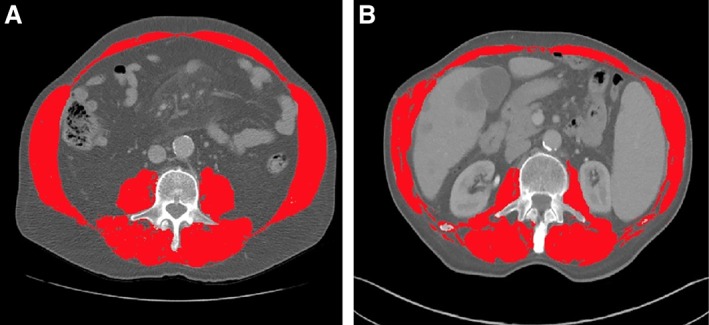
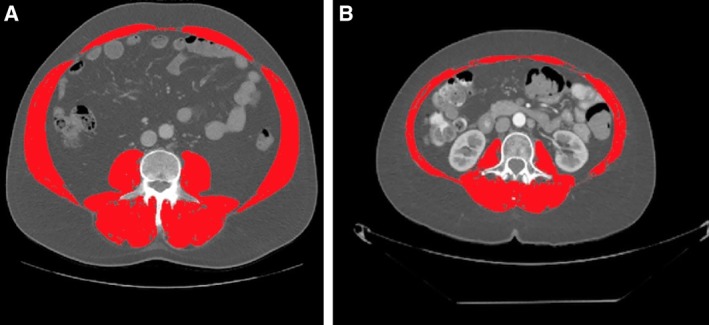
Methods: We performed a retrospective review of 90 patients enrolled on immunotherapy-based phase I clinical trials at Emory University from 2009 to 2017. Baseline neutrophil-to-lymphocyte ratio, monocyte-to-lymphocyte ratio, and platelet-to-lymphocyte ratio (PLR) were used as surrogates of inflammation. The skeletal muscle index (SMI) was derived from the skeletal muscle density calculated from baseline abdominal computed tomography images. Optimal cutoffs for continuous inflammation biomarkers and SMI were determined by bias-adjusted log-rank test. A four-level risk stratification was used to create low-risk (PLR <242 and nonsarcopenic), intermediate-risk (PLR <242 and sarcopenic), high-risk (PLR ≥242 and nonsarcopenic), and very-high-risk (PLR ≥242 and sarcopenic) groups with subsequent association with survival.
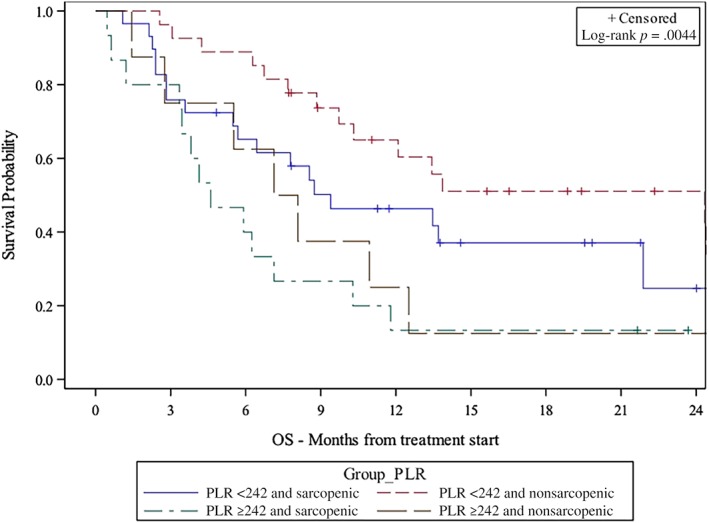
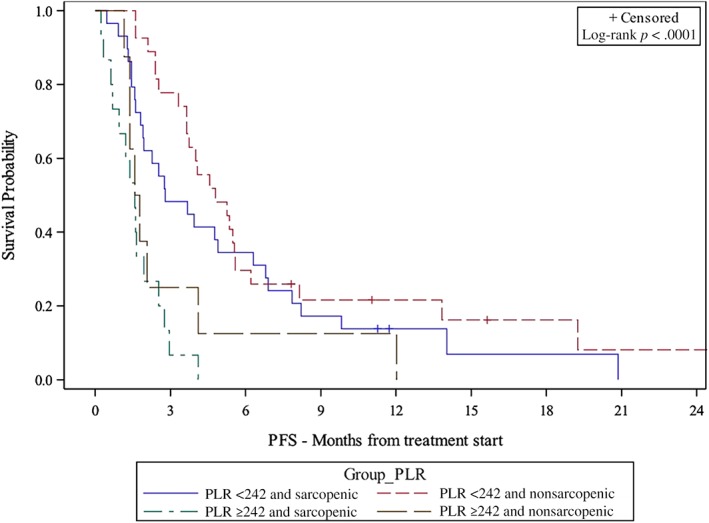
Results: Most patients (59%) were male, and the most common cancers were melanoma (33%) and gastrointestinal (22%). Very high-risk, high-risk, and intermediate-risk patients had significantly shorter overall survival (hazard ratio [HR], 8.46; 95% confidence interval [CI], 2.65-27.01; p < .001; HR, 5.32; CI, 1.96-14.43; p = .001; and HR, 4.01; CI, 1.66-9.68; p = .002, respectively) and progression-free survival (HR, 12.29; CI, 5.15-29.32; p < .001; HR, 3.51; CI, 1.37-9.02; p = .009; and HR, 2.14; CI, 1.12-4.10; p = .022, respectively) compared with low-risk patients.
Conclusion: Baseline sarcopenia and elevated inflammatory biomarkers may have a combined effect on decreasing survival in immunotherapy-treated patients in phase I trials. These data may be immediately applicable for medical oncologists for the risk stratification of patients beginning immunotherapeutic agents.
Implications for practice: Sarcopenia and inflammation have been associated with poor survival in patients with cancer, but it is unclear how to apply this information to patient care. The authors created a risk-stratification system that combined sarcopenia and platelet-to-lymphocyte ratio as a marker of systemic inflammation. The presence of sarcopenia and systemic inflammation decreased progression-free survival and overall survival in our cohort of 90 patients who received immunotherapy in phase I clinical trials. The data presented in this study may be immediately applicable for medical oncologists as a way to risk-stratify patients who are beginning treatment with immunotherapy.
Keywords: Biomarkers; Immunotherapy; Inflammation; Risk stratification; Sarcopenia.
© 2019 The Authors. The Oncologist published by Wiley Periodicals, Inc. on behalf of AlphaMed Press.
Conflict of interest statement
Figures
Comment in
-
Sarcopenia and Inflammation with Immunotherapy.Oncologist. 2020 May;25(5):e875. doi: 10.1634/theoncologist.2019-1005. Epub 2020 Mar 19. Oncologist. 2020. PMID: 32191391 Free PMC article.
-
In Reply.Oncologist. 2020 May;25(5):e876. doi: 10.1634/theoncologist.2020-0059. Epub 2020 Mar 23. Oncologist. 2020. PMID: 32201999 Free PMC article.
References
-
- Fearon K, Strasser F, Anker SD et al. Definition and classification of cancer cachexia: An international consensus. Lancet Oncol 2011;12:489–495. - PubMed
-
- Dewys WD, Begg C, Lavin PT et al. Prognostic effect of weight loss prior to chemotherapy in cancer patients. Eastern Cooperative Oncology Group. Am J Med 1980;69:491–497. - PubMed
-
- Couch M, Lai V, Cannon T et al. Cancer cachexia syndrome in head and neck cancer patients: Part I. Diagnosis, impact on quality of life and survival, and treatment. Head Neck 2007;29:401–411. - PubMed
-
- Colotta F, Allavena P, Sica A et al. Cancer‐related inflammation, the seventh hallmark of cancer: Links to genetic instability. Carcinogenesis 2009;30:1073–1081. - PubMed
Publication types
MeSH terms
Grants and funding
LinkOut - more resources
Full Text Sources
Other Literature Sources
Medical
