


Immune Clearance of Senescent Cells to Combat Ageing and Chronic Diseases
- PMID: 32164335
- PMCID: PMC7140645
- DOI: 10.3390/cells9030671
Immune Clearance of Senescent Cells to Combat Ageing and Chronic Diseases
Abstract
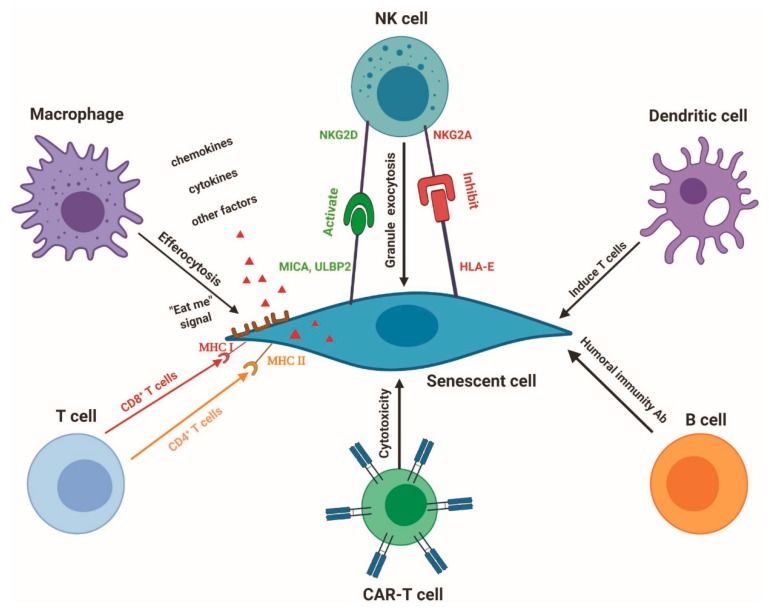
Senescent cells are generally characterized by permanent cell cycle arrest, metabolic alteration and activation, and apoptotic resistance in multiple organs due to various stressors. Excessive accumulation of senescent cells in numerous tissues leads to multiple chronic diseases, tissue dysfunction, age-related diseases and organ ageing. Immune cells can remove senescent cells. Immunaging or impaired innate and adaptive immune responses by senescent cells result in persistent accumulation of various senescent cells. Although senolytics-drugs that selectively remove senescent cells by inducing their apoptosis-are recent hot topics and are making significant research progress, senescence immunotherapies using immune cell-mediated clearance of senescent cells are emerging and promising strategies to fight ageing and multiple chronic diseases. This short review provides an overview of the research progress to date concerning senescent cell-caused chronic diseases and tissue ageing, as well as the regulation of senescence by small-molecule drugs in clinical trials and different roles and regulation of immune cells in the elimination of senescent cells. Mounting evidence indicates that immunotherapy targeting senescent cells combats ageing and chronic diseases and subsequently extends the healthy lifespan.
Keywords: ageing; ageing markers; cellular senescence; chronic disease; senescence immunotherapy.
Conflict of interest statement
The authors declare no conflict of interest.
Figures
References
Publication types
MeSH terms
Grants and funding
LinkOut - more resources
Full Text Sources
Medical
