


Use of microbiological and patient data for choice of empirical antibiotic therapy in acute cholangitis
- PMID: 32164573
- PMCID: PMC7066745
- DOI: 10.1186/s12876-020-01201-6
Use of microbiological and patient data for choice of empirical antibiotic therapy in acute cholangitis
Abstract
Background: Ineffective antibiotic therapy increases mortality of acute cholangitis. The choice of antibiotics should reflect local resistance patterns and avoid the overuse of broad-spectrum agents. In this study, we analysed how results of bile and blood cultures and patient data can be used for selection of empirical antibiotic therapy in acute cholangits.
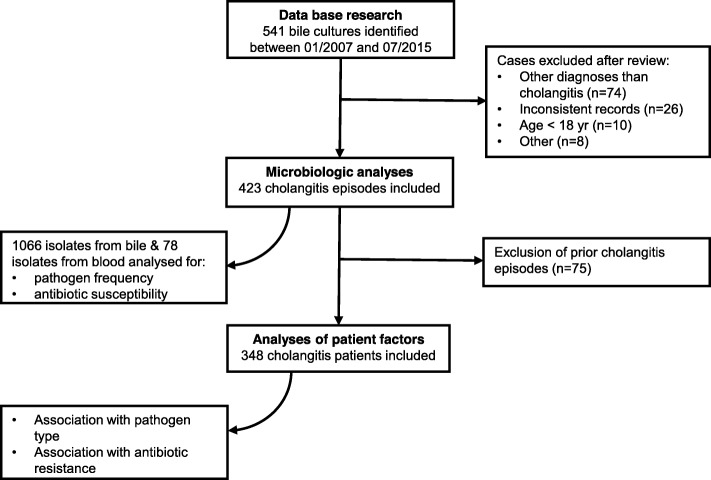
Methods: Pathogen frequencies and susceptibility rates were determined in 423 positive bile duct cultures and 197 corresponding blood cultures obtained from 348 consecutive patients with acute cholangitis. Patient data were retrieved from the medical records. Associations of patient and microbiological data were assessed using the Chi-2 test and multivariate binary logistic regression.
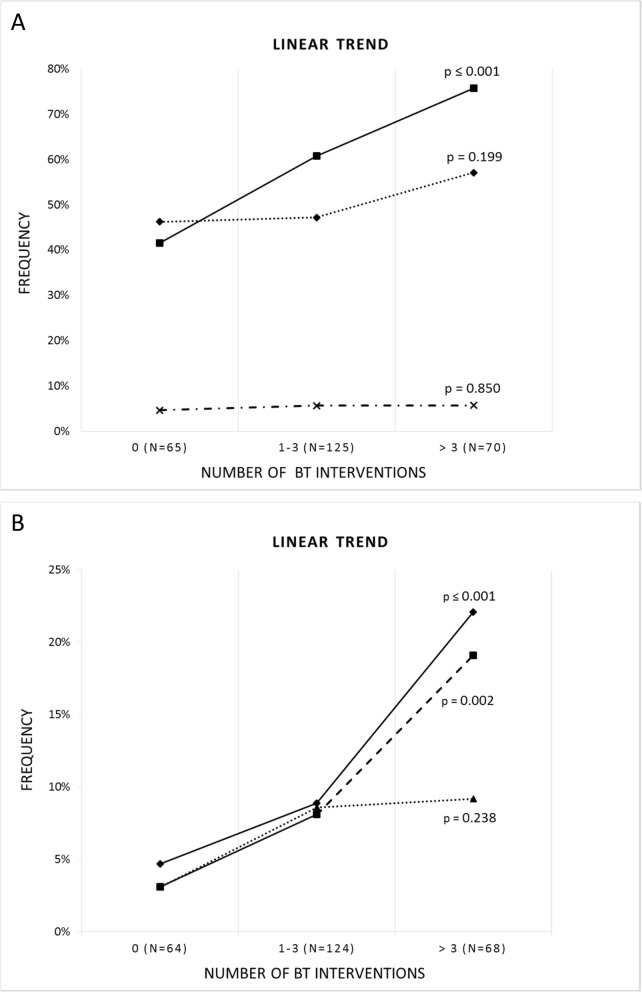
Results: In bile cultures, enterobacterales and enterococci were isolated with equal frequencies of approximately 30% whereas in blood cultures, enterobacterales predominated (56% compared to 21% enterococci). Antibiotic resistance rates of enterobacterales were > 20% for fluorochinolones, cephalosporines and acylureidopenicillins but not for carbapenems (< 2%). The efficacy of empirical therapy was poor with a coverage of bacterial bile and blood culture isolates in 51 and 69%, respectively. By multivariate analysis, predictors for pathogen species, antibiotic susceptibility and expected antibiotic coverage were identified.
Conclusions: In unselected patients treated for acute cholangitis in a large tertiary refferential center, use of carbapenems seems necessary to achieve a high antibiotic coverage. However, by analysis of patient and microbiological data, subgroups for highly effective carbapenem-sparing therapy can be defined. For patients with community-acquired cholangitis without biliary prosthesis who do not need intensive care, piperacillin/tazobactam represents a regimen with an expected excellent antibiotic coverage.
Keywords: Acute cholangitis; Antimicrobial resistance; Biliary tract infection; Carbapenem-sparing therapy; Empirical antibiotic therapy; Gastrointestinal tract microbiology.
Conflict of interest statement
The authors declare that they have no competing interests.
Figures
References
MeSH terms
Substances
LinkOut - more resources
Full Text Sources
Medical
