


Effectiveness of the female condom in preventing HIV and sexually transmitted infections: a systematic review and meta-analysis
- PMID: 32164652
- PMCID: PMC7068875
- DOI: 10.1186/s12889-020-8384-7
Effectiveness of the female condom in preventing HIV and sexually transmitted infections: a systematic review and meta-analysis
Abstract
Background: The effectiveness of female condoms for preventing HIV and sexually transmitted infections (STIs) remains inconclusive. We examined the effects of female condoms on the acquisition of HIV and STIs.
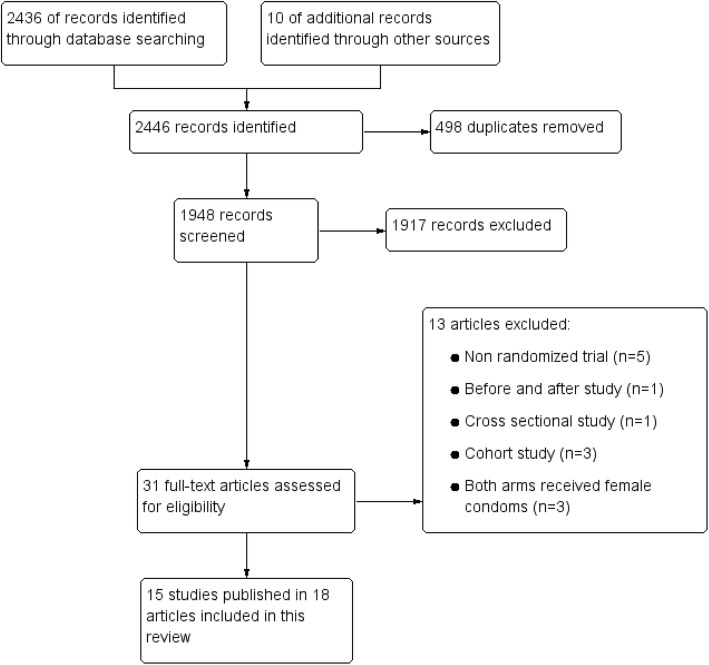
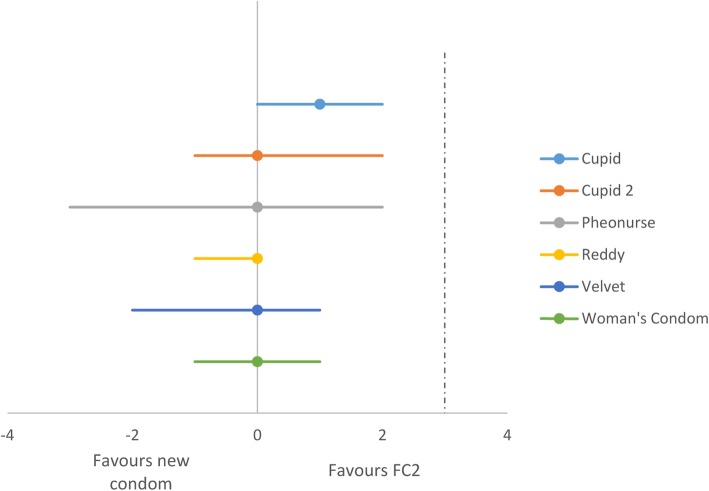
Methods: We searched four databases, two trial registries, and reference lists of relevant publications in October 2018 and updated our search in February 2020. We screened search output, evaluated study eligibility, and extracted data in duplicate; resolving differences through discussion. We calculated the effective sample size of cluster randomised trials using an intra-cluster correlation coefficient of 0·03. Data from similar studies were combined in a meta-analysis. We performed a non-inferiority analysis of new condoms relative to marketed ones using a non-inferiority margin of 3%. We assessed the certainty of evidence using GRADE.
Results: We included fifteen studies of 6921 women. We found that polyurethane female condoms (FC1) plus male condoms may be as effective as male condoms only in reducing HIV acquisition (1 trial, n = 149 women, RR 0.07, 95%CI 0.00-1.38; low-certainty evidence). However, the use of FC1 plus male condoms is superior to male condoms alone in reducing the acquisition of gonorrhoea (2 trials, n = 790, RR 0.59, 95%CI 0.41-0.86; high-certainty evidence) and chlamydia (2 trials, n = 790, RR 0.67, 95%CI 0.47-0.94; high-certainty evidence). Adverse events and failure rates of FC1 were very low and decreased during follow up. Although the functionality of newer female condoms (Woman's, Cupid, Pheonurse, Velvet, and Reddy) may be non-inferior to FC2, there were no available studies assessing their efficacy in preventing HIV and STIs.
Conclusion: The use of female plus male condoms is more effective than use of male condoms only in preventing STIs and may be as effective as the male condom only in preventing HIV. There is a need for well conducted studies assessing the effects of newer female condoms on HIV and STIs.
Prospero registration number: CRD42018090710.
Keywords: Female condom; HIV; Sexually transmitted infections; Systematic review.
Conflict of interest statement
The authors declare that they have no competing interests.
Figures

References
-
- Unaids. UNAIDS DATA 2018 [Internet]. 2018 [cited 2018 Dec 5]. Available from: http://www.unaids.org/sites/default/files/media_asset/unaids-data-2018_e....
-
- UNAIDS. Putting HIV prevention among adolescent girls and young women on the fast-track and engaging men and boys [Internet]. Geneva. 2016 [cited 2018 Dec 5]. Available from: http://www.unaids.org/sites/default/files/media_asset/UNAIDS_HIV_prevent....
Publication types
MeSH terms
Grants and funding
LinkOut - more resources
Full Text Sources
Medical
