


Emotion dysregulation in adults with attention deficit hyperactivity disorder: a meta-analysis
- PMID: 32164655
- PMCID: PMC7069054
- DOI: 10.1186/s12888-020-2442-7
Emotion dysregulation in adults with attention deficit hyperactivity disorder: a meta-analysis
Abstract
Background: Emotional symptoms are increasingly considered a core feature of attention deficit/hyperactivity disorder (ADHD). We aimed to quantify the evidence of emotional dysregulation and its respective facets in individuals with adult ADHD compared to healthy controls using meta-analysis.
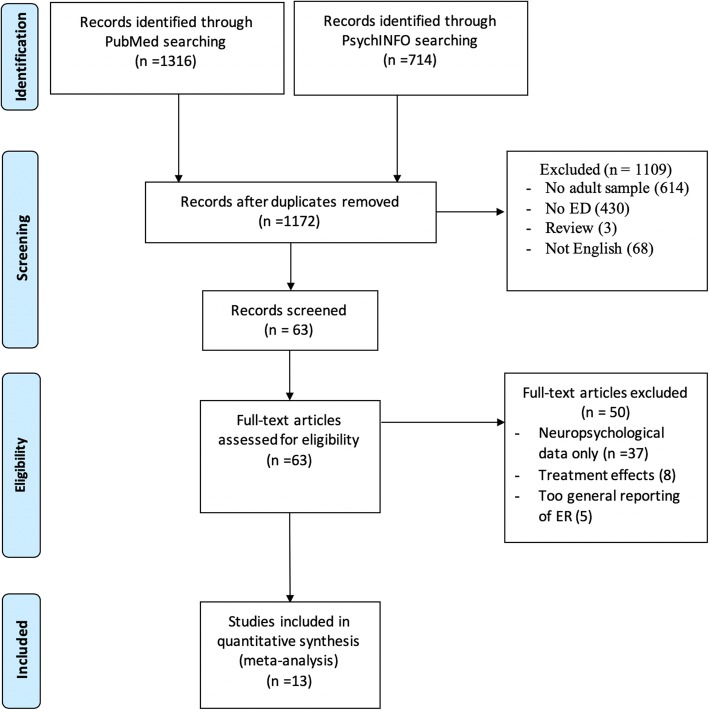
Methods: Two electronic databases (PubMed, PsycINFO) were reviewed to identify studies. Studies were eligible for inclusion that had reports on any measure of emotion (dys) regulation in adults (> 18 years of age) in clinically diagnosed patients with ADHD as well as healthy control participants. We included a total of 13 studies (N = 2535) to assess (1) the standardized mean difference in emotion dysregulation (ED) as a general factor and its specific facets (i.e., emotional lability, negative emotional responses, and emotion recognition) between adults with ADHD and healthy controls; and (2) the association between ADHD symptom severity and ED.
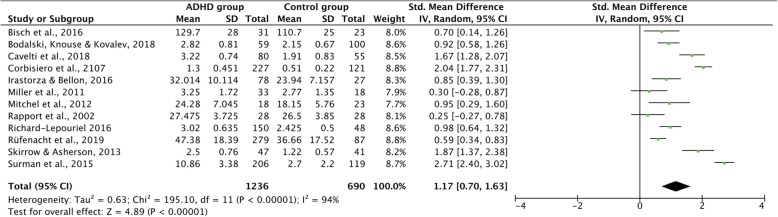
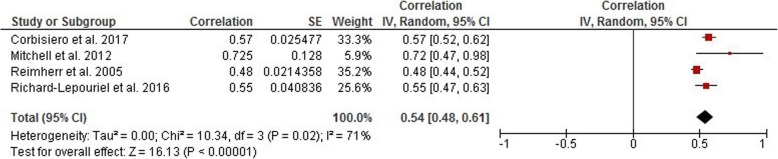
Results: Compared to healthy controls, adults with ADHD revealed significantly higher levels of general ED (Hedges' g = 1.17, p < 0.001; Hedges' g is the adjusted effect size). With regard to intermediate dimensions of ED, emotional lability exhibited the strongest weighted effect (Hedges' g = 1.20, CI [0.57, 1.83], p < 0.001). Furthermore, symptom severity and general ED correlated significantly (r = 0.54, p < 0.001). Regarding intermediate dimensions of ED, negative emotional responses correlated closely with ADHD symptom severity (r = 0.63, p < 0.001) and emotional lability (r = 0.52, p < 0.001).
Conclusions: Our findings support ED symptoms as a core feature of ADHD's psychopathology. With respect to dimensions of ED, emotional lability, and negative emotional responses play a more definitive role in the psychopathology of adults with ADHD. Due to insufficient statistical reports in the included studies, we could not perform meta-regressions to control the role of moderator variables.
Keywords: ADHD; Emotion dysregulation; Meta-analysis; adults.
Conflict of interest statement
The authors declare that they have no competing interests.
Figures
References
-
- Association AP. Diagnostic and statistical manual of mental disorders (DSM-5®) American psychiatric pub. 2013. - PubMed
-
- Barkley RA, Murphy KR, Fischer M. Adult ADHD: What the science says. New York: Guilford; 2008.
Publication types
MeSH terms
LinkOut - more resources
Full Text Sources
Medical
