


Efficacy of the interpersonal and social rhythm therapy (IPSRT) in patients with bipolar disorder: results from a real-world, controlled trial
- PMID: 32165907
- PMCID: PMC7061484
- DOI: 10.1186/s12991-020-00266-7
Efficacy of the interpersonal and social rhythm therapy (IPSRT) in patients with bipolar disorder: results from a real-world, controlled trial
Erratum in
-
Correction to: Efficacy of the interpersonal and social rhythm therapy (IPSRT) in patients with bipolar disorder: results from a real-world, controlled trial.Ann Gen Psychiatry. 2020 Apr 18;19:28. doi: 10.1186/s12991-020-00278-3. eCollection 2020. Ann Gen Psychiatry. 2020. PMID: 32328148 Free PMC article.
Abstract
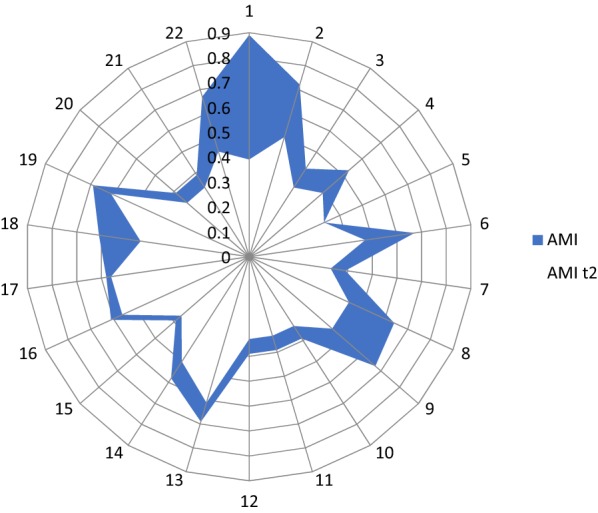
Background: Bipolar disorder (BD) is one of the most burdensome mental disorders, with a lifetime prevalence of 2.4%, with a prevalence of 0.6% for bipolar type I and 0.4% for bipolar type II. Several interventions have been developed to implement the treatment strategy of bipolar disorder, including the Interpersonal and Social Rhythm Therapy (IPSRT). This intervention has been specifically developed to manage patients' stressful life events, improve the disruptions of social and circadian rhythms and increase adherence to medications. The aim of the present study is to assess the efficacy of IPSRT on affective and anxiety psychopathology, social functioning, response to pharmacological treatment and affective morbidity index (AMI) in BD patients.
Methods: BD patients were consecutively recruited at the Mood Disorder Unit of the University of Campania "Luigi Vanvitelli" and randomly assigned to the experimental group receiving the IPSRT or to the Treatment as Usual (TAU) group. Patients were assessed at baseline, after 3 and 6 months with several validated assessment tools and with the affective morbidity index.
Results: At the end of the intervention, compared to controls, patients from the experimental group reported a significant improvement in anxious depressive and manic symptomatology, global functioning; and response to mood stabilizers. Patients in the IPSRT group reported a reduction at the AMI score.
Conclusions: IPSRT has been confirmed to be effective in improving the clinical symptomology of BD patients and in improving the affective morbidity index. Further studies with longer follow-up are needed in order to assess the stability of the results.Trial registration The study was approved by the local ethical review board (N001567/28.01.2018).
Keywords: Affective morbidity index; Bipolar disorder; Psychosocial intervention; Treatment strategy.
© The Author(s) 2020.
Conflict of interest statement
Competing interestsThe authors declare that they have no competing interests.
Figures
References
LinkOut - more resources
Full Text Sources
