


Identification of Rosellinia species as producers of cyclodepsipeptide PF1022 A and resurrection of the genus Dematophora as inferred from polythetic taxonomy
- PMID: 32165986
- PMCID: PMC7056724
- DOI: 10.1016/j.simyco.2020.01.001
Identification of Rosellinia species as producers of cyclodepsipeptide PF1022 A and resurrection of the genus Dematophora as inferred from polythetic taxonomy
Abstract
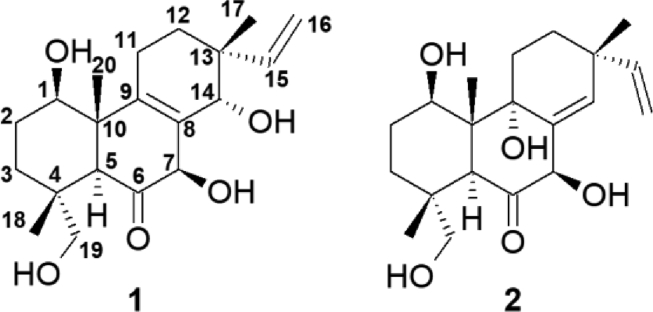
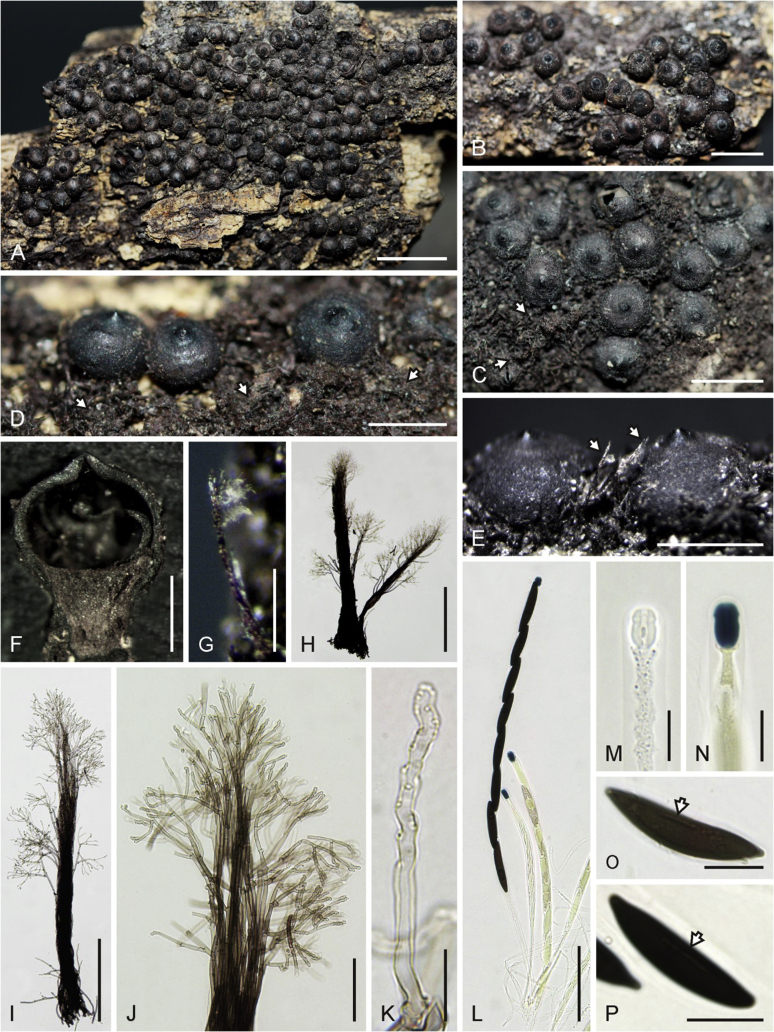
Rosellinia (Xylariaceae) is a large, cosmopolitan genus comprising over 130 species that have been defined based mainly on the morphology of their sexual morphs. The genus comprises both lignicolous and saprotrophic species that are frequently isolated as endophytes from healthy host plants, and important plant pathogens. In order to evaluate the utility of molecular phylogeny and secondary metabolite profiling to achieve a better basis for their classification, a set of strains was selected for a multi-locus phylogeny inferred from a combination of the sequences of the internal transcribed spacer region (ITS), the large subunit (LSU) of the nuclear rDNA, beta-tubulin (TUB2) and the second largest subunit of the RNA polymerase II (RPB2). Concurrently, various strains were surveyed for production of secondary metabolites. Metabolite profiling relied on methods with high performance liquid chromatography with diode array and mass spectrometric detection (HPLC-DAD/MS) as well as preparative isolation of the major components after re-fermentation followed by structure elucidation using nuclear magnetic resonance (NMR) spectroscopy and high resolution mass spectrometry (HR-MS). Two new and nine known isopimarane diterpenoids were identified during our mycochemical studies of two selected Dematophora strains and the metabolites were tested for biological activity. In addition, the nematicidal cyclodepsipeptide PF1022 A was purified and identified from a culture of Rosellinia corticium, which is the first time that this endophyte-derived drug precursor has been identified unambiguously from an ascospore-derived isolate of a Rosellinia species. While the results of this first HPLC profiling were largely inconclusive regarding the utility of secondary metabolites as genus-specific chemotaxonomic markers, the phylogeny clearly showed that species featuring a dematophora-like asexual morph were included in a well-defined clade, for which the genus Dematophora is resurrected. Dematophora now comprises all previously known important plant pathogens in the genus such as D. arcuata, D. bunodes, D. necatrix and D. pepo, while Rosellinia s. str. comprises those species that are known to have a geniculosporium-like or nodulisporium-like asexual morph, or where the asexual morph remains unknown. The extensive morphological studies of L.E. Petrini served as a basis to transfer several further species from Rosellinia to Dematophora, based on the morphology of their asexual morphs. However, most species of Rosellinia and allies still need to be recollected in fresh state, cultured, and studied for their morphology and their phylogenetic affinities before the infrageneric relationships can be clarified.
Keywords: Dematophora; Dematophora acutispora (Theiss.) C. Lambert, K. Wittstein & M. Stadler; Dematophora arcuata (Petch) C. Lambert, K. Wittstein & M. Stadler; Dematophora asperata (Massee ex Wakef.) Lambert, K. Wittstein & M. Stadler; Dematophora beccariana (Ces.) C. Lambert, K. Wittstein & M, Stadler; Dematophora boedijnii (L.E. Petrini) C. Lambert, K. Wittstein & M. Stadler; Dematophora bothrina (Berk. & Broome) C. Lambert, K. Wittstein & M. Stadler; Dematophora bunodes (Berk. & Broome) C. Lambert, K. Wittstein & M. Stadler; Dematophora buxi (Fabre) C. Lambert, K. Wittstein & M. Stadler; Dematophora compacta (Takemoto) C. Lambert, K. Wittstein & M. Stadler; Dematophora francisiae (L.E. Petrini) C. Lambert, K. Wittstein & M. Stadler; Dematophora freycinetiae (L.E. Petrini) C. Lambert, K. Wittstein & M. Stadler; Dematophora gigantea (Ellis & Everh.) C. Lambert, K. Wittstein & M. Stadler; Dematophora grantii (L.E. Petrini) C. Lambert, K. Wittstein & M. Stadler; Dematophora hsiehiae (L.E. Petrini) C. Lambert, K. Wittstein & M. Stadler; Dematophora hughesii (L.E. Petrini) C. Lambert, K. Wittstein & M. Stadler; Dematophora javaensis (L.E. Petrini) C. Lambert, K. Wittstein & M. Stadler; Dematophora macdonaldii (Bres.) C. Lambert, K. Wittstein & M. Stadler; Dematophora obregonii (L.E. Petrini) C. Lambert, K. Wittstein & M. Stadler; Dematophora obtusiostiolata (L.E. Petrini) C. Lambert, K. Wittstein & M. Stadler; Dematophora paraguayensis (Starbäck) C. Lambert, K. Wittstein & M. Stadler; Dematophora pepo (Pat.) C. Lambert, K. Wittstein & M. Stadler; Dematophora puiggarii (Pat.) C. Lambert, K. Wittstein & M. Stadler; Dematophora pyramidalis (Lar.N. Vassiljeva) C. Lambert, K. Wittstein & M. Stadler; Dematophora samuelsii (L.E. Petrini) C. Lambert, K. Wittstein & M. Stadler; Dematophora siggersii (L.E. Petrini) C. Lambert, K. Wittstein & M. Stadler; Genus resurrection; Isopimarane diterpenoids; PF1022A; Polythetic taxonomy; Rosellinia; Xylariaceae.
© 2020 Westerdijk Fungal Biodiversity Institute. Production and hosting by ELSEVIER B.V.
Figures



References
-
- Aldridge D.C., Burrows B.F., Turner W.B. The structures of the fungal metabolites cytochalasin E and F. Journal of the Chemical Society - Chemical Communications. 1972;3:148–149.
-
- Chen Y.S. Studies on the metabolic products of Rosellinia necatrix Berlese. Bulletin of the Agricultural Chemical Society Japan. 1960;24:372–381.
-
- Chen Y.S. The metabolic products of Rosellinia necatrix. II. The structure of rosellinic acid. Bulletin of the Agricultural Chemical Japan. 1964;28:431–435.
-
- Conder G.A., Johnson S.S., Nowakowski D.S., et al. Anthelmintic profile of the cyclodepsipeptide PF1022A in in vitro and in vivo models. Journal of Antibiotics. 1995;48:20–823. - PubMed
-
- Daranagama D.A., Camporesi E., Tian Q., et al. Anthostomella is polyphyletic comprising several genera in Xylariaceae. Fungal Diversity. 2015;73:203–238.
LinkOut - more resources
Full Text Sources
Other Literature Sources
Molecular Biology Databases
Miscellaneous