


Community health promotion programs for older adults: What helps and hinders implementation
- PMID: 32166190
- PMCID: PMC7060897
- DOI: 10.1002/hsr2.144
Community health promotion programs for older adults: What helps and hinders implementation
Abstract
Background and aims: Despite the many known health benefits of physical activity (PA), older adults are the least active citizens in many countries. Regular PA significantly decreases the odds of functional limitation and social disengagement. However, there is a dearth of publicly funded support services for older adults. The primary objective of this study is to conduct a formative evaluation to examine the implementation of community-driven health promotion programs for older adults in British Columbia, Canada.
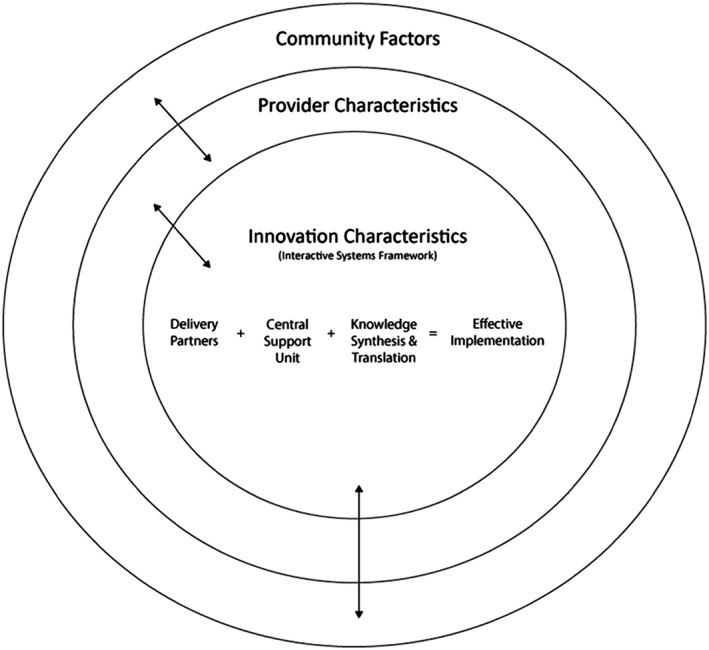
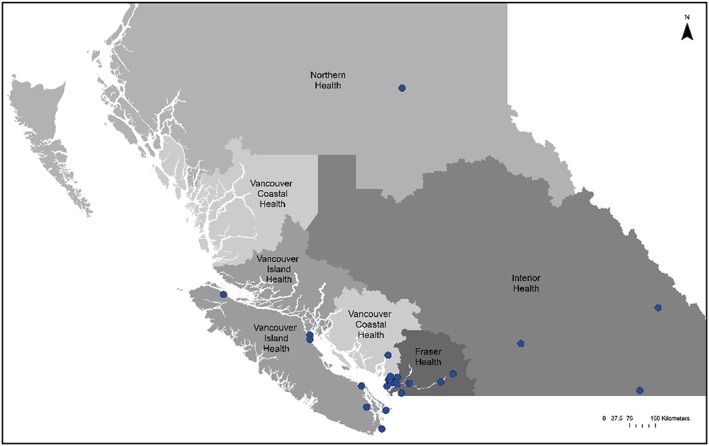
Methods: The Active Aging Grant (AAG) initiative funded 30 community-based organizations in British Columbia to design and deliver community-driven health promotion programs for older adults, with an explicit focus on PA and social connectedness. Guided by the Framework for Successful Implementation, we recruited program coordinators and participants and used semistructured interview guides to focus on design, delivery, and experience within the program. Framework analysis was used with NVivo 11.
Results: Thirty-six in-depth, semistructured interviews were conducted in 2017, after program completion. Data saturation was achieved after interviewing 10 coordinators and 26 program participants from seven of the organizations. Eighteen were female; nine were male; 68% fell in the age range of 65-84. We detail the innovation characteristics, provider characteristics, and contextual factors that facilitate and impede program implementation. Aspects that facilitate implementation include that they promote PA, foster social connectedness, and address isolation and loneliness; personal accountability; affordability; program design; providers' appropriate skills; community collaborations; and transportation support. Aspects that hinder implementation include lack of resources for marketing and communications, lack of volunteers and dedicated staff, and access to transportation. We also highlight two themes that emerged outside the theoretical framework, the roles of gender and funding in program implementation.
Conclusions: As part of a formative evaluation, the information will help adapt and enhance implementation of a larger scale-out intervention aimed to increase PA and social connectedness amongst older adults in British Columbia, Canada.
Keywords: community‐based service sector; physical activity; social connectedness.
© 2019 The Authors. Health Science Reports published by Wiley Periodicals, Inc.
Conflict of interest statement
The authors claim no conflict of interest.
Figures
References
-
- Warburton DER. Health benefits of physical activity: the evidence. Can Med Assoc J. 2006;174(6):801‐809. https://doi.org/10.1503/cmaj.051351 - PMC - PubMed
-
- Hallal PC, Andersen LB, Bull FC, Guthold R, Haskell W, Ekelund U. Global physical activity levels: surveillance progress, pitfalls, and prospects. Lancet. 2012;380(9838):247‐257. https://doi.org/10.1016/S0140‐6736(12)60646‐1 - PubMed
-
- Paterson DH, Warburton DE. Physical activity and functional limitations in older adults: a systematic review related to Canada's physical activity guidelines. Int J Behav Nutr Phys Act. 2010;7(1):38. https://doi.org/10.1186/1479‐5868‐7‐38 - PMC - PubMed
-
- Robins LM, Hill KD, Finch CF, Clemson L, Haines T. The association between physical activity and social isolation in community‐dwelling older adults. Aging Ment Health. 2018;22(2):175‐182. https://doi.org/10.1080/13607863.2016.1242116 - PubMed
LinkOut - more resources
Full Text Sources
Research Materials
