


Liquid Biopsy: The Unique Test for Chasing the Genetics of Solid Tumors
- PMID: 32166219
- PMCID: PMC7050026
- DOI: 10.1177/2516865720904052
Liquid Biopsy: The Unique Test for Chasing the Genetics of Solid Tumors
Abstract
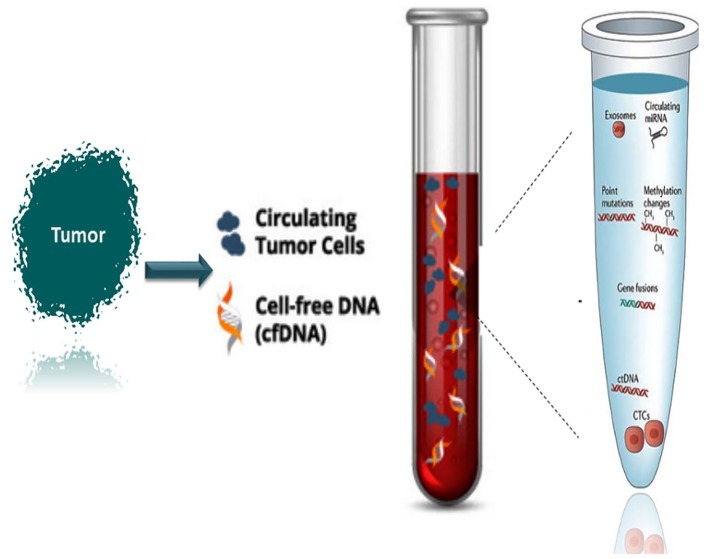
Blood test is a kind of liquid biopsy that checks cancer cells or cancer nucleic acids circulating freely from cells in the blood. A liquid biopsy may be used to distinguish cancer at early stages and it could be a game-changer for both cancer diagnosis and prognosis strategies. Liquid biopsy tests consider several tumor components, such as DNA, RNA, proteins, and the tiny vesicles originating from tumor cells. Actually, liquid biopsy signifies the genetic alterations of tumors through nucleic acids or cells in various body fluids, including blood, urine, cerebrospinal fluid, or saliva in a noninvasive manner. In this review, we present an overall description of liquid biopsy in which circulating tumor cells, cell-free nucleic acids, exosomes, and extrachromosomal circular DNA are included.
Keywords: Liquid biopsy; cell-free nucleic acids (cfNAs); circulating tumor cells (CTCs); exosomes.
© The Author(s) 2020.
Conflict of interest statement
Declaration Of Conflicting Interests:The author(s) declared no potential conflicts of interest with respect to the research, authorship, and/or publication of this article.
Figures
References
-
- Siegel RL, Miller KD, Jemal A. Cancer statistics, 2018. CA Cancer J Clin. 2018;68:7-30. - PubMed
-
- Ashworth T. A case of cancer in which cells similar to those in the tumours were seen in the blood after death. Med J Australia. 1869;14:146-147.
-
- Mandel P. Les acides nucleiques du plasma sanguin chez l’homme. C R Seances Soc Biol Fil. 1948;142:241-243. - PubMed
-
- Leon S, Shapiro B, Sklaroff D, Yaros M. Free DNA in the serum of cancer patients and the effect of therapy. Cancer Res. 1977;37:646-650. - PubMed
Publication types
LinkOut - more resources
Full Text Sources
